
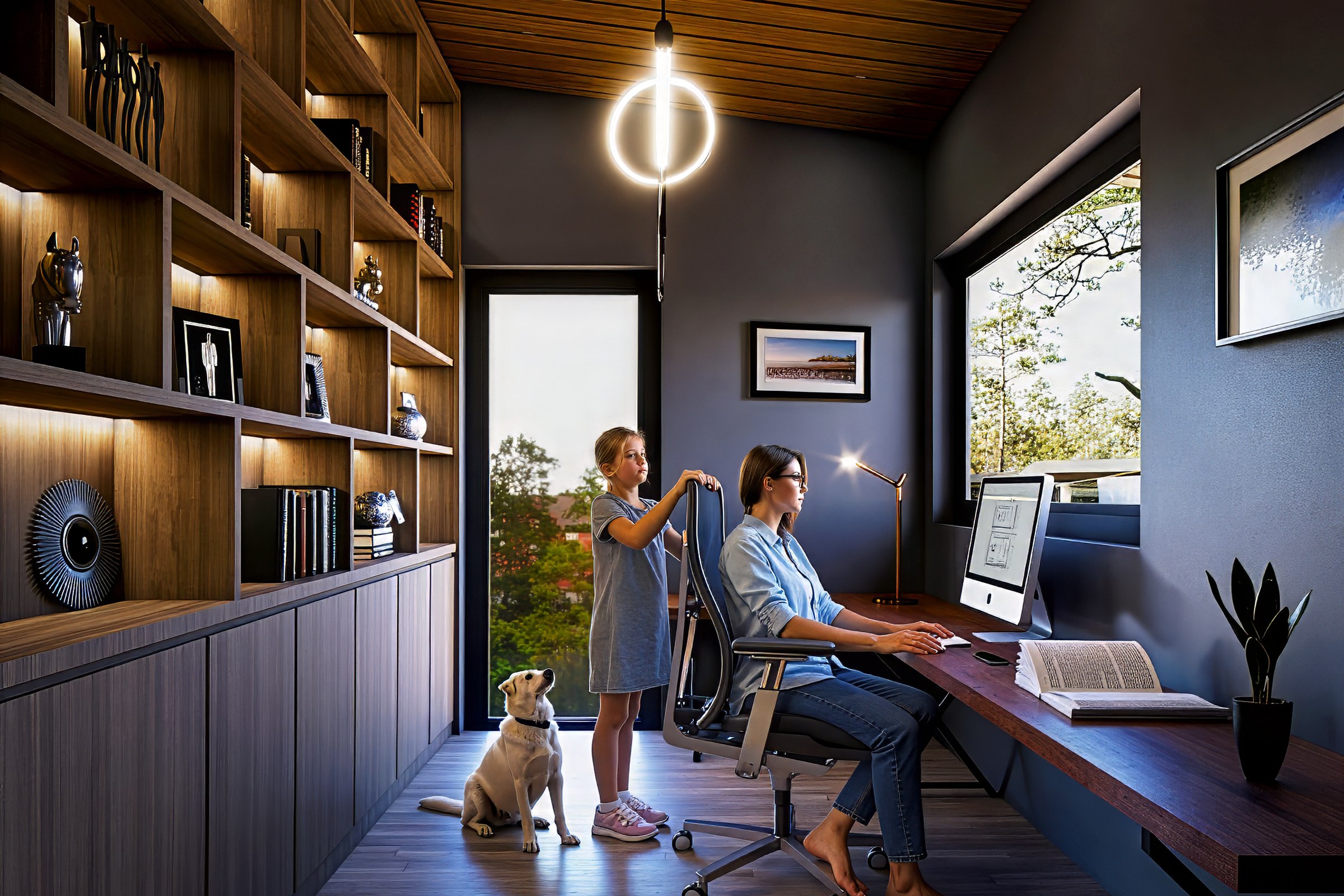
Before we change anything
Design intent does not usually die in the render. It dies in the thread underneath it — where a spatial judgement gets compressed into four words and the reason gets left behind.
Half of design language is pointing. There. That one. Like this, but less. Not that far.
Those words carry almost no meaning on their own and they are the most efficient instruments in the room, because a hand and a shared frame are doing the other ninety percent of the work. Every architect and every designer talks this way, all day, and it is not sloppiness — it is what a trained spatial judgement sounds like when it is being expressed at the speed it actually arrives.
Then the same judgement has to go into an email, and the hand is gone. Now the pointing word has to be replaced with a description, the comparison has to be spelled out, and the reason — which was implicit and instant when you were standing next to somebody — has to be typed out in full sentences by a person who has four other things to do before six o’clock. So it gets cut. It is the most expensive part to type and it feels like the most obvious part to leave out.
What arrives at the studio is a verdict with the argument removed. It looks heavy. Something’s off. It wants to be simpler. And a studio holding a verdict has exactly one move available to it: change something, and hope. That round comes back slightly different and slightly wrong, and the third one drifts further, and by then the conversation is no longer about the design at all — it is about tolerance. That is the round an architect experiences as their intent being mangled. Almost always it is not a studio that ignored them. It is a studio that received a lossy copy of them.
This is not an argument that written feedback is bad. Markups are precise, threads are a record, and both are indispensable. It is an argument about what a written channel is structurally unable to carry — and about the fact that recovering it takes one question, not another render.
There are about six of those questions. We ask them constantly, they take a couple of seconds each, and every one of them has the same shape: it does not ask what to change. It asks for the thing that was true before the sentence got compressed. Below is each of them, written out the way these exchanges actually go — composites, not quotes from anyone — against a real frame of the kind that produces them.
The turn — where a verdict becomes a design question
Each exchange is a generic composite of the kind of note a single finished frame produces. Nothing here is quoted from a client, a project or a thread.
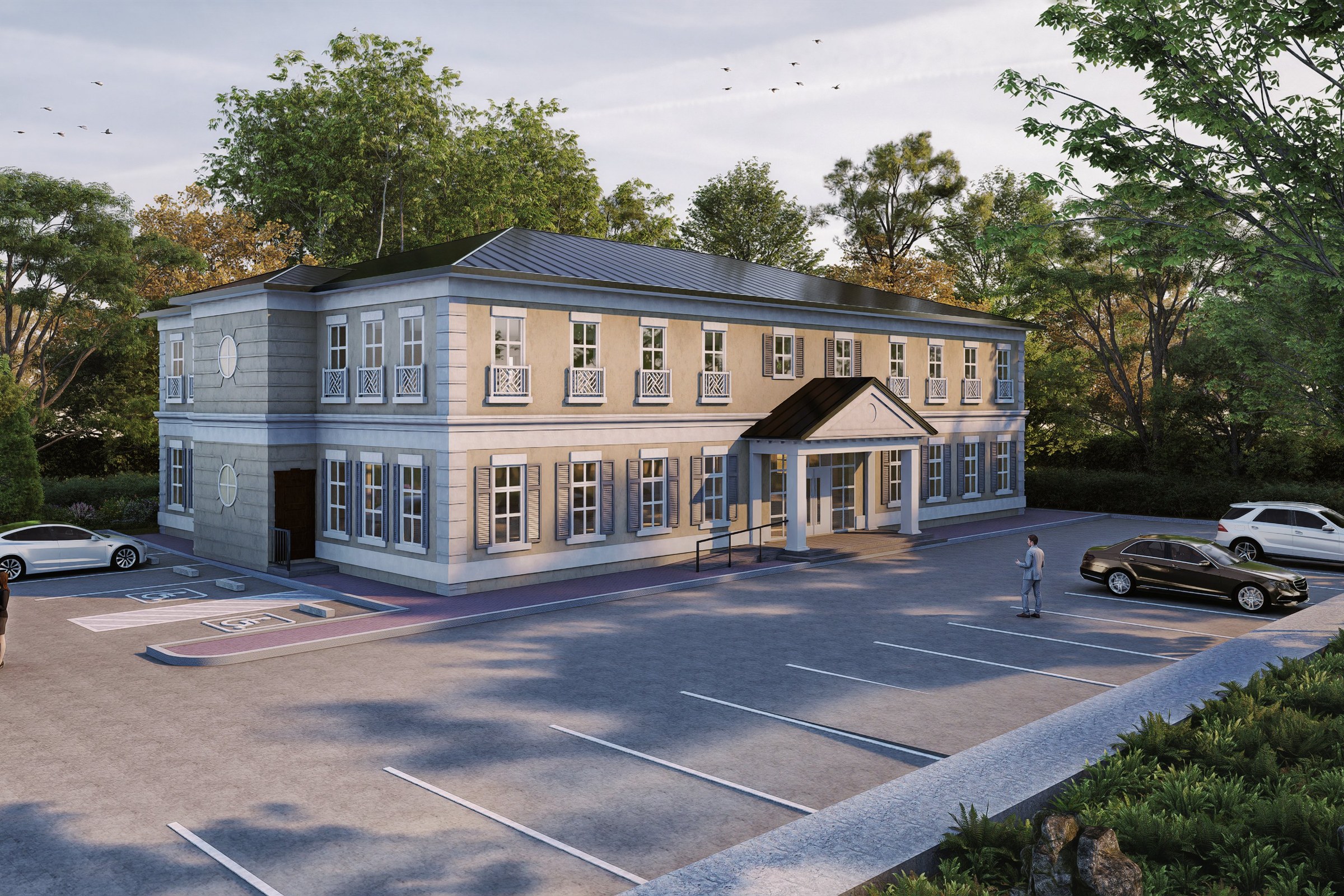
Something isn’t right about the entrance.
If you put a finger on one square metre of that image, where does it land?
the turnThere. The porch is too small for the wall it’s standing on.
The object
A reaction names a region. A decision needs a thing.
Nobody says “the porch pediment is undersized against the second-floor band.” They say the entrance.
Those two sentences are not the same note, and only the second one can be acted on. The first names an area of the drawing and a feeling about it; the second names an object and a relationship. What happened in between is not that the architect thought harder — they knew the answer the whole time. It is that pointing is free and describing is not. When you are in a room you say there, and the word costs nothing because your hand is doing the work. When you are typing you have to replace your hand with a noun phrase, and under time pressure the noun phrase you reach for is a category: the entrance, the roof, the corner. Categories are what a studio then goes and re-renders — the whole entrance, at cost, when the note was about one element being half a metre short. Look at the frame below and count the objects in it: shutters, a cornice, two oval windows, a canopy, a set of steps, a line of bays, a car park. The porch is one small thing among them. “The entrance” could mean any of eight decisions. One square metre resolves it in about two seconds.
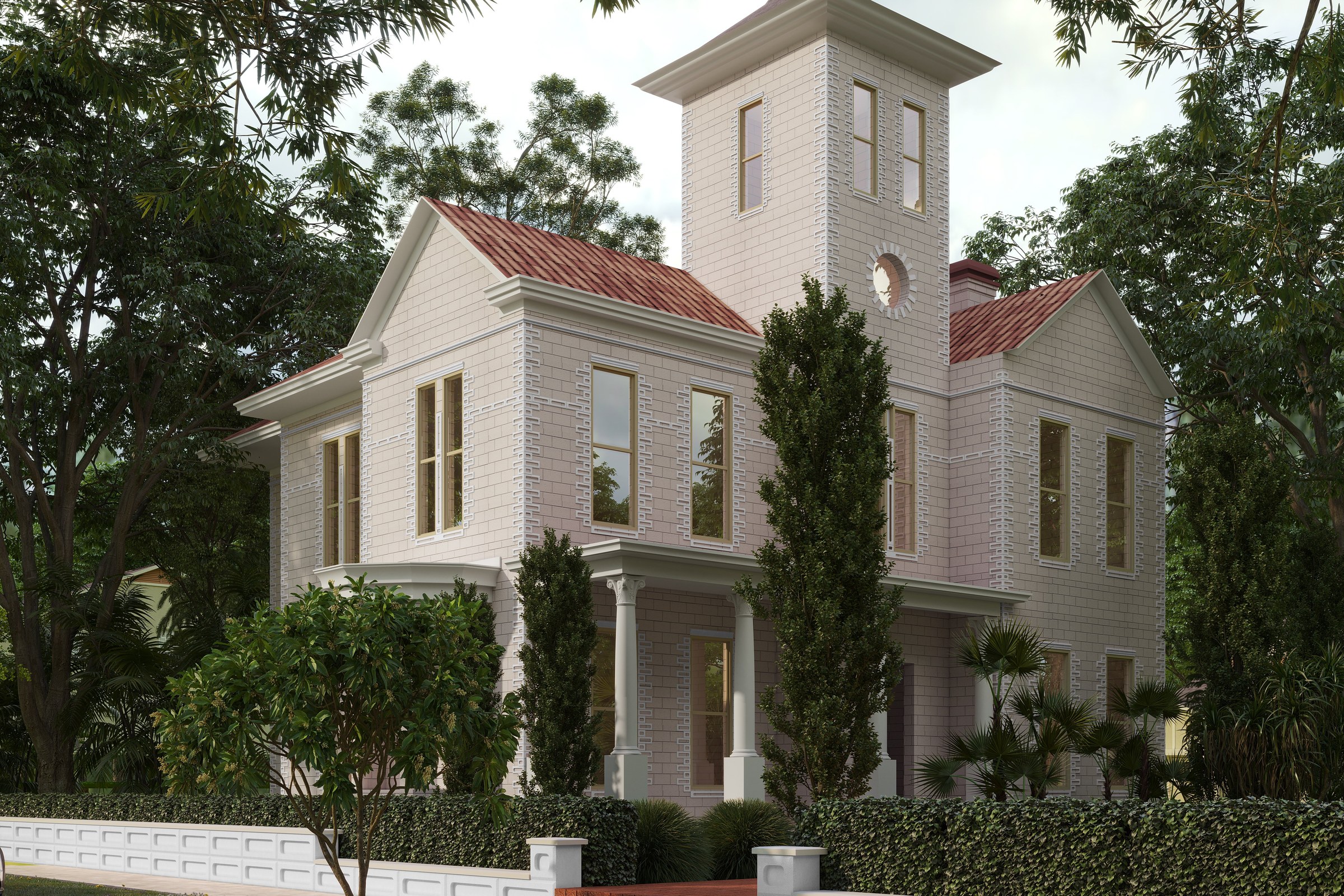
It doesn’t feel like ours.
Compared to what? Name a building — one of yours is fine, so is the drawing you sent.
the turnCompared to the drawing. The mouldings are heavier than I drew them and the render has gone pink.
The reference
Every sentence about character is a comparison with the second half missing
“It doesn’t feel like ours” is a precise perception. It is also half a sentence.
Nobody perceives a facade in isolation, which means nobody reacts to one in isolation either. A practice with a recognisable hand carries a reference set in their head — their own back catalogue, two or three precedents, the elevation they drew last Tuesday — and “it doesn’t feel like ours” is a comparison against one of those, made instantly and correctly. The comparand simply never gets typed, because to the sender it is the most obvious thing in the world. Here is why that omission is expensive rather than merely untidy: the three likely comparands lead to three unrelated jobs. Against a precedent, this is a materials and light conversation. Against their own back catalogue, it is a proportion conversation. Against the drawing they issued, it is a modelling accuracy conversation — somebody thickened a profile that was dimensioned — and no amount of taste discussion will find it. One question separates them. Below is a building with very little in it except character: bracketed cornices, rusticated stucco, a belvedere tower, red roofs. On a frame like that, “doesn’t feel right” is nearly always about a profile or a tone, and nearly never about the massing.
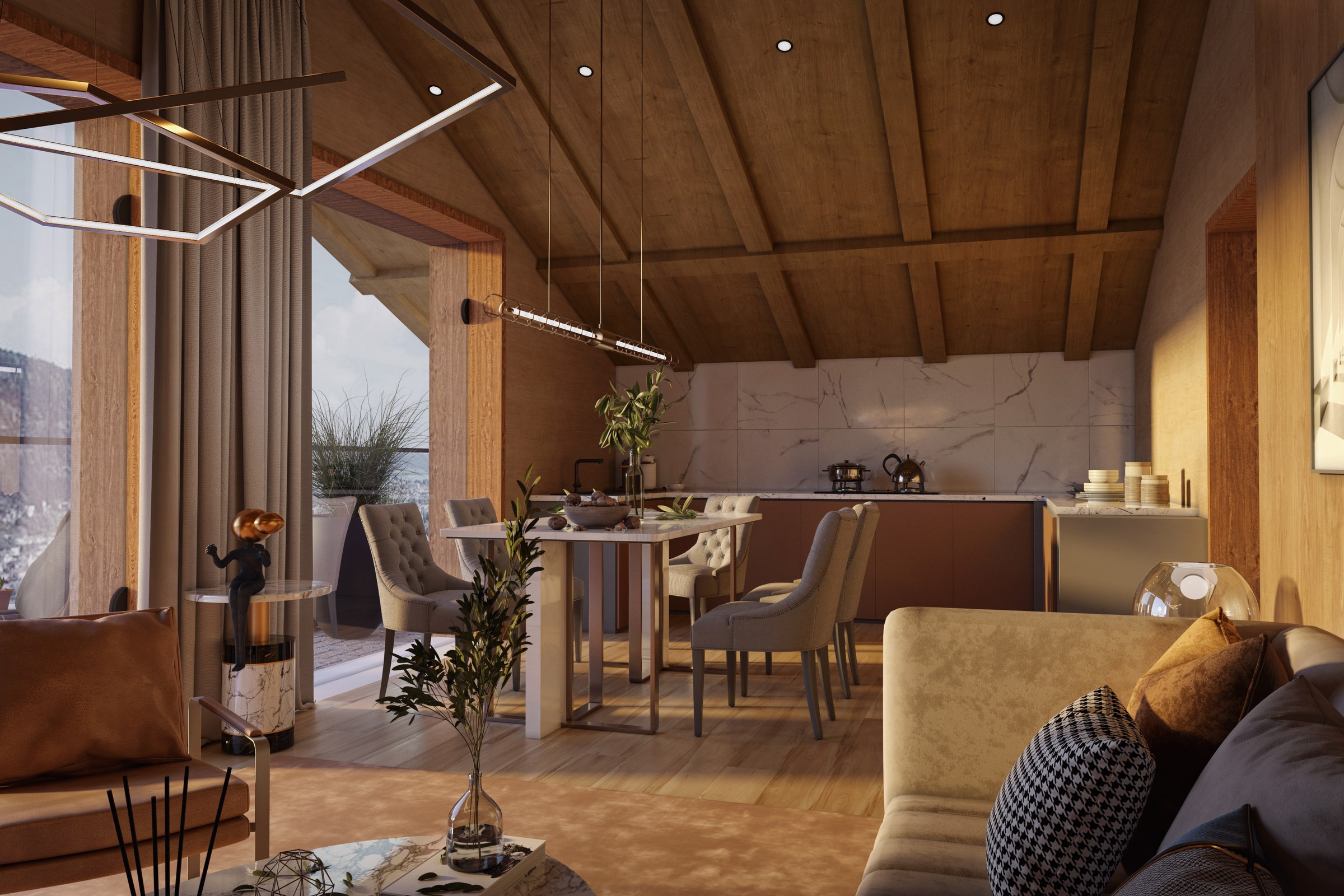
Can we warm it up a bit?
Warm until what happens? What would tell us we’d gone too far?
the turnStop while the stone still reads grey. If the stone turns, you’ve overcooked it.
The stop
A direction without a ceiling is a loop
“A bit warmer” has no end in it. Two rounds later the stone has gone gold and nobody meant that.
This is the cheapest question on the page and the one most often skipped, because it sounds like pedantry and is actually arithmetic. An instruction of the form more X defines a direction and no destination. A studio receiving it ships the middle of the plausible range; the reply is “a bit more”; the next version overshoots; the reply is “too much, back off”; and three rounds have gone by settling something that was never in dispute. Nobody in that exchange is being difficult. There was simply no stop condition in the original sentence, and neither party noticed, because when you say it out loud in front of the image you tend to add one without thinking — you point at something and say not so warm that this goes. Typed, that clause gets cut. It reads as fussy. The useful information is almost never the target; it is the thing that must survive the move. The room below is a good picture of a range with a limit in it: timber ceiling, oak floor, camel and tan upholstery, warm light throughout — and the marble is still cool white. Warm, right up to a line, and the line is a material.
I think it wants to be simpler.
Simpler in the image, or simpler in the building?
the turnIn the building. The ground floor has too much going on and I’ve suspected it for a fortnight.
The artefact
Is the image wrong, or is the building?
The most expensive ambiguity in the whole loop, and both readings are completely legitimate.
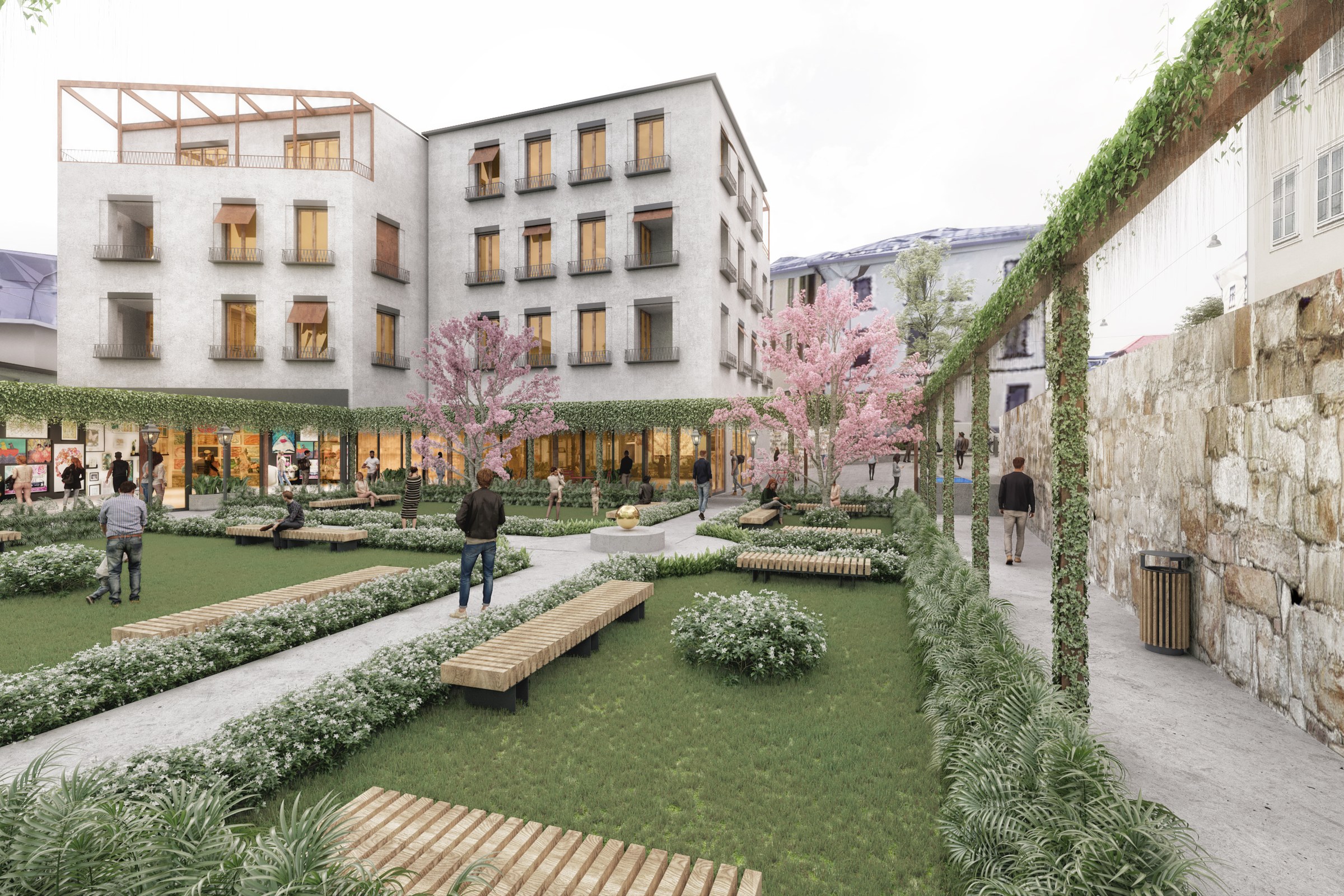
Read that as a render note and the work is entourage, planting, dressing and camera — an afternoon, and the scheme does not move. Read it as a design note and the work is the ground floor, which no amount of re-rendering will touch. Both are ordinary things for an architect to mean by that sentence, and the two cost nothing like the same amount. Worth saying the uncomfortable part plainly: the studio is the party paid to render, so the studio has a quiet incentive to hear the render version. A collaborator has to ask anyway, and ask first. There is a reason this note is so common, and it is a compliment to the medium rather than a complaint about it — a render is very often the first time a designer sees a scheme instead of reading it, and seeing produces judgements that reading did not. Those judgements are the most valuable output of the whole exercise, and they arrive disguised as image feedback. In the courtyard below, “too busy” is genuinely undecidable from outside the practice: it could be the benches, the flowering trees and the crowd, or it could be the shopfront rhythm underneath them.
Both are fine, honestly. Whichever’s easier.
If only one of them can change before Thursday, which one?
the turnThe garage door. Nobody will look at anything else until that’s sorted.
The rank
Politeness deletes the ranking
Two notes arrive with equal weight, so both get done — in whatever order the files opened.
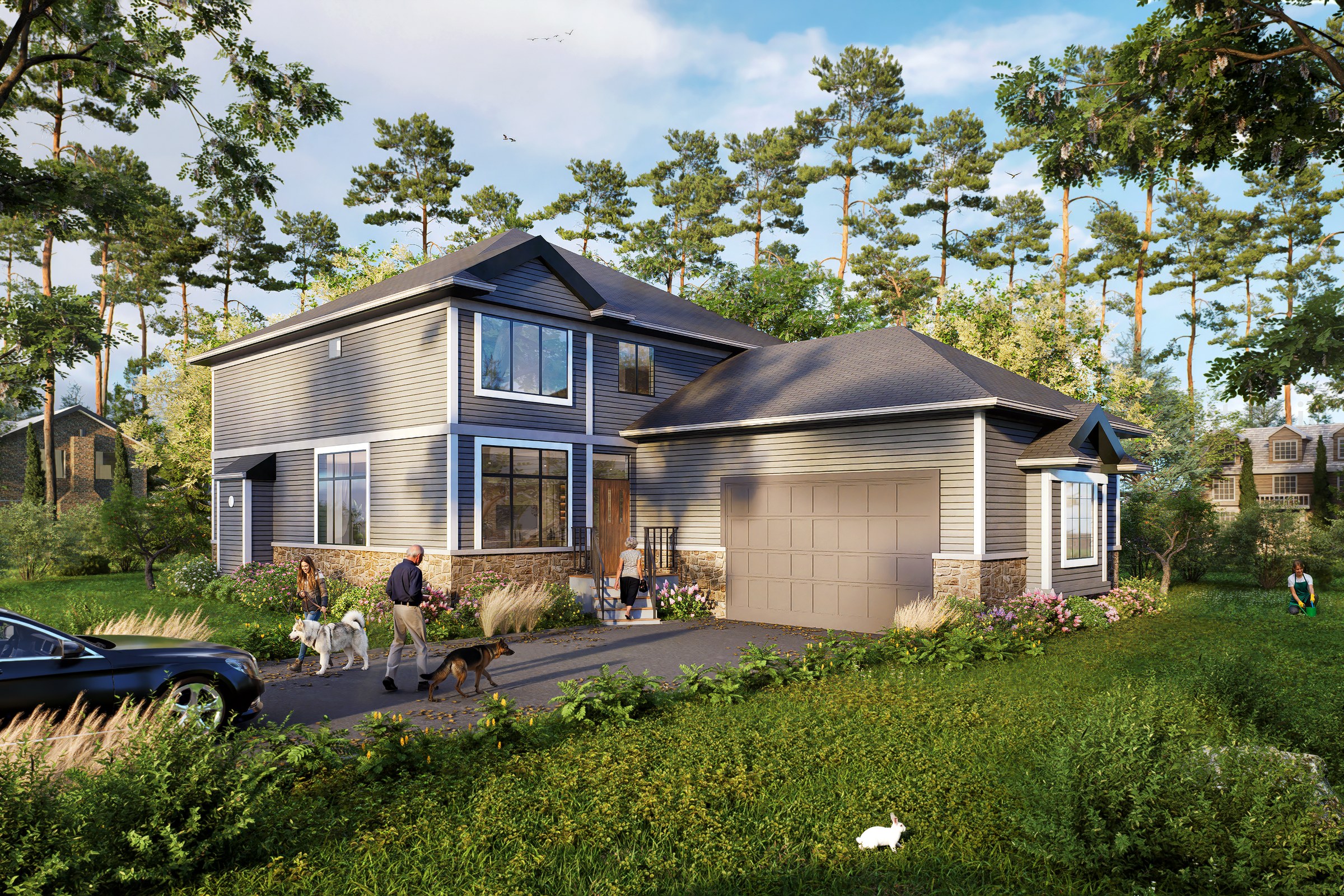
That answer existed before the question. It was suppressed by ordinary good manners: volunteering a priority you were not asked for feels like telling a professional how to run their week. So a written round arrives flat — three notes, no rank — and a studio, being conscientious, treats them as equally urgent, which is the same as treating none of them as urgent. Then the reply comes back on the wrong thing first and everyone quietly loses a day. The recovery is a constraint, and it works best when the constraint is true. One before Thursday is not a negotiating tactic; it is a fact about a calendar, and stating it converts an unanswerable politeness into a two-word answer. Look at the house below and count what could independently change without touching the design: the width and colour of that pale garage door, the grey of the siding, the stone base course, the timber front door, the planting at the steps. Five real options, five different afternoons, and exactly one of them is what the client is going to see first.
Leave it, it’s fine.
Fine as in you’ve decided — or fine as in you’re not the one who has to like it?
the turnThe second one. They see it Friday.
The decider
Fine as in decided, or fine as in not your call?
The commonest wasted round is not a disagreement. It is an approval from the person who was never going to be the judge.
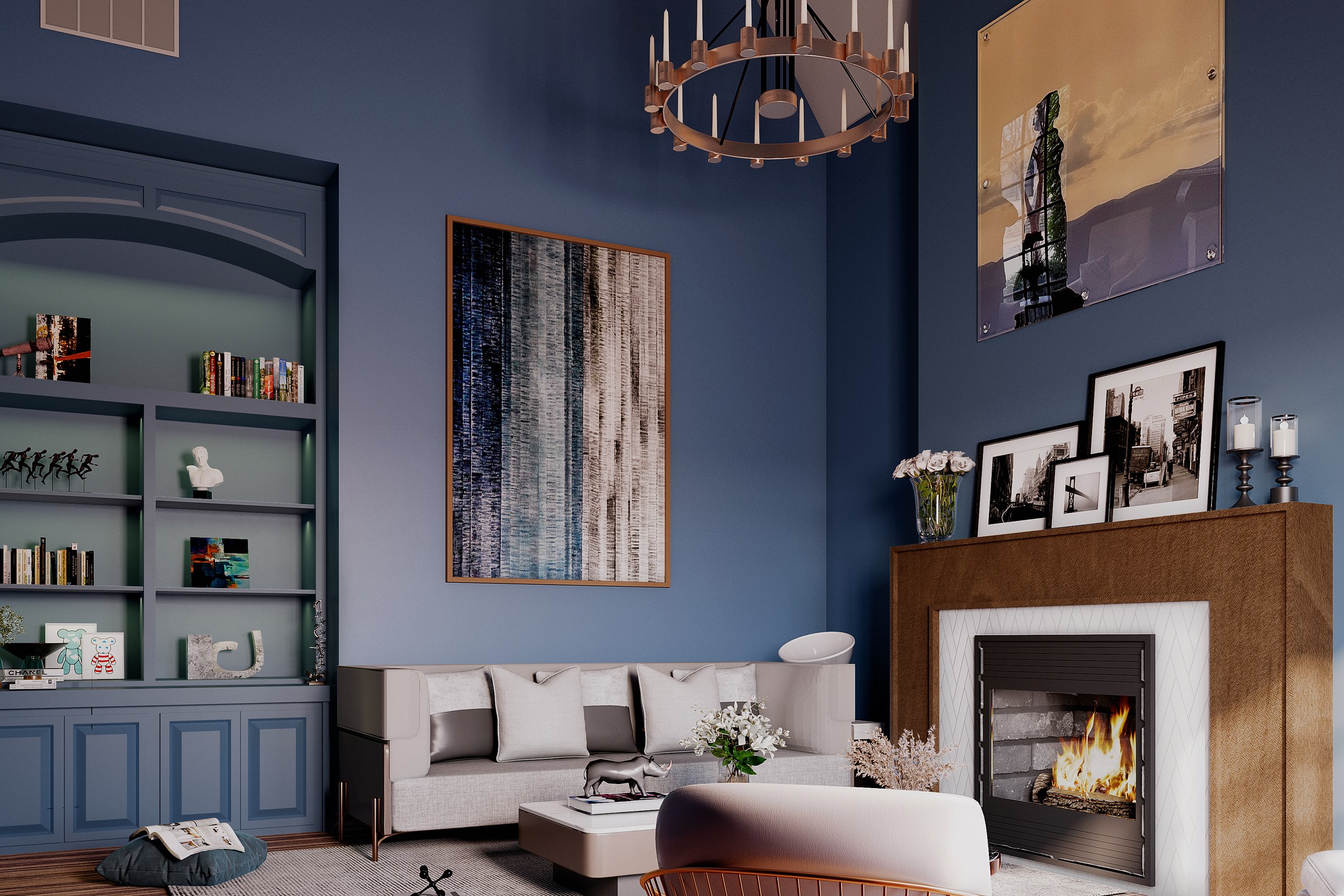
Almost nobody asks this, because typed it reads as a challenge to someone’s authority and out loud it reads as what it is: interest in who the image has to work for. And it changes more downstream work than any other question here. If the frame is going to a household on Friday, or to a board, or to a partner who has not been in a single call, then the useful conversation is no longer about whether the image is correct — it is about which frames go, what each one has to carry, and which of them needs a sentence attached so nobody reads a placeholder as a decision. Interiors feel this hardest. A wall colour is a professional judgement to a designer and an emotional one to the person who will wake up inside it, and those two readings almost never fail at the same point. The room below is exactly that kind of commitment: a deep slate blue taken across every wall and up two storeys. It is either a conviction or a bet, and which one it is has nothing to do with the render and everything to do with who is sitting in the room on Friday.
A verdict tells a studio you are unhappy. A reason tells it what to do.
Six lines, yours to keep
Nothing here is proprietary and none of it is about rendering. They work on any drawing, in either direction, and they work on your own clients too.
-
Put a finger on one square metre — where does it land?
recovers the object -
Compared to what? Name a building, or the drawing you sent.
recovers the reference -
Warmer until what? What would tell us we’d gone too far?
recovers the stop -
Simpler in the image, or simpler in the building?
recovers the artefact -
If only one can change before Thursday, which one?
recovers the rank -
Fine as in decided, or fine as in not your call?
recovers the decider
Read them again and notice what none of them asks: what would you like changed?
That question invites a verdict, which is what we already have. Each of the six asks instead for the one piece of context that was true in someone’s head and got cut on the way out — the object, the comparison, the limit, the artefact, the priority, the person. And here is the part that decides whether any of it happens: every one of those questions is nearly unaskable in writing. Compared to what? typed into a reply looks like a challenge. Fine as in decided? typed looks like an audit. Said out loud, over an image both people can see, they are just interest — the sort of thing a colleague asks. The channel does not change the question. It changes what the question costs to ask, and that cost is the only thing standing between a studio and the reason.
Two of the six should be pointed back at us, and we would rather you did. Which parts of this frame did you decide, and which did you guess? — because a render is full of choices your drawings never specified, and a studio that will not separate the two is a studio quietly authoring your building. And did you hear that as a render note or a scheme note? — the one where our incentive is not neutral, so it is fair to make us say it. The sixth one, about who actually has to like it, is worth asking your own client. It is not our question to ask them.
This is also, in the plainest terms, why we ask for a short call rather than sending a file and waiting. Not because a call is more thorough — it is less thorough, and it leaves a worse record. Because a call is the only channel in which pointing still works, and because twenty minutes of pointing routinely replaces a fortnight of adjectives. We bring two angles to it for a reason we have argued separately: a single frame can only collect a verdict, while a pair gives every one of these sentences somewhere to land.
Neighbouring pages, if your question is a different one: why the second angle changes the conversation — that one is about how many frames are on the screen, this one is about the channel they are discussed in — which single viewpoint carries a scheme, the five inputs that get a first draft right, and why a photoreal frame arrives with no hierarchy in it.


