
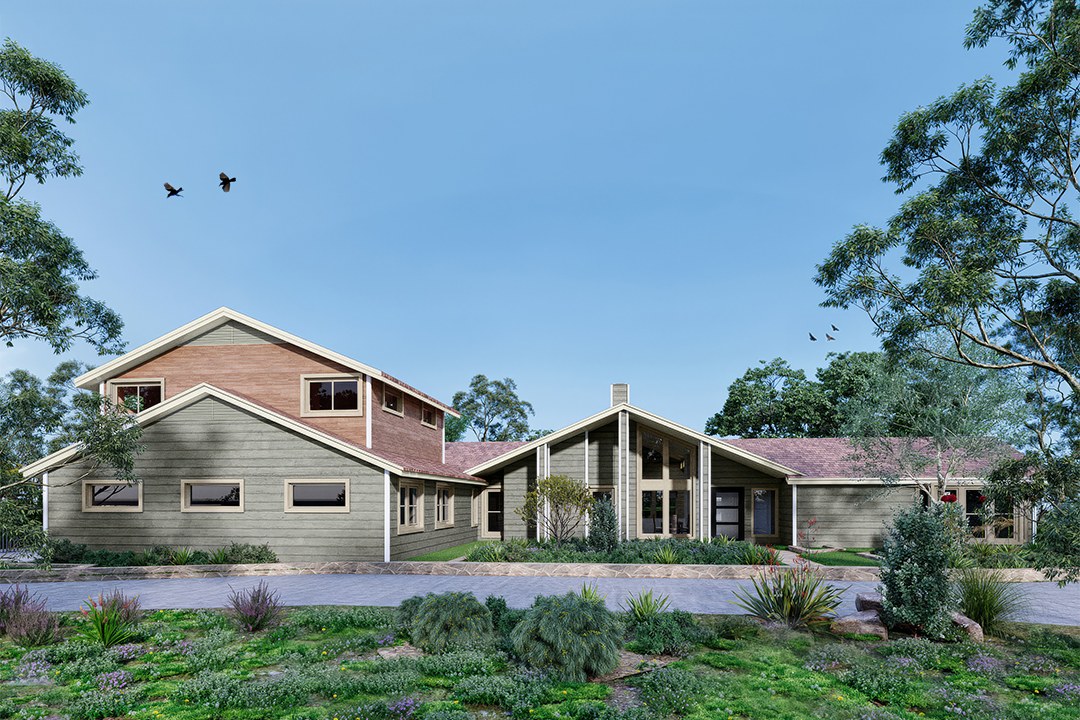
One angle — the viewpoint that sells the scheme
Still working on a scheme? Here’s one free angle you can use today: the render almost never fails in the model. It fails at the camera.
Here is a small, unglamorous truth from inside the studio: the renders that land flat were rarely a modelling problem. The geometry was fine, the materials were fine — the camera was simply standing in the wrong place. Which is oddly good news, because it means the fix is often one decision, made before a single pixel is rendered: where do you put the lens? Pick that one angle well and it does most of the persuading for you. So — a free angle, no strings: four viewpoint calls a studio makes on every job, and how to make them on the scheme open on your screen right now.
Four viewpoints — and when each one earns the frame
None of these need a better model. They only need the camera in the right spot for the story the image has to tell.
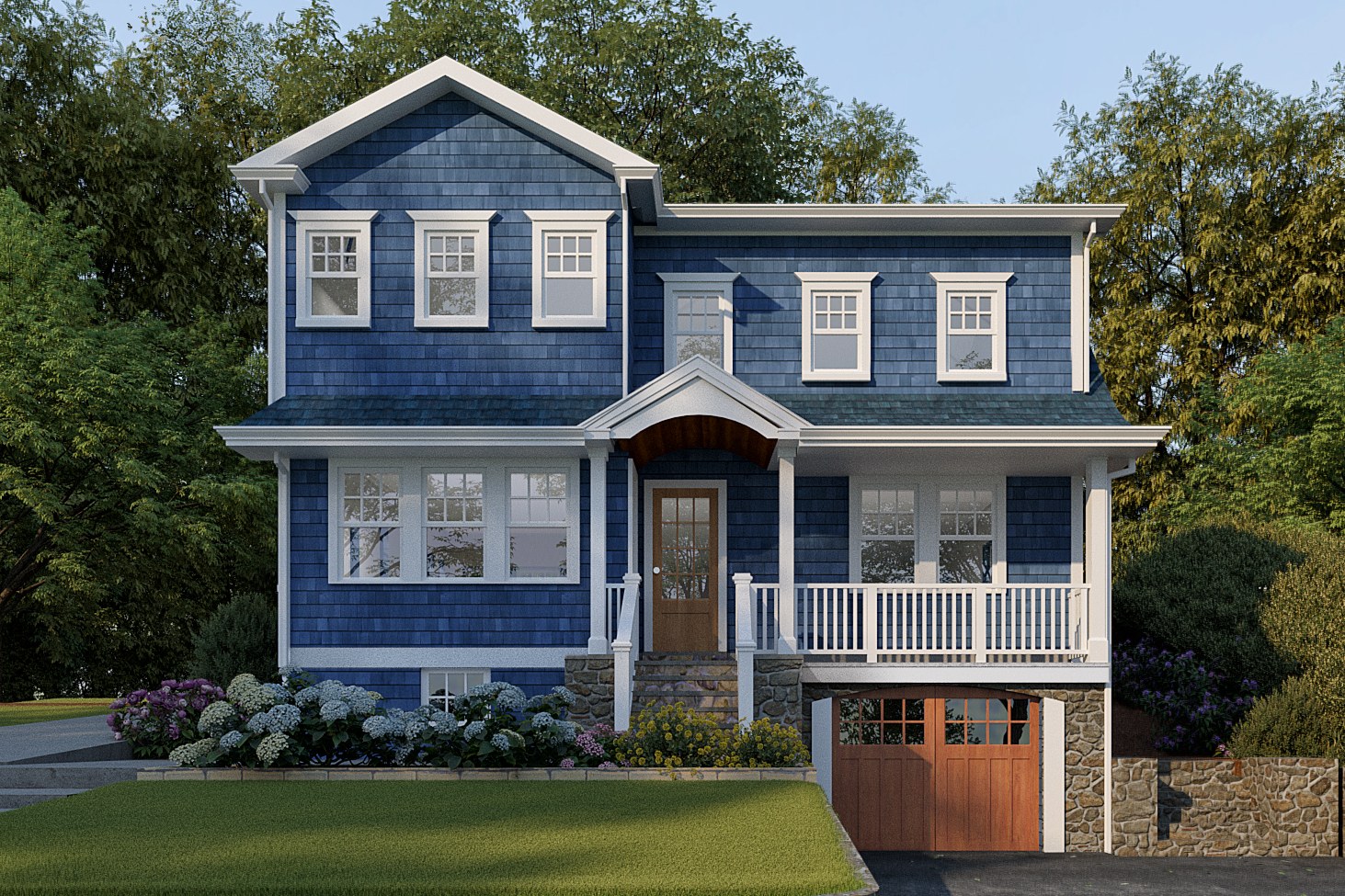
Stand where a person stands
Eye level, straight on — the height a visitor actually arrives at.
The most persuasive angle is usually the least clever one: the lens at human eye height, roughly where someone stands at the end of the drive. It reads as true because it is the height the building will one day be experienced from — not staged, just seen. Drone-high looks impressive and sells nothing; it flatters the roof and forgets the front door. When the story is “a home you walk up to,” put the camera where the feet go.
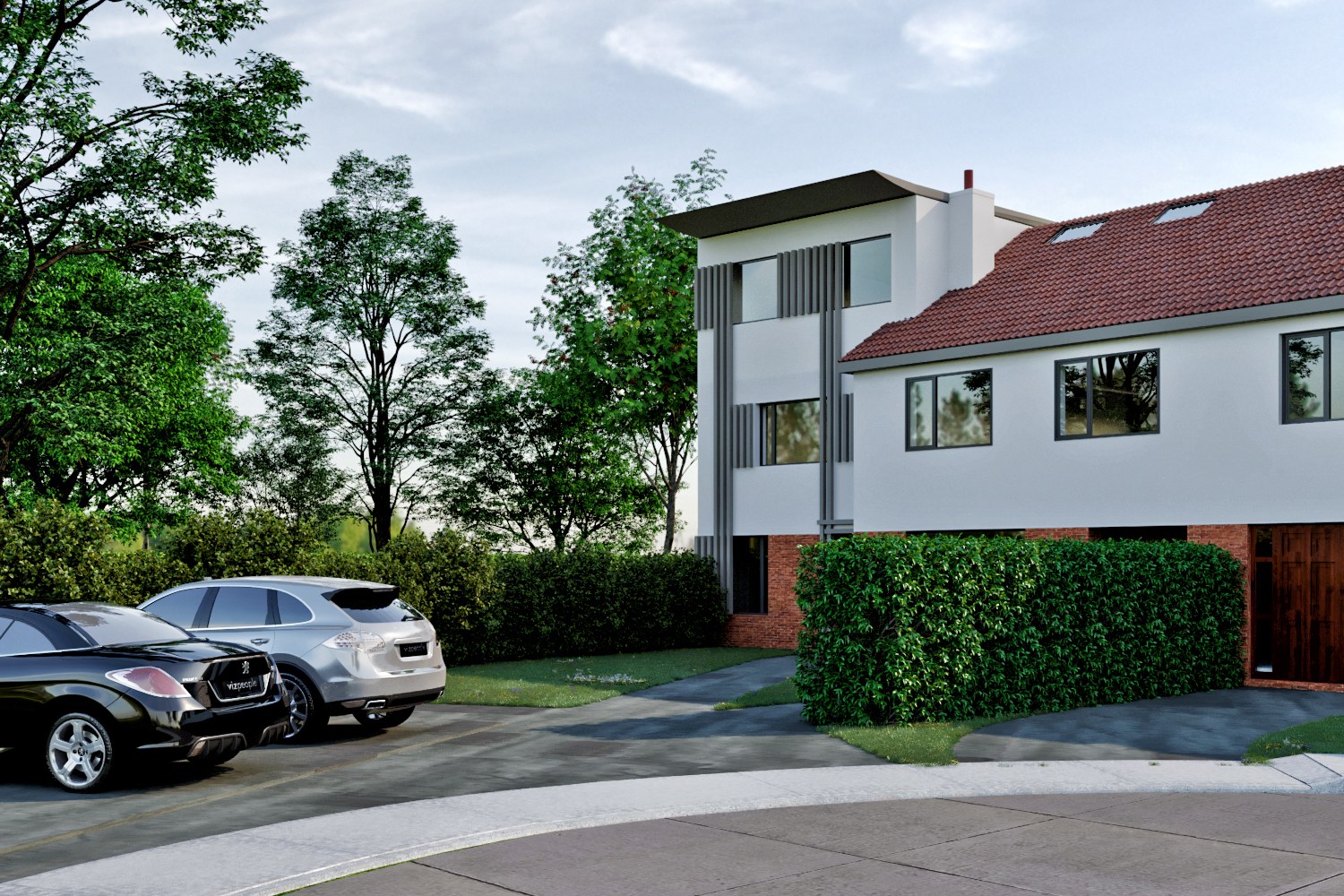
Turn the corner
A three-quarter view — so the massing has depth, not just a facade.
Shoot a building dead-on and you get an elevation: honest, flat, forgettable. Turn to a three-quarter view — two faces visible, the near corner leading the eye back — and the same building suddenly has mass, depth, and a sense of how it sits on its plot. This is the single most reliable upgrade to a weak render: stop photographing the facade and start photographing the form.
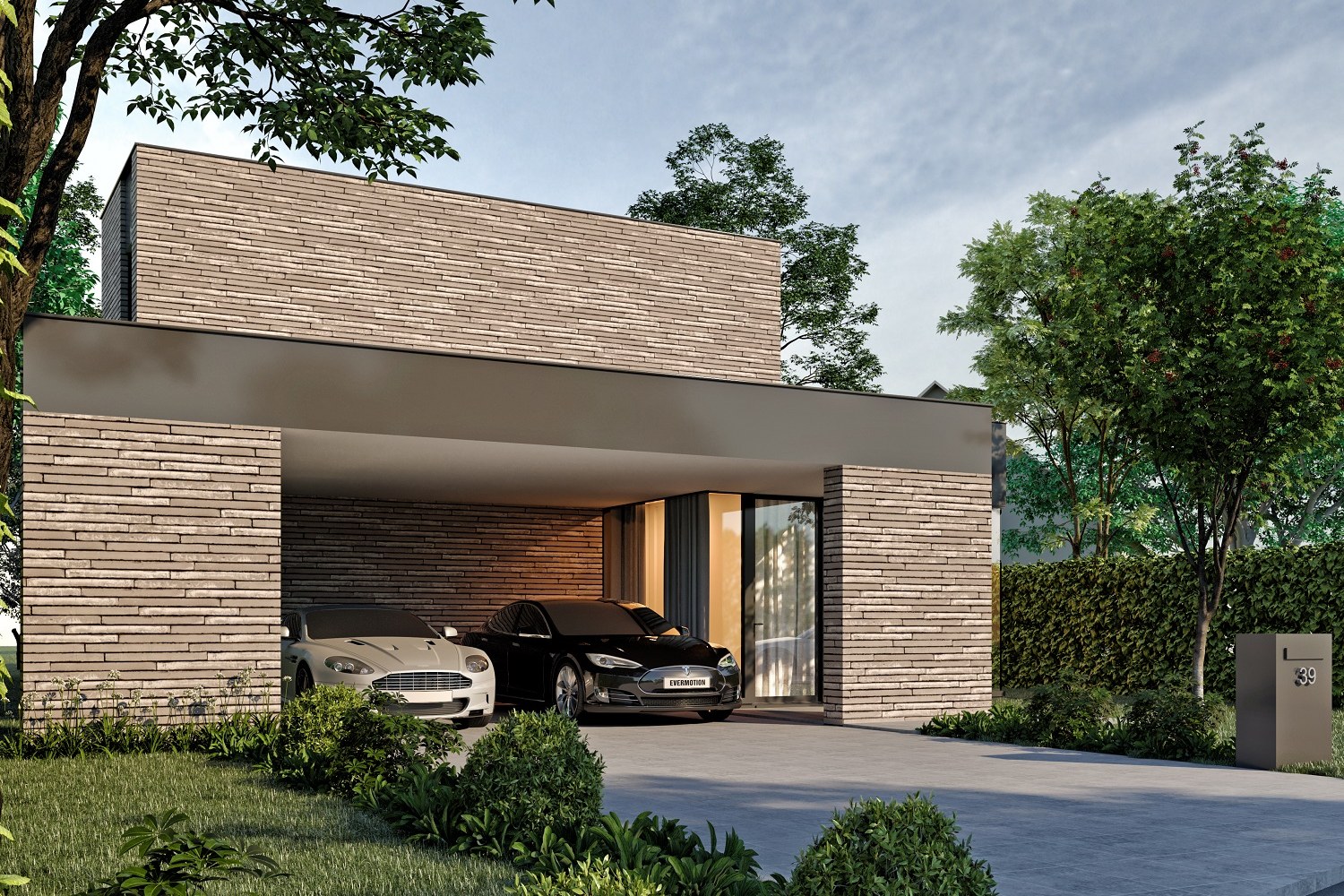
Frame it through something
A branch, a hedge, a run of planting — depth in the foreground.
A render with nothing between the lens and the building feels like a product shot. Let a tree branch cross the top of the frame, or a hedge lead in from the edge, and the eye gets a foreground, a middle and a distance — the image gains depth and, quietly, a place. Foreground is not clutter; it is the difference between a model floating in a void and a building that belongs somewhere.
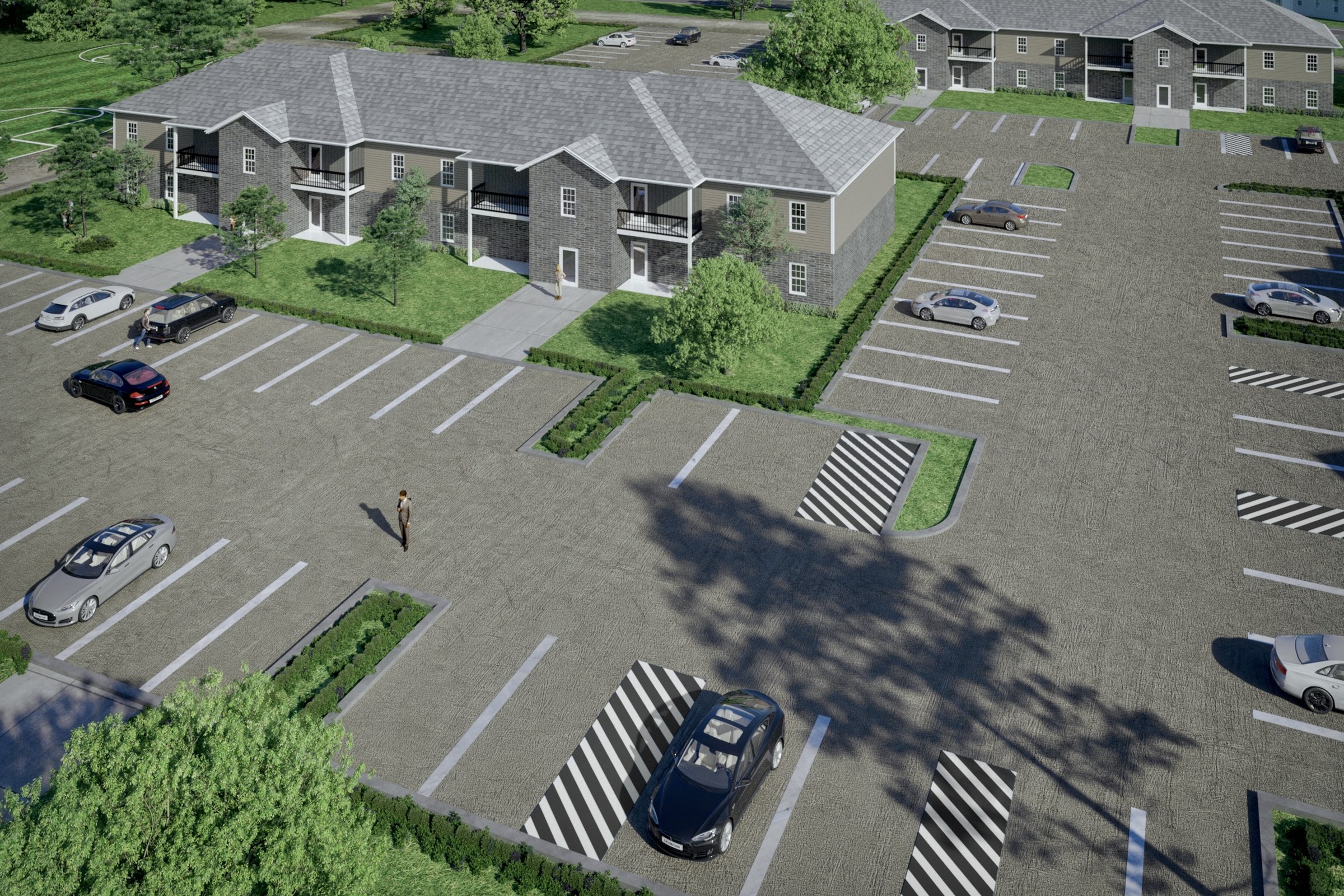
Only rise when the site is the story
Up high and oblique — when scale, density and circulation are the point.
The aerial is a specialist, not a default. When the subject is a community, a campus or a masterplan — how the parking flows, how dense it is, how the green space breaks it up — rise up and take the oblique. When the subject is a single front door, the very same height turns your building into a rooftop. Use altitude to answer the question the audience is actually asking.
Pick your one angle
Match the scheme in front of you to the viewpoint that already knows which story to tell.
- A single home, and the front door is the story Eye level, straight on, framed by planting.
- A building with real massing or two strong faces Three-quarter, low, read from the corner.
- A site — community, campus, masterplan Up high and oblique, so circulation and scale read.
- Mood is the selling point — dusk, a lobby, a room Get low, get close, and let the light lead.
You don’t need ten renders of the scheme. You need the one angle that already knew which story to tell.


