
How Many Projects in the Next 90 Days? Why the Answer Shapes How We Protect Your Design

One number tells us more about how to protect your design than a ten-line brief: how many projects are you visualising in the next 90 days?
It sounds like a sales question. It is closer to a craft question.
A render partner who is looking after one image for one project can afford to sit with it: the way a brass-edged mirror catches a second room, the throw of a single spotlight across a plaster wall. A partner who is looking after six projects at once cannot rely on attention alone. They need decisions that hold still while the work multiplies.
Those are different ways of working, and the practice should know which one it is buying.
One project: attention is the whole job
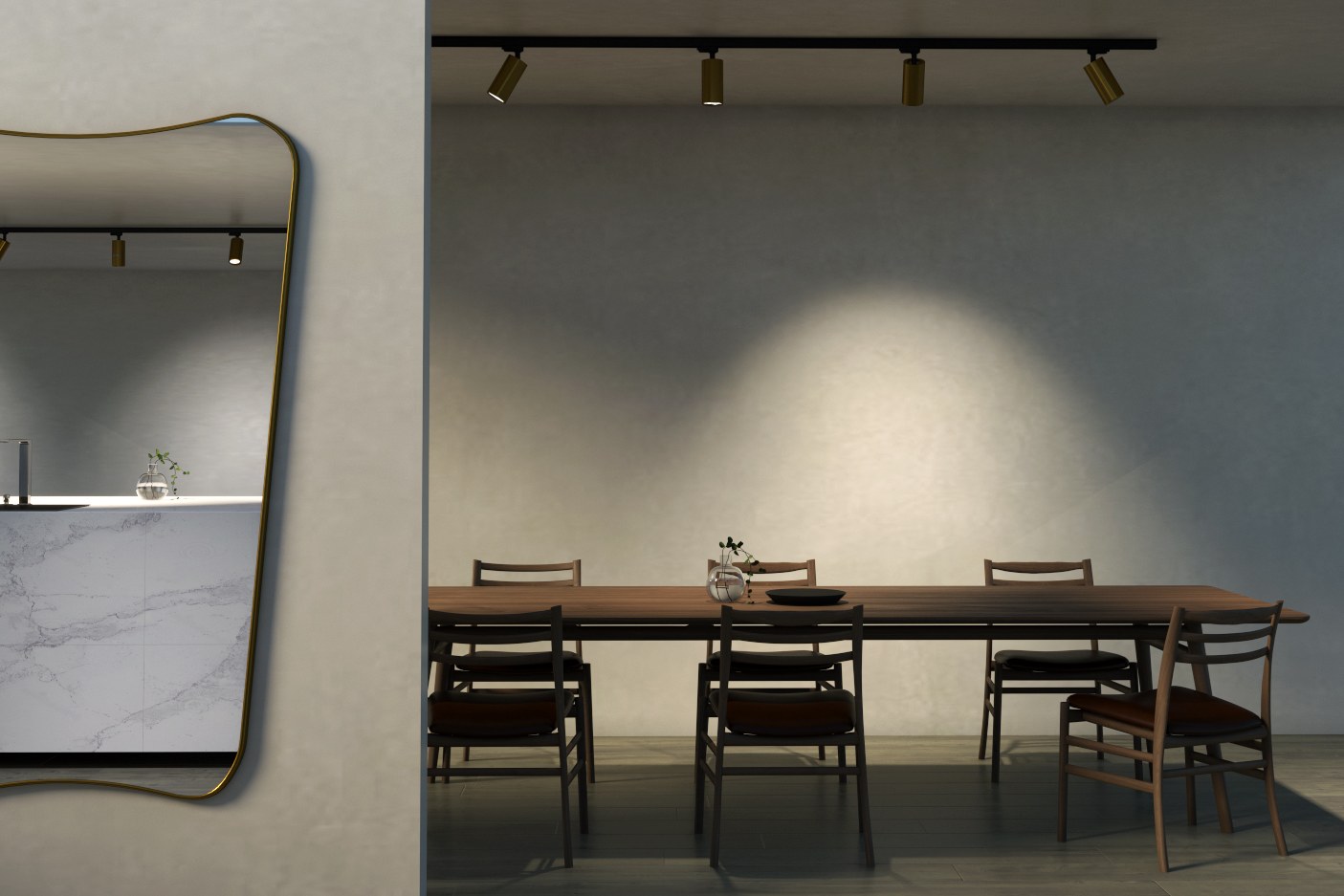
An image like this lives on restraint. There is very little in the frame, so every choice is exposed: the proportion of the table to the wall, the softness of the light pool, the exact warmth of the timber against the grey. Change any one of them slightly and the room stops being yours.
When the volume is one, the job is closeness. We work from your drawings and your material choices, agree the defining view first, and check each round against your intent rather than against our own taste. Revisions are a conversation with the person who drew the room, not a negotiation with a pipeline.
A handful: decisions you only make once
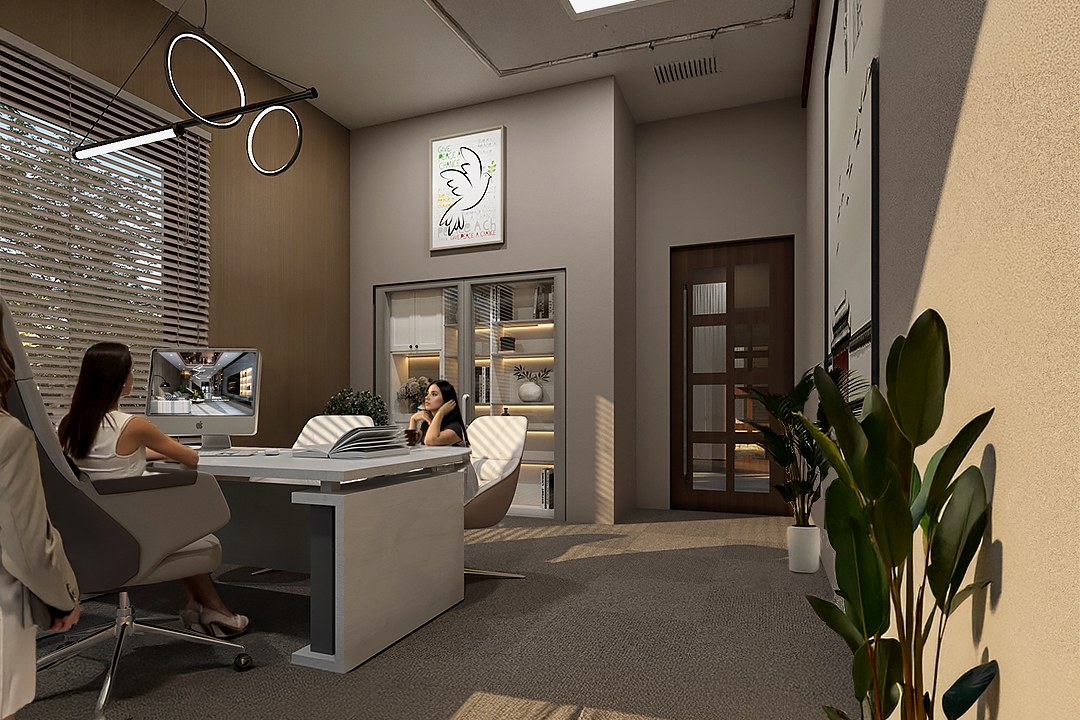
With a few projects running side by side, the risk changes. It is no longer that one image goes wrong. It is that each project quietly reopens the same questions: how warm is the light, how are people shown, how much of the plant life, what is the camera height. Every reopened question is a place where intent can drift.
So the better setup is to settle those things once, on your practice’s terms, and let them carry across. The materials library, the lighting mood and the camera habits become part of how we work with you, not something re-explained per job. Your projects still look like different projects. They just stop looking like different studios made them.
Many: a system that respects the drawings
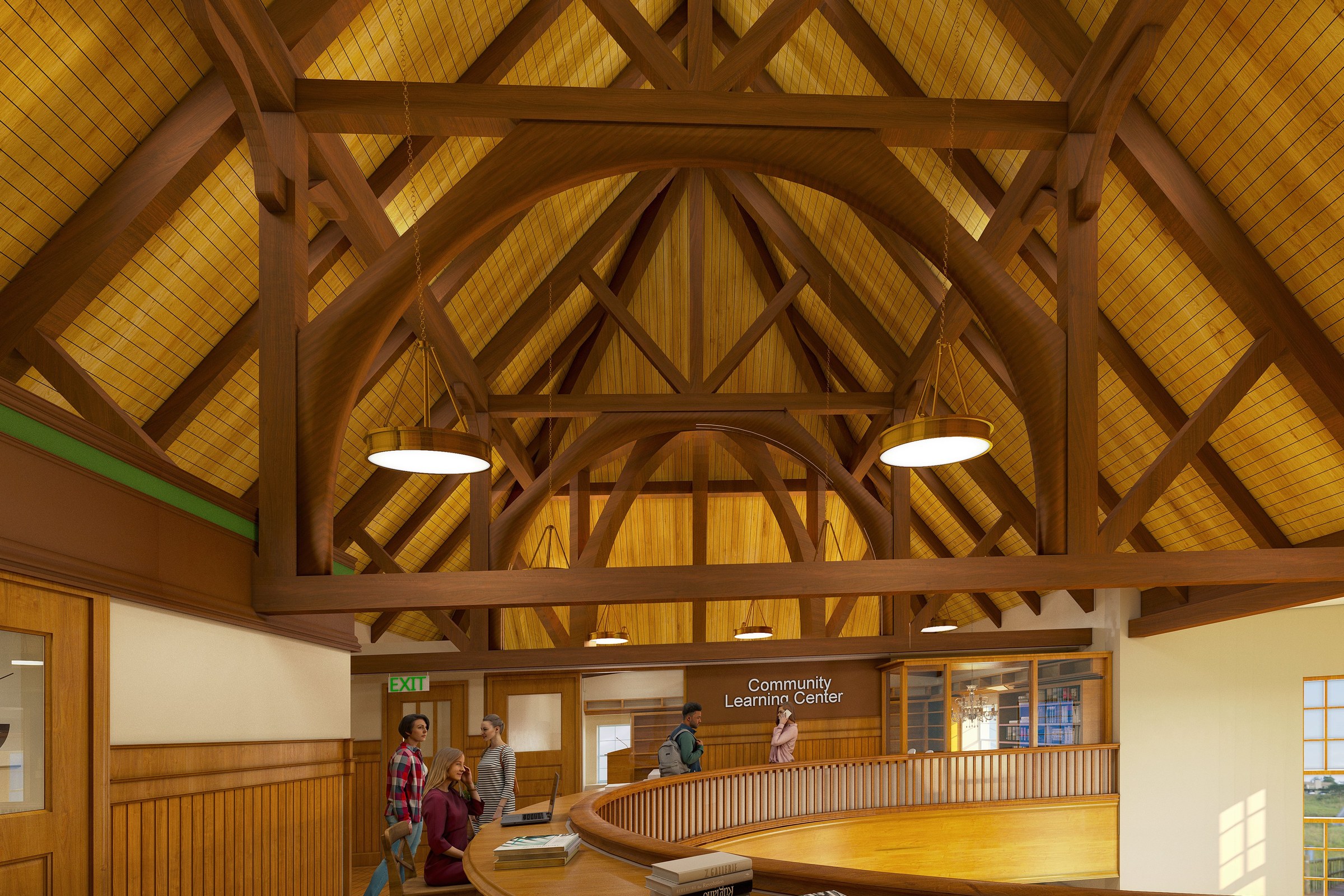
A space like this one has a great deal to get right: the geometry of the trusses, the rhythm of the boards between them, the way warm light climbs the timber. Now imagine several of those in a quarter. The only way to keep each one faithful is a clear order of work: one lead view per project agreed against your latest drawings, materials locked on that frame, supporting views following the same decisions, and a shared understanding of who marks up what and when.
At that volume, the aim is for revisions to stay small and predictable, because the large decisions were made early and in the open.
Why one digit is enough
We are not asking for a commitment, a budget or a brief. A single number is enough to start the right conversation, and it keeps us from sending a setup built for a different volume than yours.
The principle is the same at any size: your design is the thing being protected, and the way we organise the work should follow from that. A practice with one project and a practice with many both deserve a partner who treats their intent as the fixed point.
Reply with just a number: how many projects are you visualising in the next 90 days? 1, 2-5 or 6+. We will reply with the setup that usually fits that volume.


