
The Brief That Carries Over: Stop Re-Explaining Your Design Language Every Job

By the third job, the brief should fit on one page. If it doesn’t, nobody wrote the first one down.
When a practice commissions exteriors every month or two, something odd tends to happen. The work gets repeated, but the briefing does too. Every scheme starts with the same paragraph about how you like materials to read, the same reminder about the camera, the same note about what you never want to see in the foreground.
Nothing is wrong with any of it. It’s just effort spent saying things that haven’t changed. And every time you say them again, there’s a small chance they come out slightly differently.
The fix is a standing brief: a short page, written once, that travels with every job. The scheme-specific note then only has to say what’s new.
What goes on the standing page

Look at how much of this house is decided before a single scheme-specific comment is made. The dark roof planes against warm timber. The one rust-coloured volume that is allowed to shout while everything else stays quiet. The terrace that reads as part of the plan, not an add-on.
That is design language, and it’s the kind of thing that belongs on the standing page, in plain words:
- How your materials should read. Warm, matte, weathered, crisp. One line each.
- The one element you let be loud. Most good schemes have exactly one.
- How you like context handled. Trees, neighbours, street. Present but quiet, or part of the story.
- Camera habits. Eye level, aerial, a preferred lens feel. What you’d never choose.
None of this needs to be clever. It needs to be yours, and written down.
What stays out of it
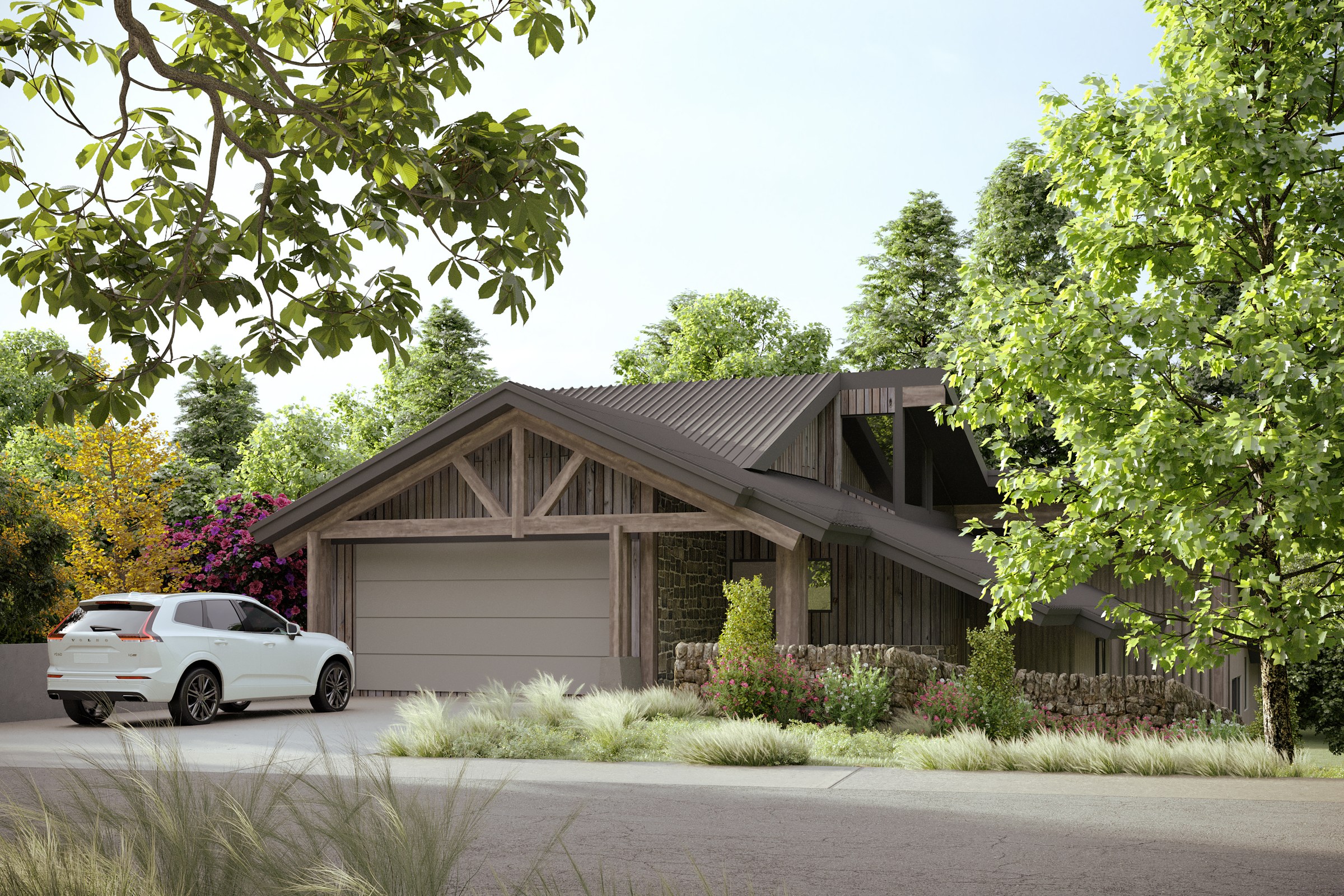
The standing page is not a rulebook. A house like this one, with its exposed truss, stone wall and grasses, is a conversation between materials. Freeze that into rules and you get a formula. Leave it as a few sentences about what you care about and you get a collaborator who can think.
So keep the page about intent, not instructions. Anything that changes scheme to scheme (the site, the light, the time of day, the specific revisions) goes in the job note, not here.
The job note: only what’s new
With the standing page in place, each new scheme needs three short things:
- The drawings as they stand today, with any change in your thinking flagged in a line.
- What’s different about this one. A tight site, a heritage neighbour, an unusual client.
- The deadline that matters, and who will be looking at the image.
That’s it. If you find yourself re-explaining the standing page, update the page. It should get slightly better every job.
Revisions get calmer, too
The best side effect isn’t speed. It’s that feedback stops being a negotiation about taste. When a comment arrives against a render, it can be checked against the page: is this the language we agreed, or a new decision? A new decision is fine, and it goes on the page. A drift gets corrected without anyone feeling second-guessed.
That’s what keeps revisions a conversation rather than a fight.
The short version
- Write the standing page once. Materials, the one loud element, context, camera habits.
- Keep it about intent. A few sentences, not a rulebook.
- Make each job note only what’s new. Drawings, what’s different, the deadline.
- Update the page when a decision changes. Let it improve every round.
Commissioning exteriors regularly? Send us your next scheme with a few lines on how you like things to read, and we’ll help you shape a standing brief from it. No ask beyond that.


