Land, Launch Date, or Already Selling? What Your Render Has to Protect at Each Stage

Your design didn’t change between the site purchase and the sales launch. The picture of it has to.
Ask an architect what a rendering is for and you’ll hear one answer. Ask them again at three different points in a project and you’ll hear three.
That’s the thing worth naming. A render is not one deliverable. It’s a tool that gets asked to do a different job depending on where the project stands, and most of the frustration people have with visualization comes from using the wrong tool for the stage: a polished hero image when the question is still “does this massing work on this plot,” or a loose study image when a buyer is about to read it as a promise.
Three stages come up again and again. Here’s what each one asks of the image, and what your design intent needs from it.
Stage one: the land is secured, and there are no visuals yet
At this point the design is still a conversation, and the image’s job is to make the conversation clearer, not to close it.
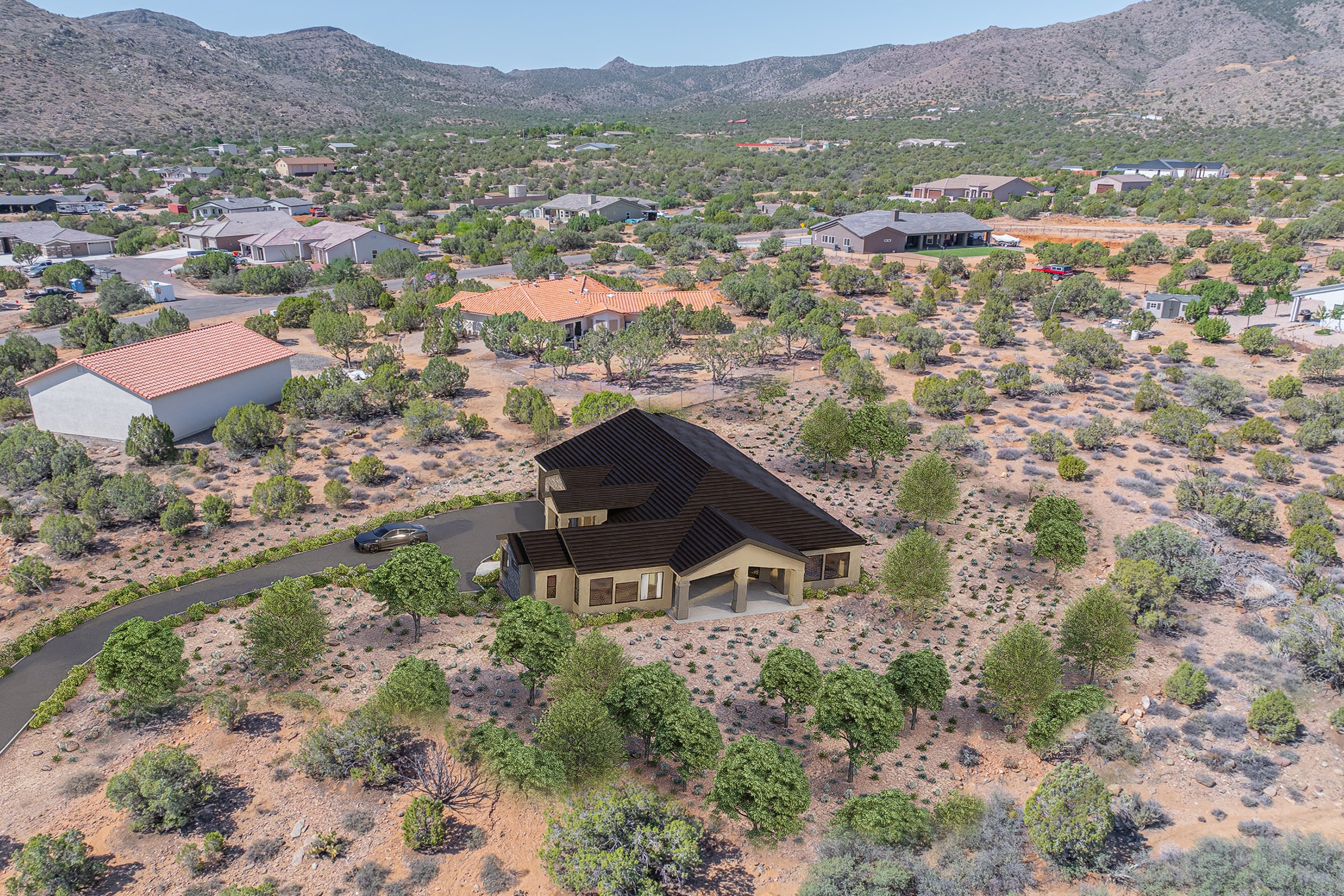
What the image has to protect here is the relationship between the building and its ground. Where it sits on the plot, how it meets the slope, what it does to the views of the neighbours, how it reads from the road. An aerial that places the proposal into its real surroundings, like the one above, answers questions a plan can’t: does the roofline sit quietly in this landscape, or shout?
What to hold back at this stage: finish detail you haven’t decided yet. A render that shows a specific brick, a specific balcony rail, a specific shade of render before you’ve chosen them quietly makes those choices for you. Clients fall in love with what they were shown, and then the real decision arrives and feels like a downgrade.
A useful brief at stage one: the site, the massing, the two or three viewpoints that matter, and a plain statement of what is still open.
Stage two: the launch date is set
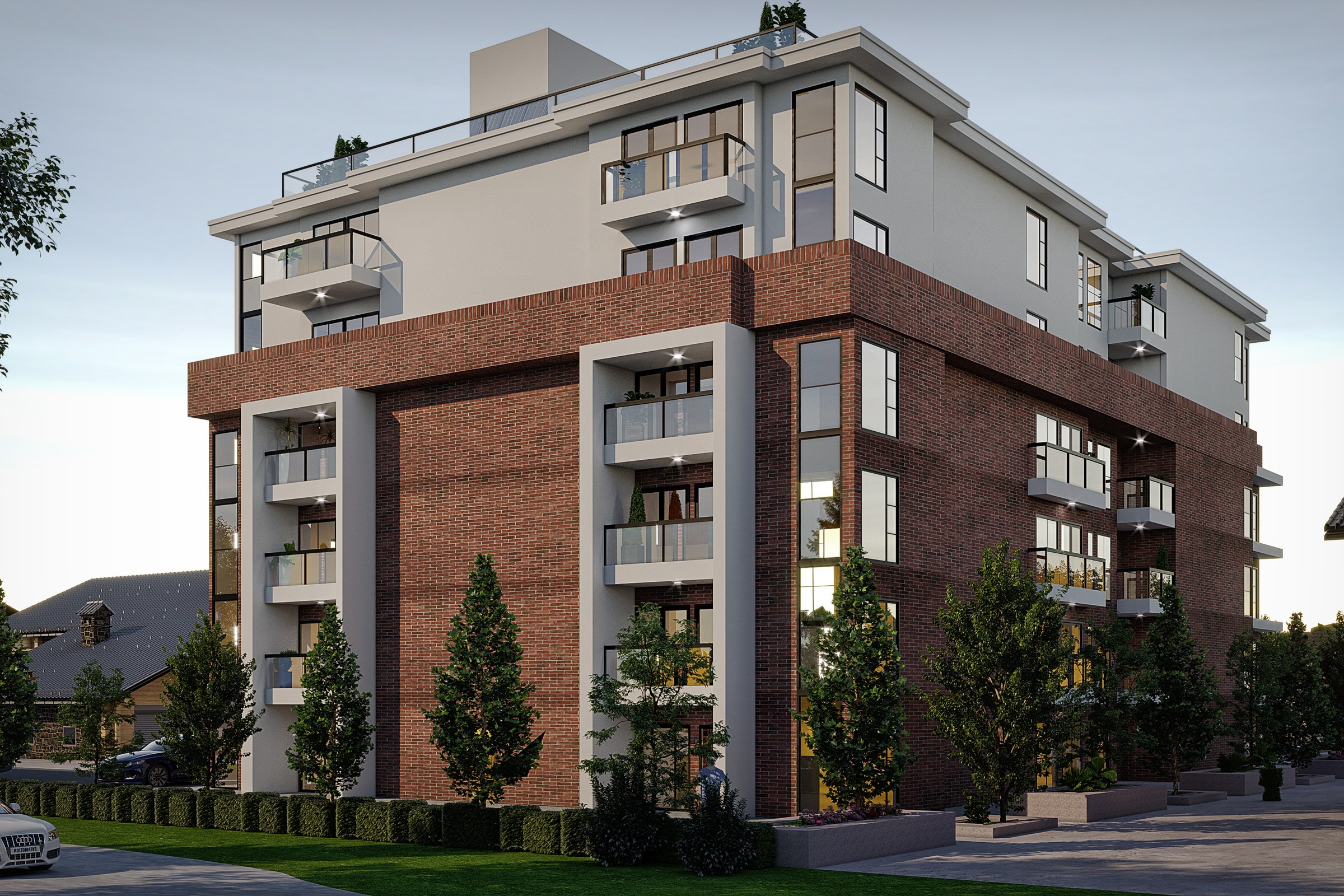
Now there is a date, and the image becomes a commitment.
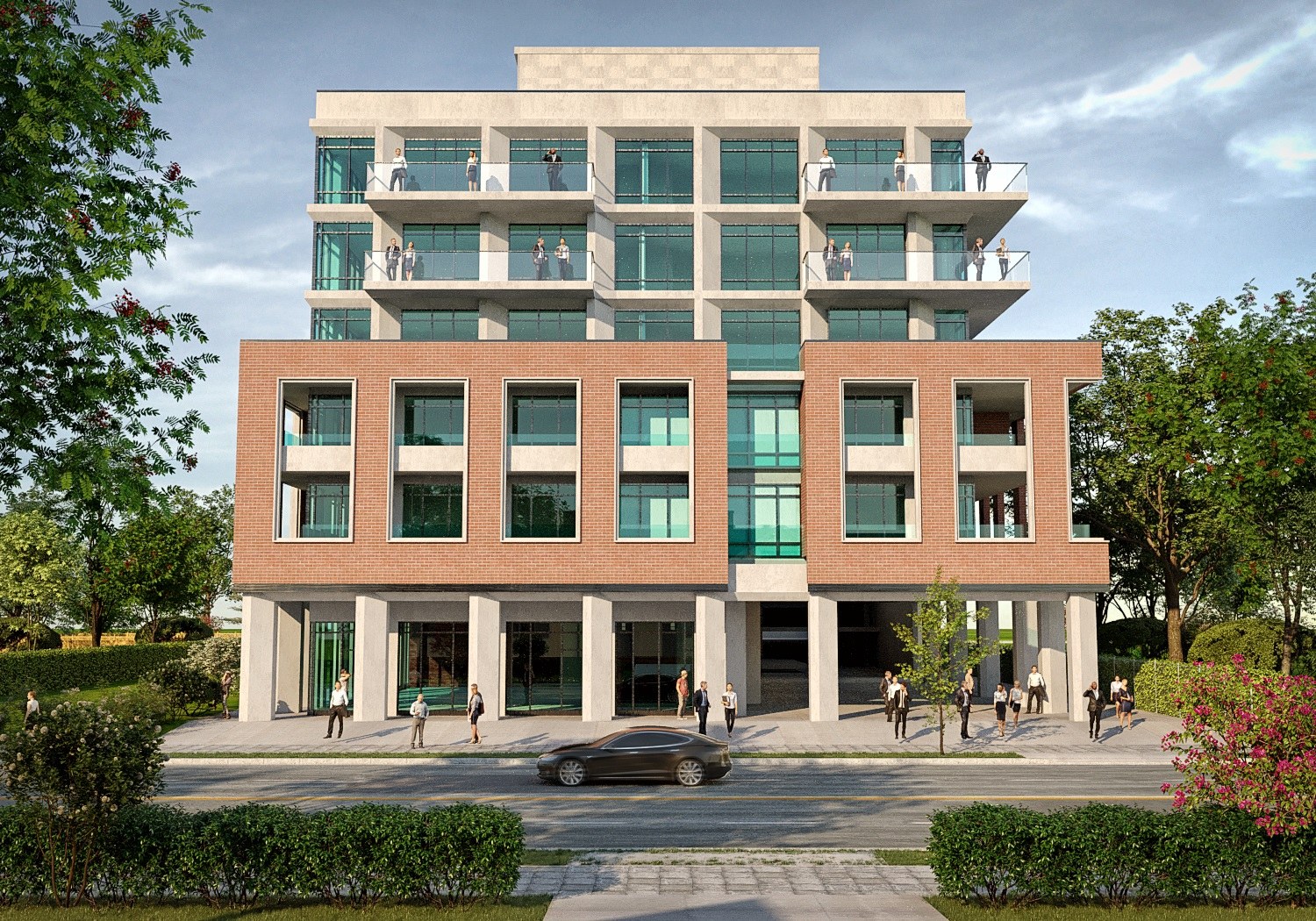
What the image has to protect here is the details that make your building yours: the proportion of the brick base against the lighter upper floors, how deep the balconies sit, where the glazing catches the light. These are the things that get flattened first when a render is rushed, because they’re the things that take care.
This is also the stage where revisions can turn into a fight. The way to keep them a conversation is to agree, before the first frame, what each round is for. Round one: is the design read correctly? Round two: is the light and mood right? Round three: polish. When feedback stays inside its round, nobody is surprised, and the design survives the process.
A useful brief at stage two: approved drawings, material decisions, a fixed list of views, and one person who can say “yes, that’s the building.”
Stage three: it’s already selling
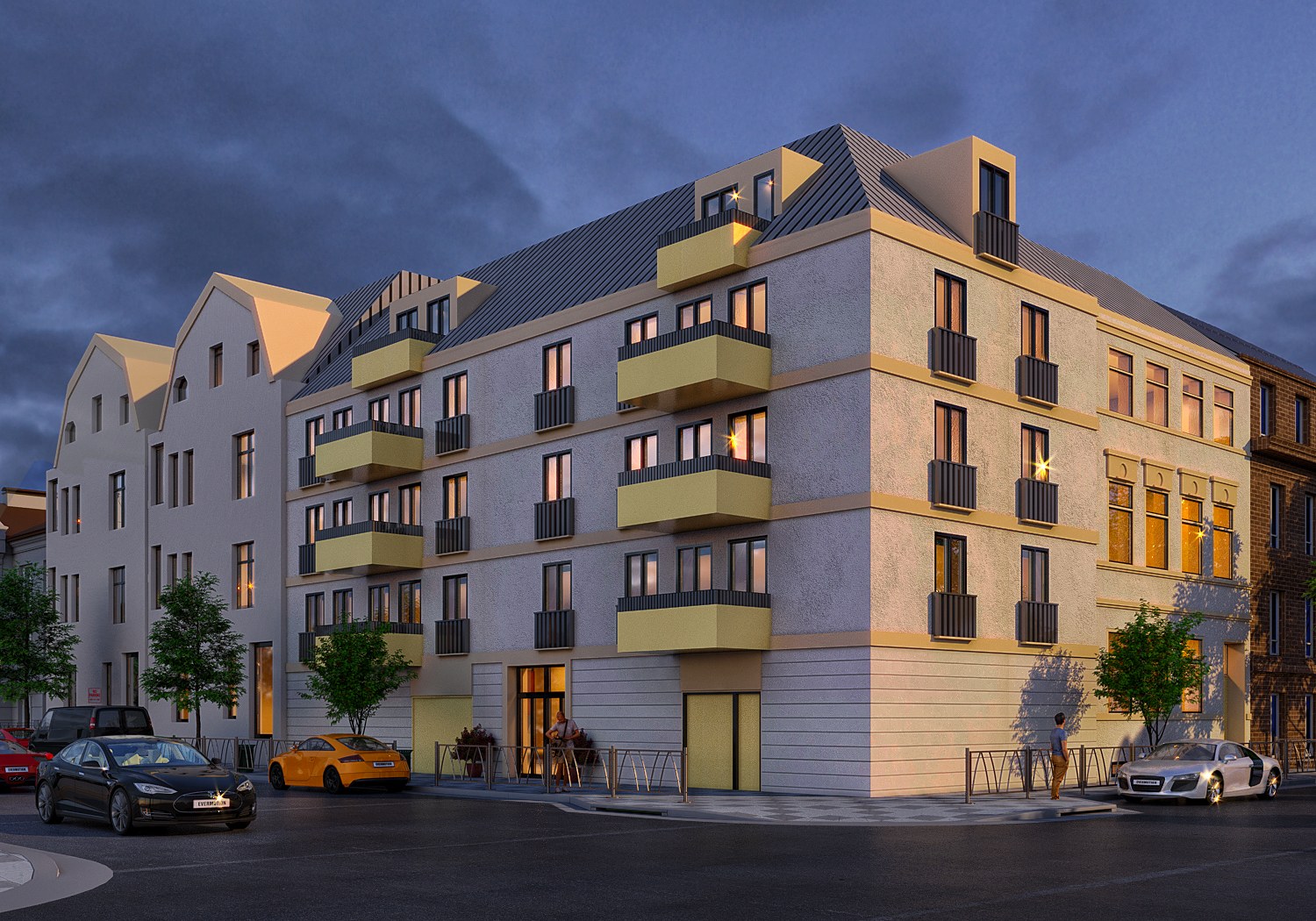
Once you’re selling, the image stops being a proposal and starts working for a stranger deciding whether to walk in.
What it has to protect here is honesty about the built result. Buyers hold the finished building up against the picture. A render that made the street feel wider, the balconies larger, or the neighbours disappear will cost you later, and it costs the architect too, because the building gets blamed for the image.
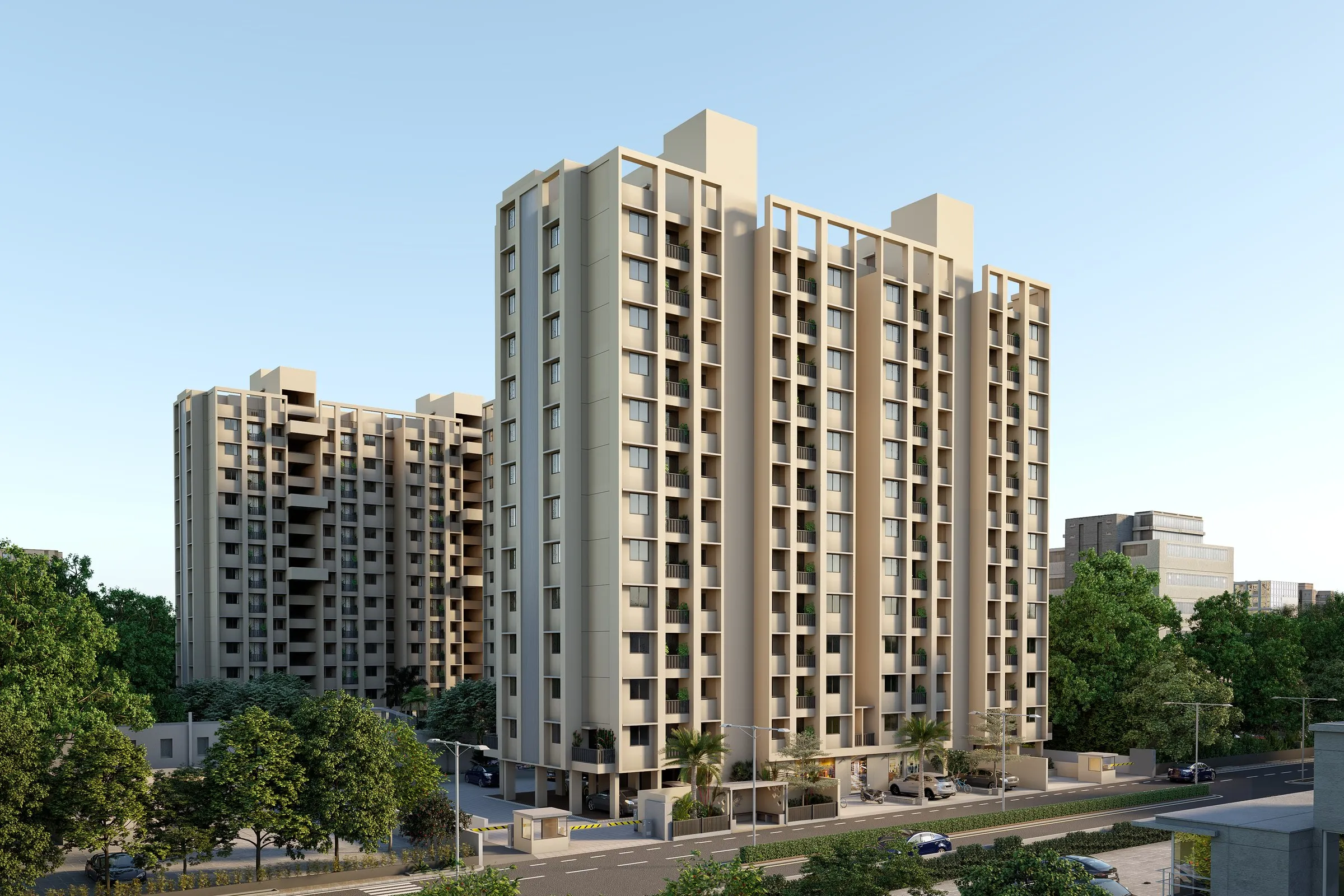
The dusk view above is the kind of image that works at this stage: warm windows, a street with life in it, the building shown in context. It sells the feeling of arriving home while staying true to the massing.
A useful brief at stage three: the mood you want the buyer to feel, the times of day that suit the building, and the frame that matches how people will actually approach it.
The pattern underneath
Across all three stages, the design intent stays the constant and the image changes around it.
- Early: protect the relationship to the site. Leave open what is open.
- Mid: protect the details that make the design specific. Keep revision rounds honest about their purpose.
- Late: protect the truth of the built result. Make it feel like arriving.
If you’re not sure which stage you’re in, that’s a useful signal in itself. It usually means the brief hasn’t been written yet, and writing it is most of the work.
Not sure which of the three you’re at? Send us a line about where the project stands: land secured, a launch date set, or already selling. We’ll reply with how we’d approach the images for that stage, and what we’d need from you to protect the design as drawn.