
Price or Plan? The Two Questions Worth Answering Before You Commission a Render

Before you brief a render, you are really asking two things: what will it cost, and how will you get there without losing your design along the way?
Most practices ask the first question first, and sensibly so. A number tells you whether the conversation can continue. But the second question quietly decides whether the number turns out to be the real one, and whether you recognise your own design when the image arrives.
So here are both, in the order we would think about them.
The price question: what actually moves a number
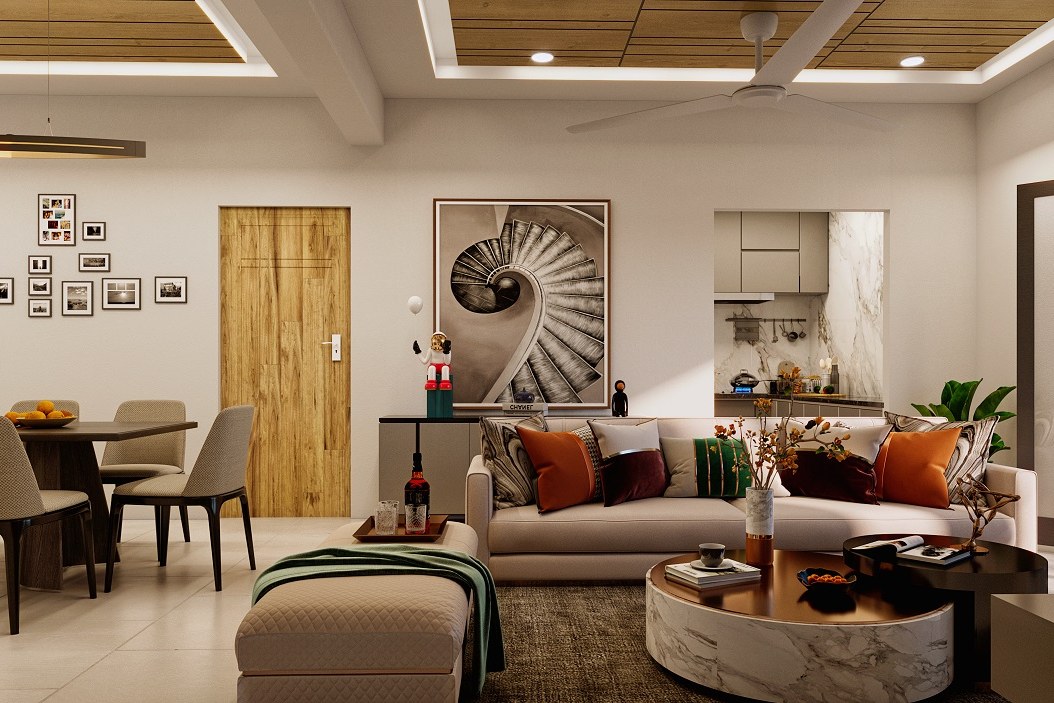
A frame like this one is a useful way to see it. Very little of what makes it read as a considered room is accidental. The recessed timber ceiling, the stone on the coffee table, the kitchen glimpsed through the opening, the way light falls across the sofa: each is a decision someone had to make, and each is something a render either carries or flattens.
Price tends to follow the same few things, whatever the practice or project:
- How much of the space is in view. One corner of a room and a room seen whole are different amounts of modelling.
- How resolved the design is. A scheme with chosen materials and furniture is quicker to build faithfully than one still being decided. If it is still moving, say so. It is not a problem, but it changes the conversation.
- What the image has to do. A frame that must hold up beside your drawings in a client review asks more of the surfaces than a mood image for early discussion.
- How many rounds of change you expect. Revisions are normal. It is easier to plan for them than to be surprised by them.
That is why we would rather give a rough range against your actual scheme than a generic rate card. A range is honest about what is still open.
The plan question: how it gets sequenced
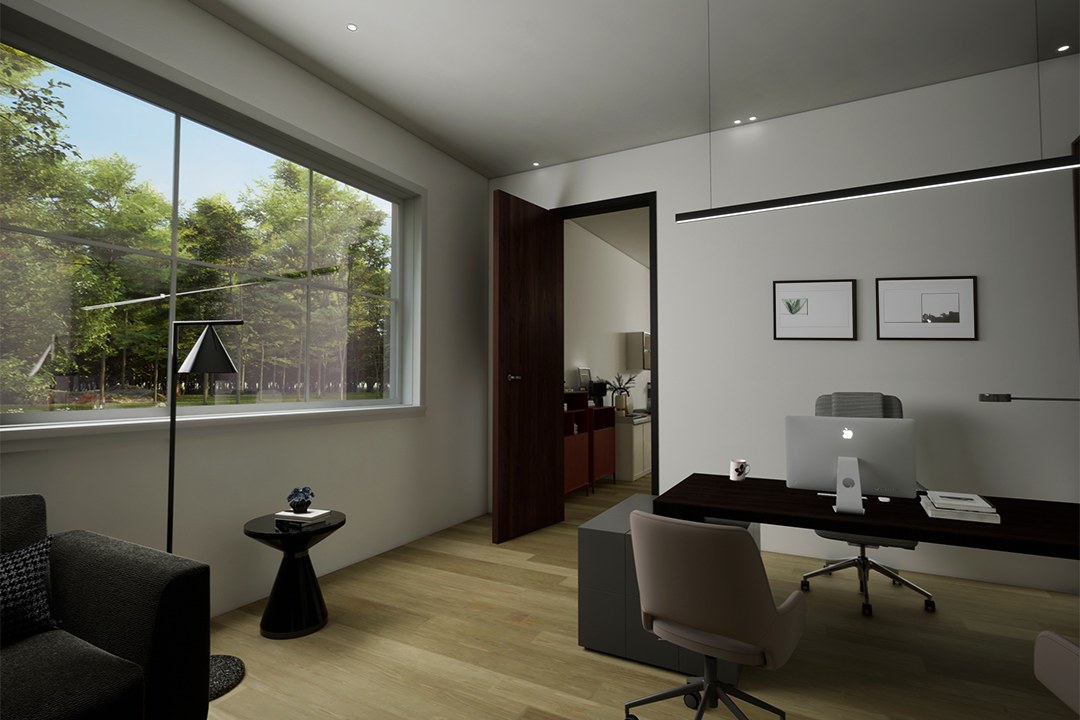
A quiet room like this is where intent is easiest to lose. The long pendant, the dark door against pale walls, the tree line through the window: the whole image rests on proportion and restraint, and it only takes one careless choice to make it feel like a different building.
Sequencing is how you protect that. In practice, a sensible launch of visuals for a project looks something like this:
- Agree the defining view first. The one frame that carries the scheme, checked against your latest drawings.
- Settle materials and light on that frame. Once they are agreed, every later image inherits them instead of reopening them.
- Extend to the supporting views. The remaining frames follow the same decisions, so the set reads as one design.
- Decide what else the launch needs. Teaser frames, a longer set, motion: add them once the base is locked.
- Know who marks up what, and when. Revisions become a conversation when everyone knows which round they are in.
None of this is complicated. It just has to be said out loud at the start, rather than discovered halfway through.
Context belongs in the plan too
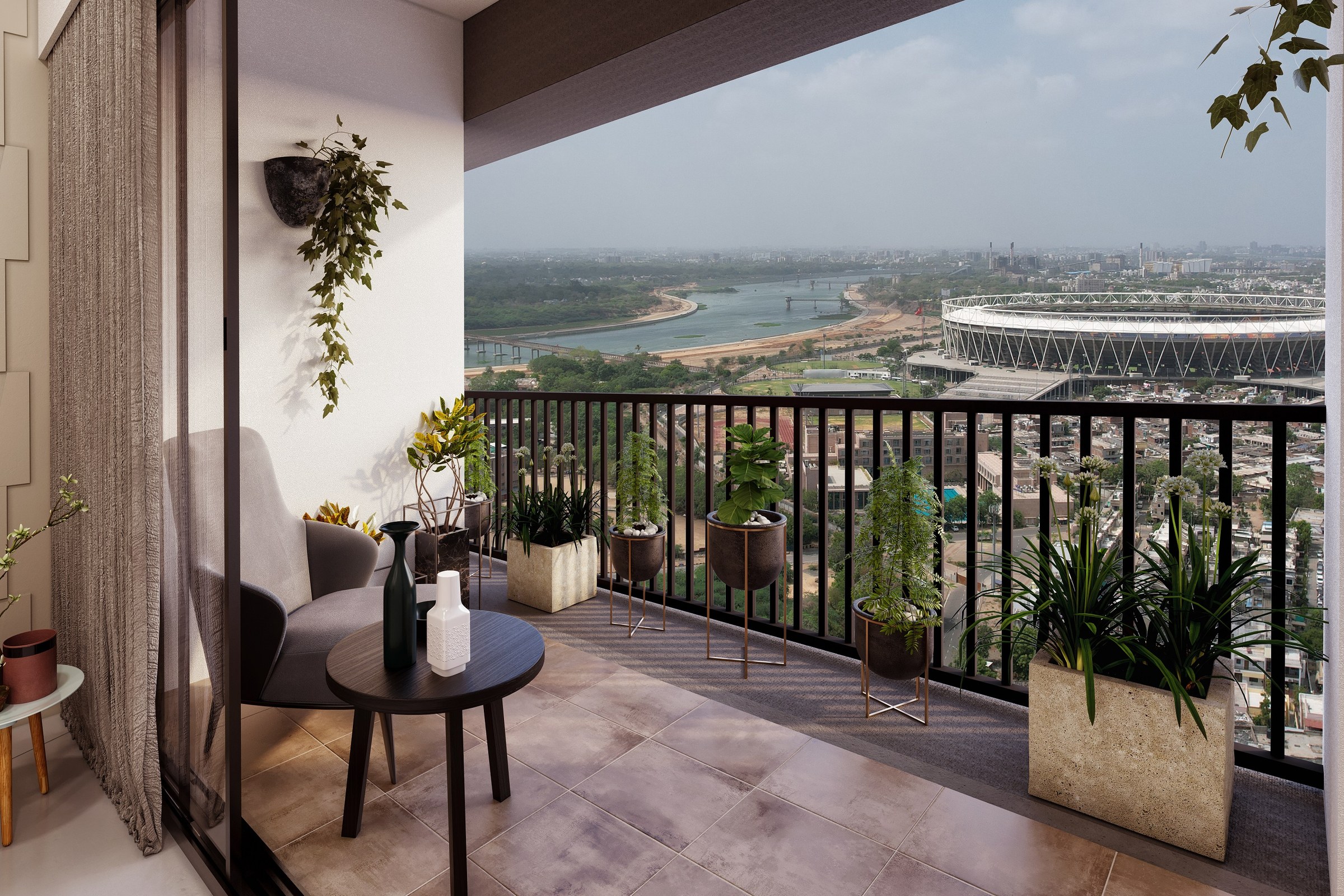
Some images are as much about where the room sits as what is in it. Here the planters, the railing rhythm and the long view are working together. When a view carries the sale or the argument, it is worth planning for early, because it changes the camera, the light and the order in which you would want frames.
Why we ask both
A price without a plan is a guess about someone else’s design. A plan without a price is a conversation that cannot land. Together they let a practice decide quickly whether to go ahead, and let us start from your drawings rather than our assumptions.
We build for practices who care that their intent survives the image, and who want revisions to feel like a conversation rather than a fight. That is the standard we hold ourselves to.
Which would help you more right now? Reply “price” and we will send a rough price range for a teaser frame. Reply “plan” and we will send a short note on how we would sequence launch visuals for your next project. One word is enough, and we will send it the same day.


