
One Frame, Three Crops: What Survives When Your Building Goes to the Feed

Your hero frame will be cut into at least three shapes you never drew it for. The only question is which part of the building gets cut off first.
An off-plan launch rarely uses a picture once. The same image goes on the sales portal as a wide banner, into a paid social post as a 4:5 portrait, and into a short vertical reel as 9:16. Somebody, usually the marketing team late on a Thursday, does the cropping.
Nobody is being careless. A wide frame simply has to lose something to fit a tall phone screen. What decides whether your scheme still reads is what was standing in the middle of the frame when they cut.
Here is how we think about it, and what is worth agreeing before the first frame is drawn.
1. Find the part of the design that must not be cropped
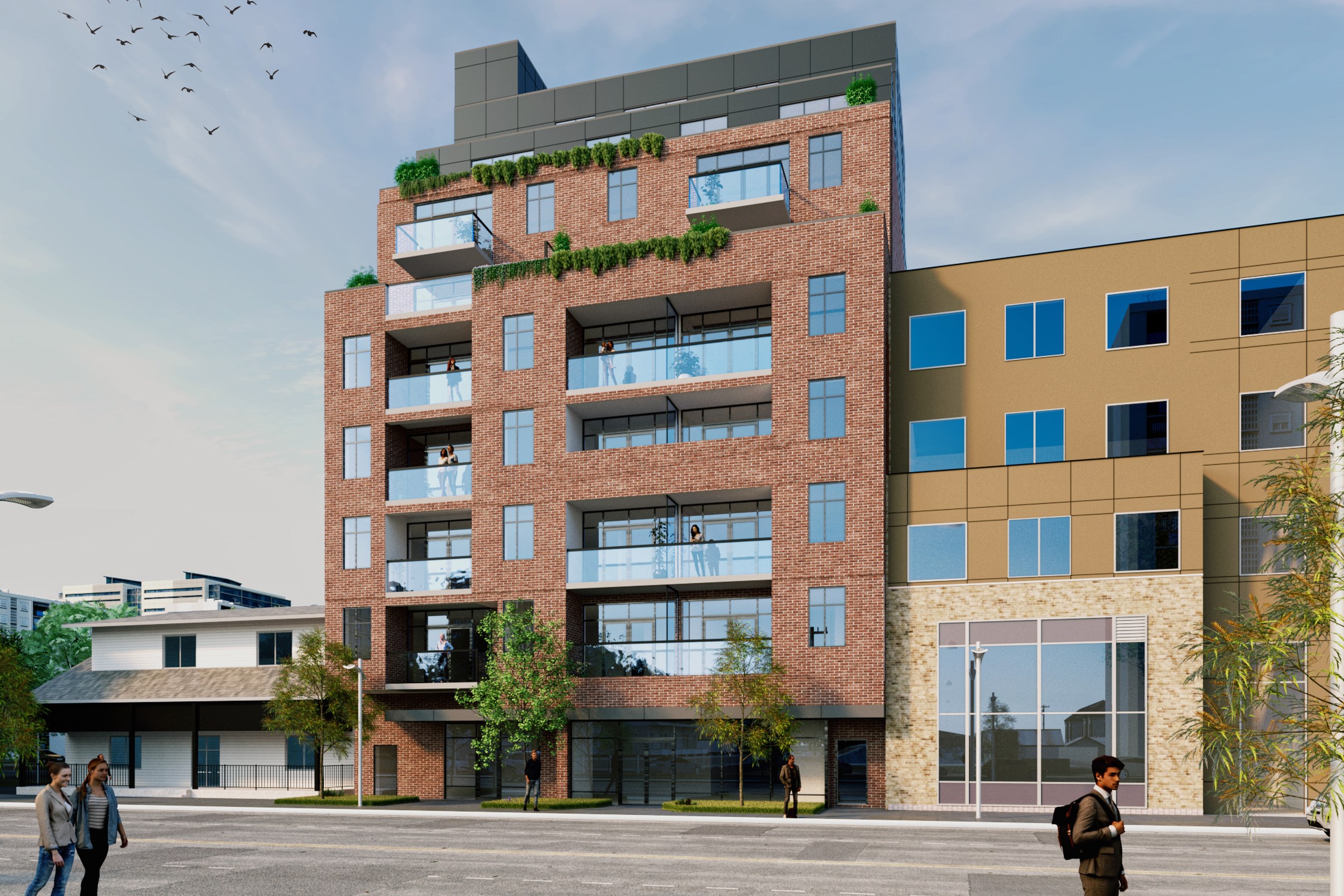
Look at a frame like this and ask what you would be upset to lose. For a lot of architects the answer is not “the building”. It is a relationship: the recessed balconies stepping back as the block rises, the planted terraces on the upper setbacks, the way the ground floor opens to the street.
A tall, narrow building survives a vertical crop well. It would lose its neighbours, though, and the neighbour is part of the argument about how the block sits in its street. A low, wide scheme is the opposite: it fills a banner and gets squeezed in portrait.
What to ask for: before any rendering starts, name the one or two things in the design that must still be visible in every crop. Everything else can flex.
2. Draw the frame with a safe core
The practical version of that rule is a safe core: the central area of the frame where the essential parts of the design sit. The wide version extends beyond it with context, sky and ground. The portrait and vertical crops cut into the margins, and the core stays whole.
It is a small discipline, and it has a side effect that architects tend to like: the camera is forced to be honest. A composition built around the real massing and the real approach does not have a dramatic cropped-in angle to hide behind.
What to ask for: a hero frame composed with the portrait and vertical crops marked on it, so you can see in advance what each version will contain.
3. Context is what you can afford to lose; the entrance is not
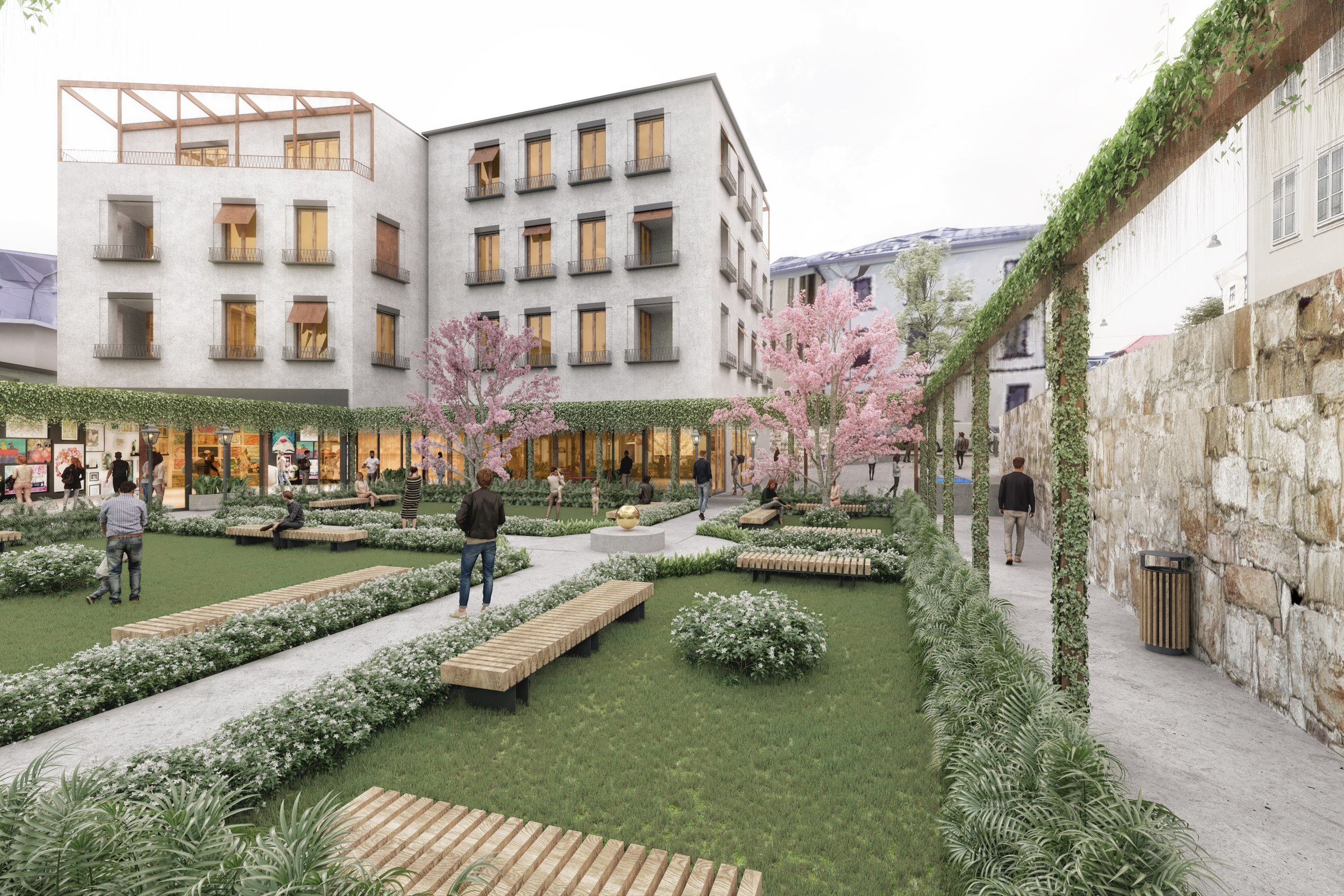
In a courtyard scheme the interest is spread across the frame: the arcade, the planting, the lit windows above, the old wall. A vertical crop will take a slice of it, and the slice you keep decides what the viewer thinks the project is.
This is where you can make the call rather than leave it to chance. Is the project about the garden, or about the elevation behind it? Is the arcade the signature, or the stone wall that was already there? Say so in the brief, and the crop that goes to the feed will lead with the part of the design you would have chosen.
What to ask for: a one-line statement of what the project is, in your words. It is the cheapest tool you have for steering every crop made after you stop looking.
4. A teaser reel is the same frame, in order
A short reel for paid social is easiest to protect when it is built from the same material as the hero frame: the same camera heights, the same light, the same context, shown in a sequence. A reel made from a different set of views starts to feel like another building.
That is also why it works well to commission the two together. The hero frame fixes what the building looks like. The reel only has to move through it, using the same safe core for each vertical shot.
Keep the reel plain. A few seconds on the approach, a few on the detail you care about, a few on the setting. Resist anything the drawings do not support, such as a flourish on the roofline or a camera that rises to a height nobody would ever stand at.
The short brief that keeps it all intact
- The thing that must survive. One or two design moves that stay visible in every crop.
- The approach view. Where someone first meets the building in real life. Start the hero frame there.
- The context to keep. The neighbours, trees and street edges that are part of the story.
- Where it will run. Portal, feed, vertical. Tell us up front, so the crops are planned, not improvised.
- What is still open. Say so plainly, and it stays open instead of being invented.
With that agreed, revisions become a conversation about whether the picture matches the building you designed. It stops being a fight over taste, and nobody ends up redrawing your scheme in the crop.
Have a scheme heading to market? Send us the approach view and the one thing that must not change, and we’ll come back with a free angle idea that respects both.


