
From Site Plan to Hero Frame: What Actually Makes a First Image Fast

A first image is fast when the questions are answered before the render starts. Not when the render is hurried.
Ask a practice what they want from visualisation at the pre-sales stage and the answer is usually the same: one convincing frame, soon, that they would not be embarrassed to put in front of a buyer. Ask what goes wrong and the answer is also the same: the image arrives, and it is not quite their building.
Those two complaints are connected. Most of the time we lose is spent on a wrong guess being corrected. So the fastest route from a site plan to a hero frame is the one with the fewest wrong guesses in it.
Start from the plan, not from the picture
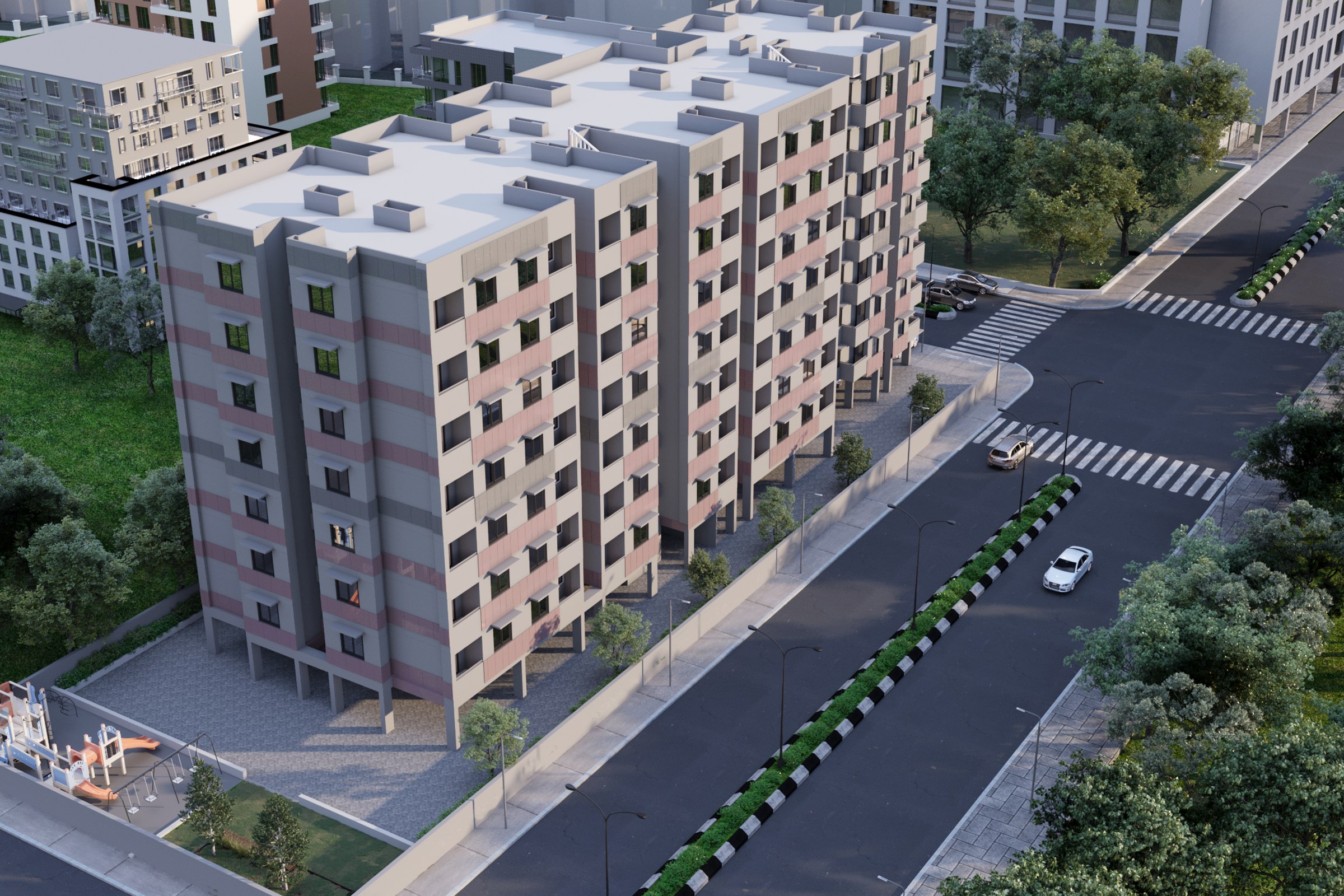
A frame like this one is a good test of why. Before anyone chooses a camera, a plan has already decided a lot: where the block sits against the street, how the open ground falls beside it, what the neighbours are doing. Get those right and the rest is a question of taste. Get them slightly wrong and no amount of polish rescues it.
So the first step is plain: read the plan and the elevations the way the architect drew them, and write down what must not change. Proportions, the rhythm of the façade bands, the stilted ground floor, the relationship to the street. We would rather ask one dull question on day one than discover the answer in a revision.
Where the time really goes
If you strip a hero frame back to its stages, they are roughly these.
- Reading the drawings and agreeing what is fixed and what is open.
- Building the massing and the site to the plan, with the context that places it.
- Choosing the view. Where the camera stands decides what the image argues.
- Materials and light, checked against your palette and your intent.
- The finishing pass: planting, people, vehicles, small things that make it read as a place.
The stages that cost the most time are the ones that get redone. Stages 1 and 3 are where a redo is most expensive, and they are also where the practice’s own judgement matters most. That is why we spend our care there and not at the end.
Where AI-assisted tools help, and where they do not
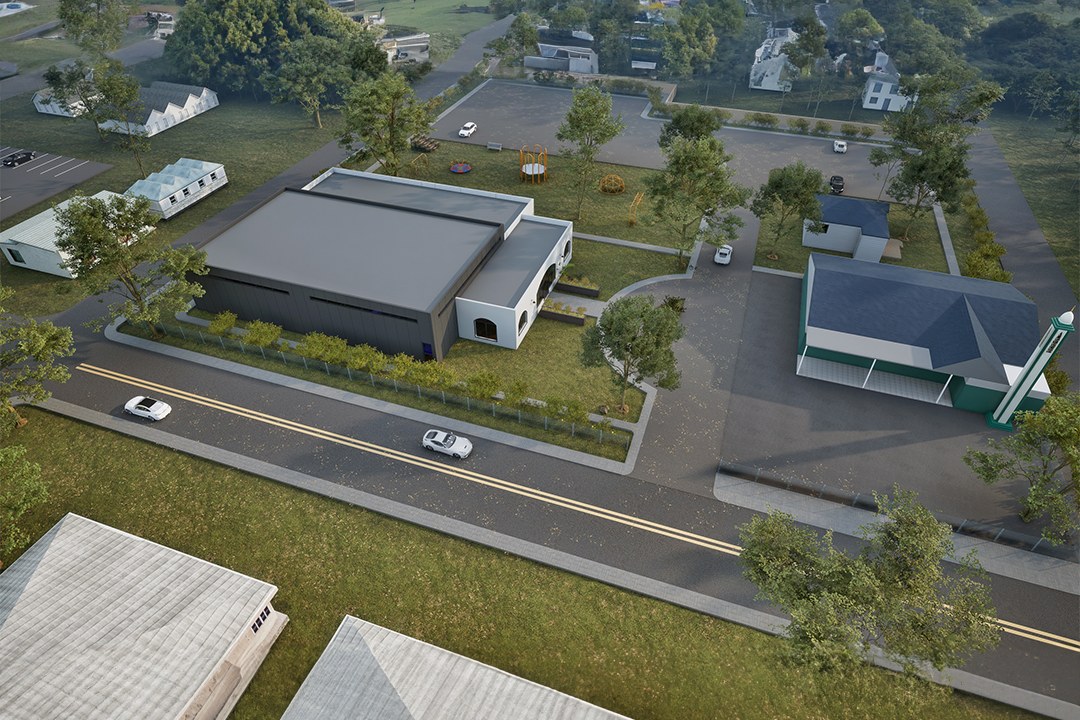
We use AI-assisted tools where they save honest time: the routine, repeatable parts of the work, such as trying alternative viewpoints quickly, populating a scene, or clearing up the small things that surround a building. They are useful for getting to a first look sooner, so that you can react to something real instead of a description.
They are not where the design lives. Whether the dark mass in this frame still reads as it did in the drawings, whether the white entry volume sits at the right scale against the hall beside it, whether the road and the planting are telling the truth about the site: those are judgements checked by a person against your drawings, every time. A fast frame that has quietly changed your building is not a fast frame. It is a revision waiting to happen.
What a good first frame is for
A hero frame at the pre-sales stage has one job. It lets you see whether the scheme holds up, and lets your buyer imagine it. It is not the final word on every material. It is a considered first look, built on the facts of the plan, that your notes can then sharpen.
Which is also why revisions should feel like a conversation. If the first frame was built on your intent, your notes are refinements: a different band of colour, a lower sun, a view from the other corner. If it was built on guesses, your notes are corrections, and the conversation turns into an argument.
A short checklist before you brief a first frame
- Send the plan and the elevations, even if rough. Say which parts are settled.
- Name the one thing that must survive: a proportion, a material, a relationship to the street.
- Say who will see it first: a buyer, a board, a marketing team. It changes the view.
- Agree the first look is a first look, and who gives notes on it.
Have a plan that needs a first frame? Send it over with the one thing that must survive the render. We will tell you how we would approach the first view, and what we would ask you before starting. No call needed.


