

Why a render reads as real
Still working on a scheme? Here’s one free angle you can use today: the renders people believe are almost never the ones with a better building. They’re the ones that look lived-in.
Here is a quiet truth from inside the studio: when a render lands flat, the fix is rarely a better model. The geometry was fine, the materials were fine — the image simply looked like nobody had ever been there. A render is believed the same way a photograph is: it shows a moment, in a real light, with a little life and a little mess in it. That’s good news, because it means most of the persuasion comes from four small, deliberate choices — not from a heavier scene. So: a free angle, no strings. Four things that make an image read as real, and how to put them into the scheme open on your screen right now.
Four things that separate a place from a model
None of these need a bigger model or a longer render. They’re what the eye quietly checks for before it decides to believe the image.

Put people where people would be
A building with nobody in it reads as a model, not a place.
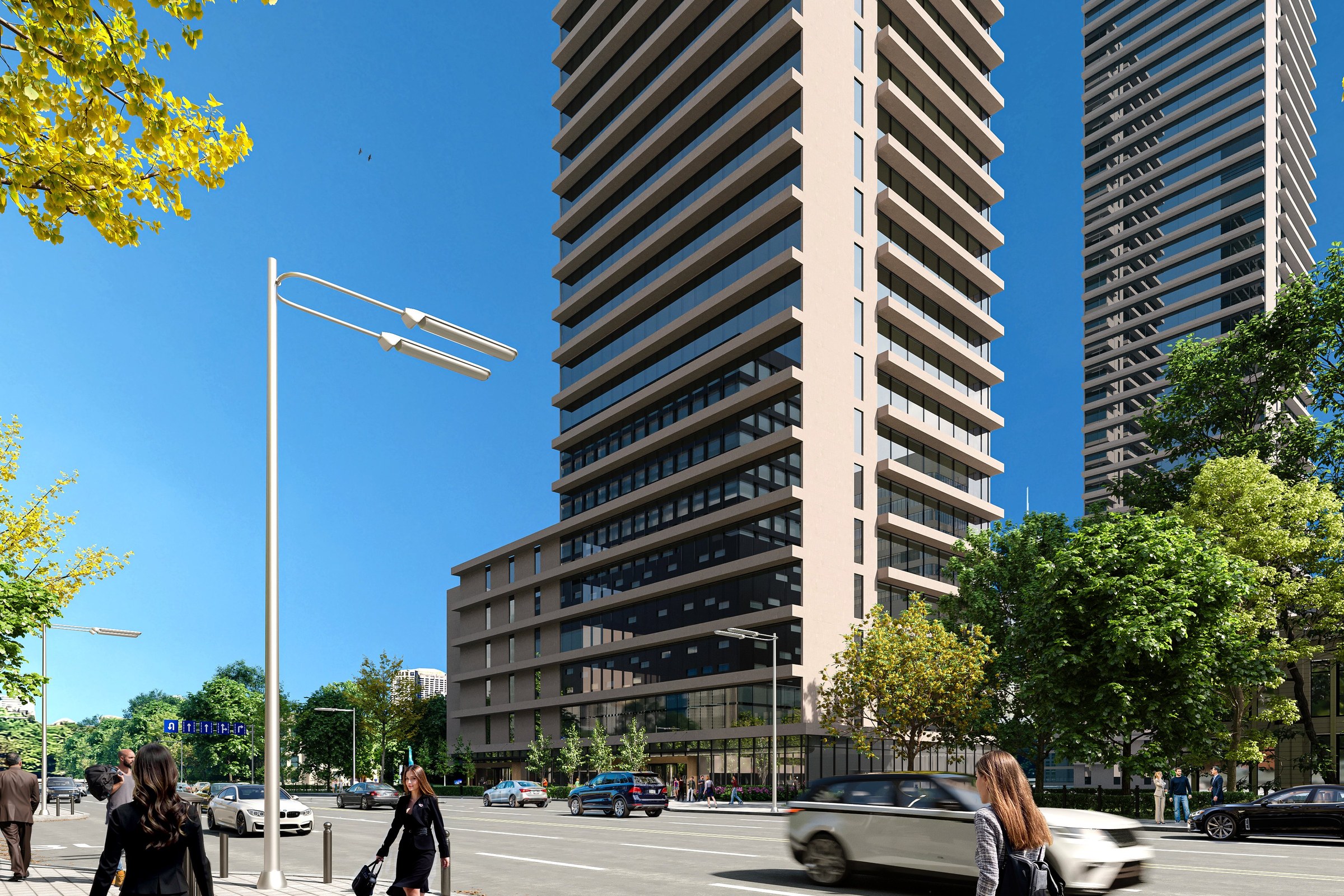
The fastest way to tell a render is a render is that it is deserted. Real streets have someone crossing them, someone at a café table, a couple of bikes in the rack. Add a handful of figures exactly where they would actually stand — not a crowd, just enough life — and the eye stops reading “3D model” and starts reading “a morning here.” People also give the building scale: without them, a doorway could be two metres or four. The point isn’t to populate the frame; it’s to answer, quietly, “what is it like to be here?”
Let something move
One car caught mid-motion, and the whole street starts breathing.
A perfectly frozen scene feels staged; a hint of movement feels caught. A single vehicle blurred as it passes, a figure mid-step rather than posed, a flag or a tree with a little wind in it — one moving element tells the viewer this is a moment in time, not a diagram. It’s the difference between a photograph and a catalogue plate. You only need one: over-do the motion and it turns theatrical. The trick is a single deliberate blur where traffic would really be, and the image gains a pulse.

Give the world back to it
Glass and water that reflect the surroundings stop the building floating.
The tell that a building looks “pasted on” is almost always the same: its glass and its ground don’t reflect anything. Real surfaces return the world — windows carry the trees and sky opposite, water holds a soft mirror of the house, and every object sits on a subtle contact shadow that pins it to the earth. Get those right and the building belongs to its site; skip them and it hovers a centimetre above the grass, no matter how good the model is. Reflection and shadow aren’t polish — they’re what makes the eye believe the thing is actually there.
Let it be a little imperfect
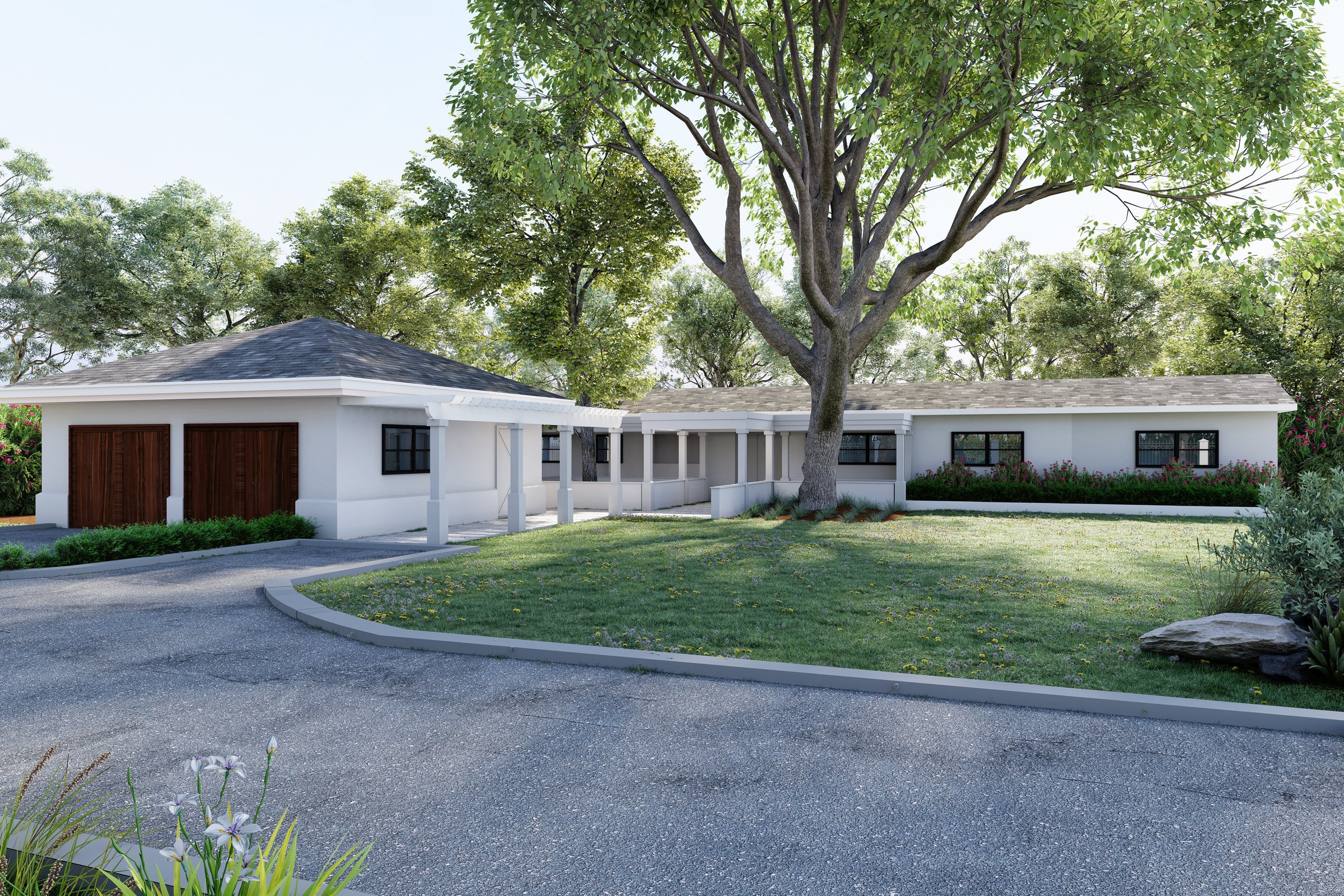
Nature is untidy — and untidy is exactly what reads as true.
The last ten percent of realism is, oddly, mess. A lawn with a few wildflowers through it, dappled light under a real tree, planting that isn’t laid out on a grid, a surface that has caught a little weather — these small imperfections are what the eye recognises as “outdoors.” A render that is too clean, too even, too new is the one that looks computer-made. You’re not adding flaws; you’re adding the ordinary texture of a place that has existed for more than a second. Perfect is the giveaway. Believable is a little worn.
If a render feels off, it’s usually one of these
Name what’s wrong with the image in front of you — the fix is almost always small.
- It looks empty — like a model, not a place Add life: a few figures exactly where people would stand.
- It looks frozen and staged Let one thing move — a single car or figure caught mid-motion.
- The building looks pasted on, almost floating Ground it: reflections in glass and water, a soft contact shadow.
- It’s technically perfect but still reads as CGI Let it be imperfect: uneven planting, dappled light, a little weather.
A render isn’t believed because the building is perfect. It’s believed because someone could have just walked through the frame.


