Land, launch or selling. Pick one below and see the frame we’d send you, made to keep what you designed intact.
Sample frame · Land
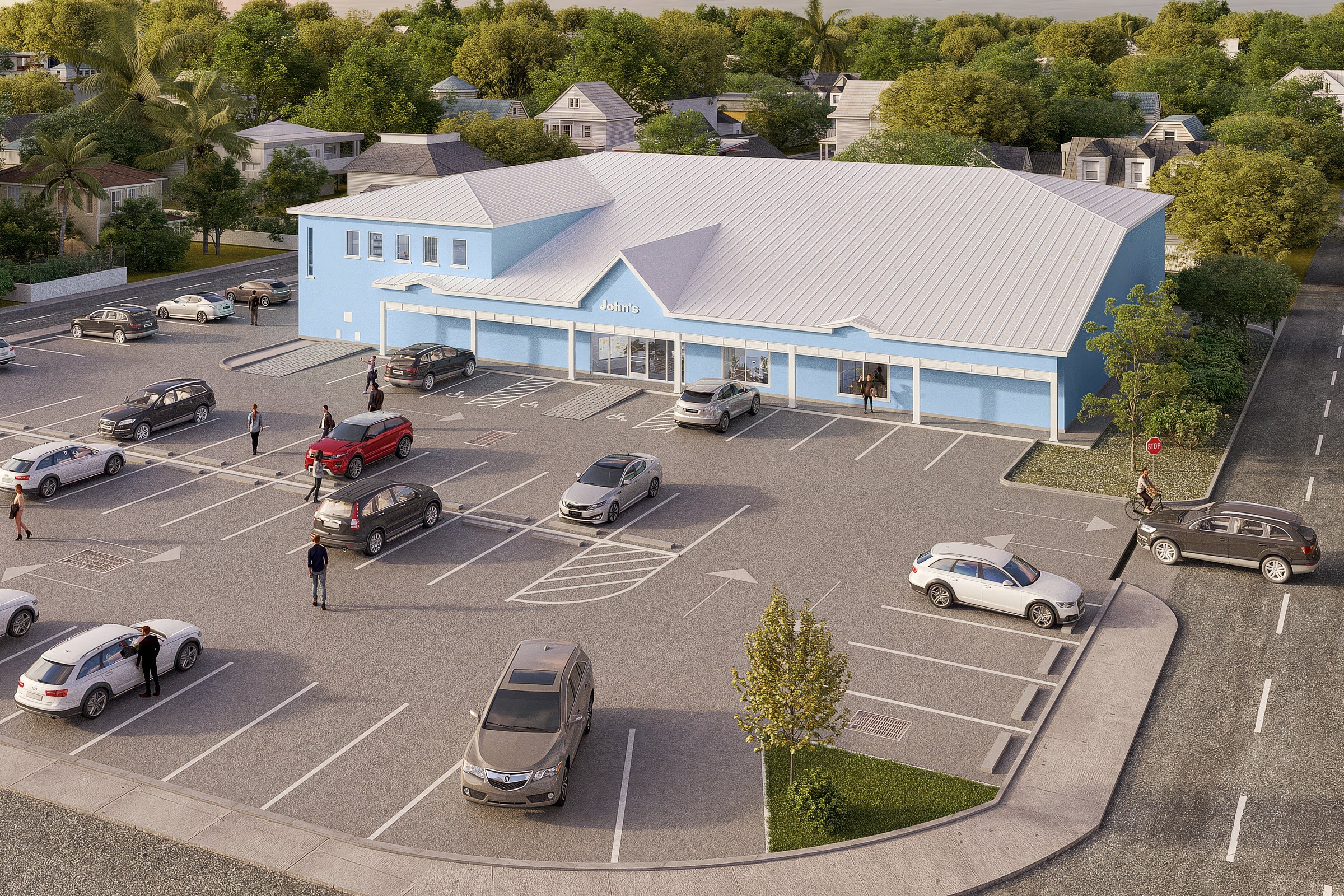
One aerial that shows the building belongs where you put it.
At the land stage the drawing set is mostly plan and section, and the people who have to say yes can’t read either. The frame we send is an aerial in daylight — massing, entrance, parking, the scale of the neighbours — so the conversation is about your siting decision, not about whether anyone understood the sheet.
We protect: your massing and setbacks exactly as drawn, with context kept honest rather than flattered.
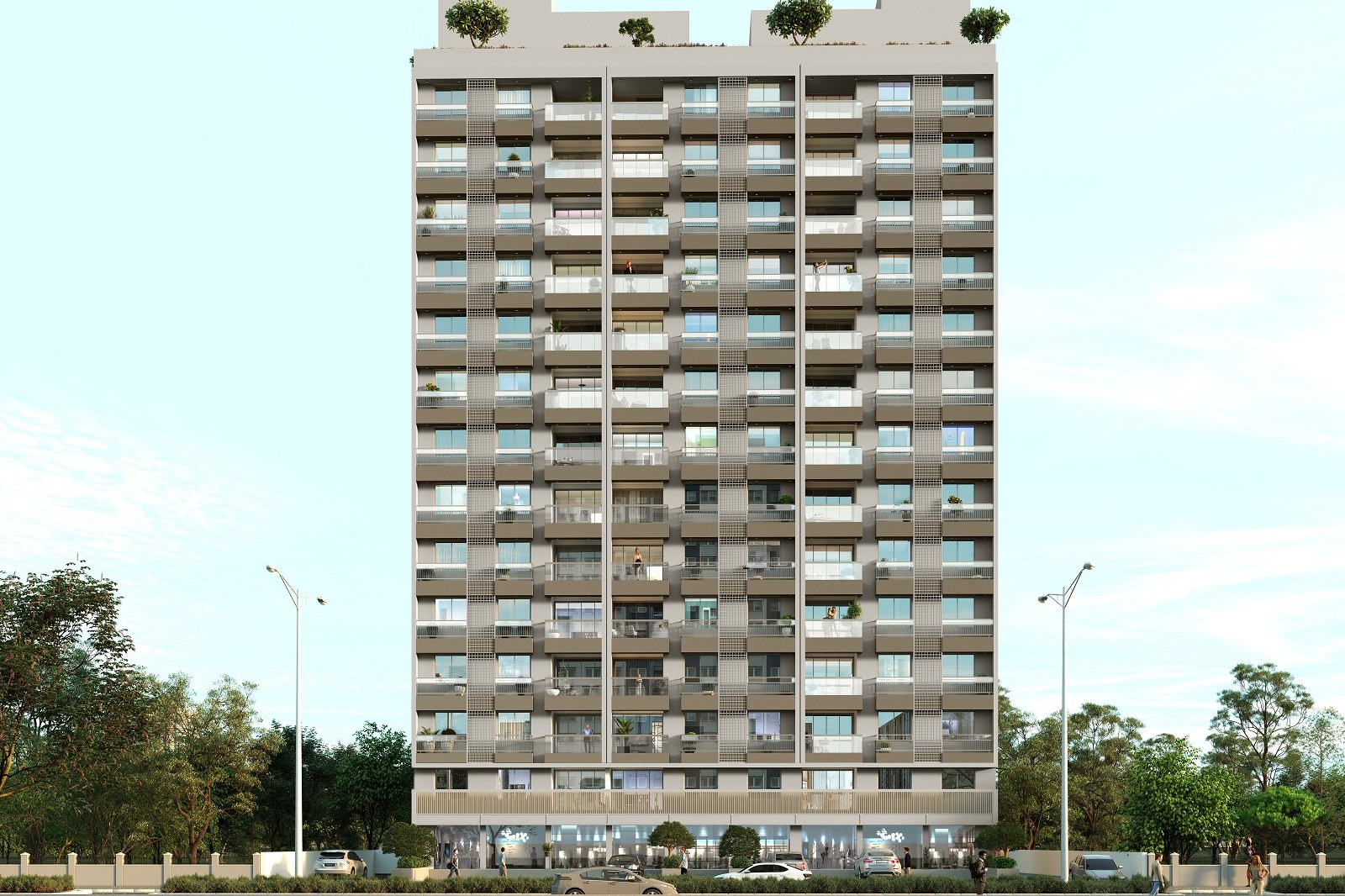
One frontal view where the facade rhythm survives the render.
When an elevation is about to become the face of a launch, the risk is quiet: balcony depth flattens, fins turn to noise, the base loses its lit threshold. The frame we send is a straight-on elevation view, held to your proportions and material breaks, the way you would want it printed beside your name.
We protect: rhythm, depth and material changes — the things a rushed render smooths away.
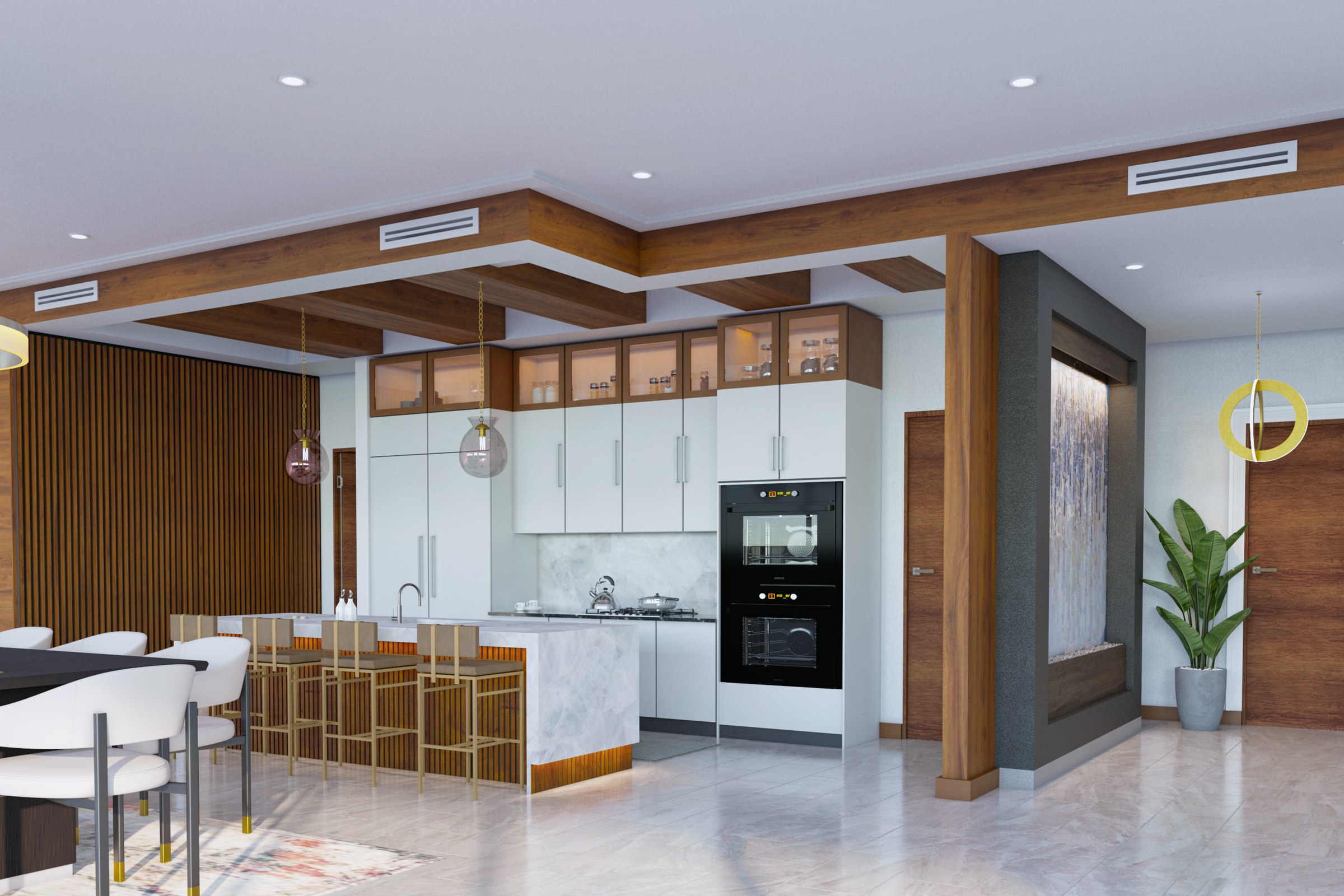
One interior where your material palette reads as chosen, not generated.
At the selling stage the buyer is deciding how a room feels. The frame we send is an interior in natural light, with the timber, stone and cabinetry you specified reading as separate decisions, so the room sells the design rather than a generic idea of luxury.
We protect: the specified palette and the light logic, with no styling that rewrites the interior.
The same drawing asks different things of an image at different moments.
The frame that wins a site conversation is not the frame that sells a unit.
So we start with where you are, and we keep your design intact all the way through.
Set plainly
What this is, and isn’t.
A small, honest offer. You see the frame before you reply, and you can stop there.
One frame, not a gallery
You pick a stage and we send a single sample frame for it. It shows how we treat that stage; it isn’t a pitch deck.
No call needed
Everything happens by email. If the frame is useful, you’ll know what to ask next. If it isn’t, you owe us nothing.
Revisions as a conversation
If it becomes a project, markups are read as design notes by people who respect the intent, not as tickets to argue over.
Questions, answered straight
What happens when I pick a stage?
The pick opens a short reply form with your stage already filled in. Send it, and we reply with the matching sample frame.
Do I need to send drawings?
No. Naming the stage is enough. If you want to attach a plan or elevation so we can tailor the note, that’s optional.
Is the sample frame from my project?
No. It’s a representative frame from our own work, sized to the stage you chose. Making a render of your project is a different offer, and the free-render page covers it.
Will you change my design?
No. Design intent is the brief. We render what you drew and flag anything ambiguous before it is guessed at.
Does this commit me to anything?
No. There is no price attached to this page and no follow-up call unless you ask for one.
Know your stage?
Pick it, reply, and the matching frame comes back. No call, no obligation.
We use cookies to improve your experience. Plausible analytics runs without cookies.
Optional cookies help us understand behavior and show relevant ads.
Read our cookie notice
Required for the site to function. Plausible analytics is cookie-free and privacy-friendly.
Behavioral analytics and session replay to improve user experience.
Remarketing and conversion tracking for relevant advertising.