Project Daystar Church
Contemporary Megachurch Visualization
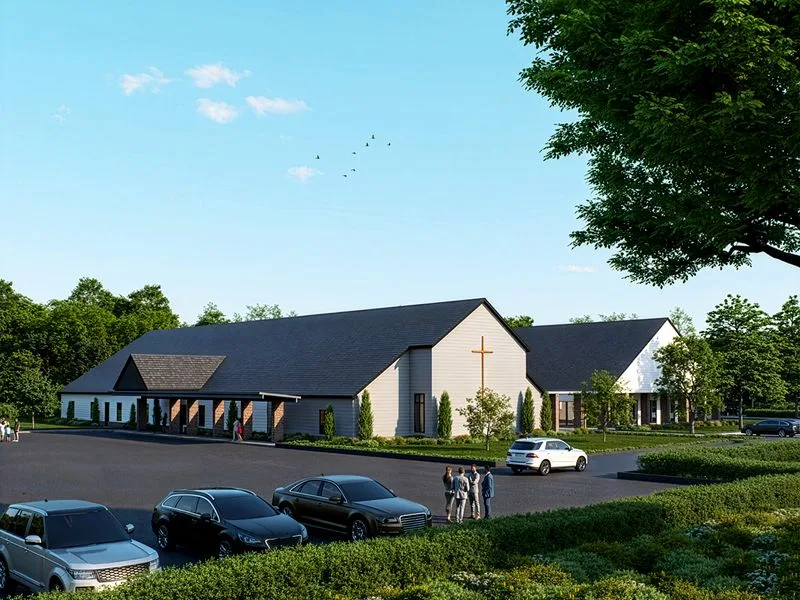
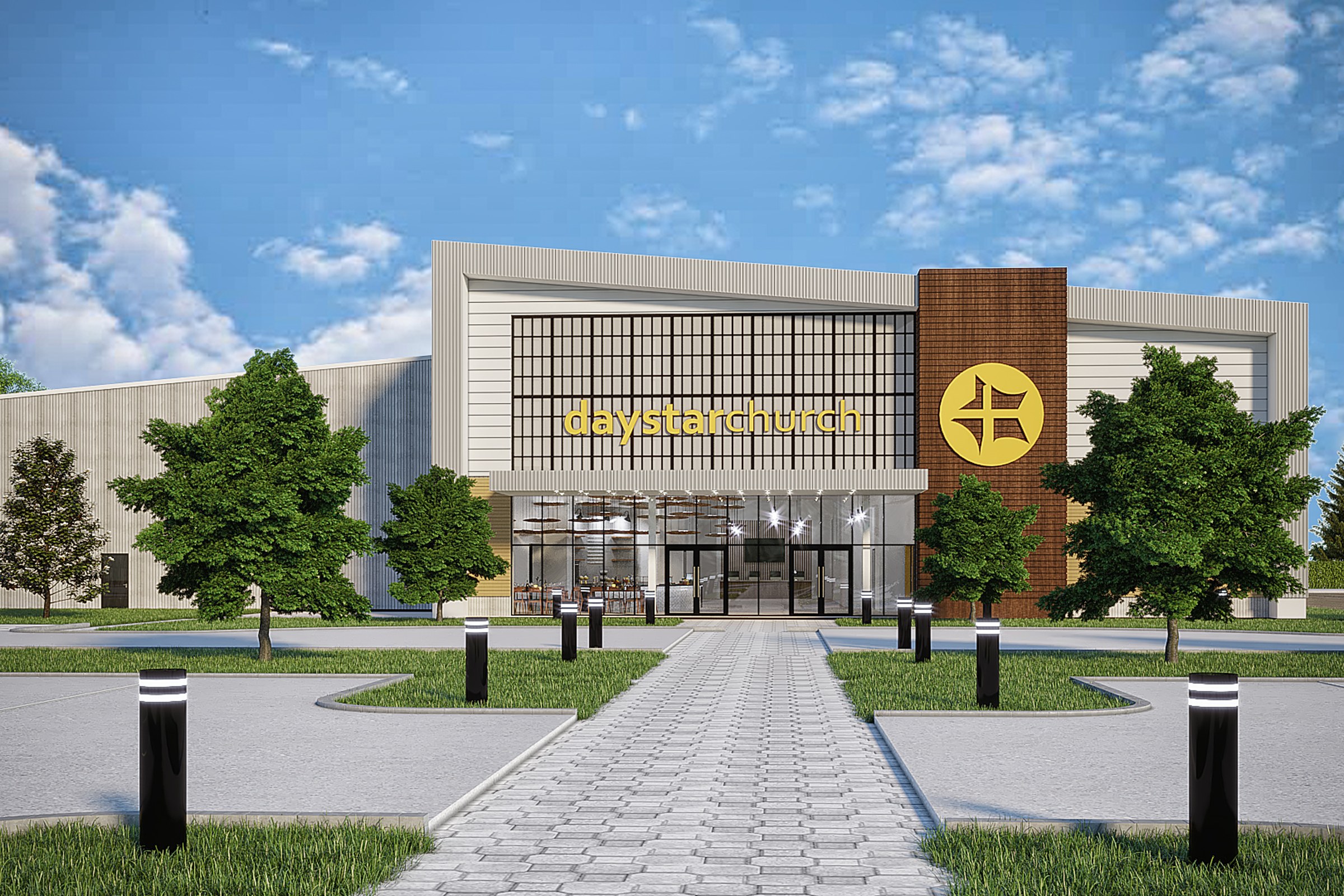
Large contemporary megachurch with metal panel cladding, massive glass curtain wall entrance with 'daystar church' text, brick accent tower with golden cross logo. Paved walkway with bollard lighting leading to entrance.
Project Overview
The Daystar Church project arrived in late 2022 from a client who preferred to remain confidential — a common arrangement with institutional projects where the design is still being refined and the congregation has not yet seen it publicly. The building was a large contemporary megachurch: metal panel cladding, a massive glass curtain wall entrance, and a brick accent tower topped with a golden cross logo.
Vikram, our most experienced artist at the time with over eight years on the team, took the lead. Religious buildings carry a weight that commercial projects do not. The congregation will see this image and form their first emotional response to a building that may define their community for decades. You cannot get it wrong.
The glass curtain wall entrance was the focal point — a soaring transparent facade with ‘daystar church’ lettering across it. Vikram spent considerable time on the glass material, working through multiple iterations to find the right balance. The glass needed to feel welcoming and open, suggesting the transparency of the community inside, while also reflecting enough of the sky to show the scale and solidity of the structure. Religious architecture often uses light as a metaphor, and the entrance needed to feel like it was drawing you in.
The brick accent tower was a different challenge. It sits beside the main structure as a vertical counterpoint to the horizontal metal panels. The golden cross logo at the top had to catch light naturally — not glow like a sign, but reflect like actual gilded metal would in daylight. Vikram referenced photographs of gold-leaf church domes to get the reflectivity right: warm, dignified, not flashy.
The paved walkway leading to the entrance was lined with bollard lighting, which in a daytime render serves a compositional purpose rather than a lighting one — the bollards create a visual rhythm that draws the eye from the foreground to the entrance, like a procession path.
Technical Approach
The metal panel cladding on the main structure required a custom V-Ray material with anisotropic reflections — real metal panels have a subtle directional grain from the manufacturing process, and without it they look like painted plastic. Vikram used a stretched noise map in the reflection glossiness channel to simulate this. The glass curtain wall used a V-Ray two-sided material with a carefully tuned IOR to handle both interior visibility and exterior reflection simultaneously. The lettering on the glass was applied as a separate decal layer with slight depth to catch edge highlights. The HDRI environment was a clear-sky dome chosen to give the golden cross a warm reflection tone without competing cloud drama. Rendering at 2400 x 1600 with this much glass took around seven hours per frame on our farm.
The Result
The client used the visualization for internal design review with the church leadership committee. We were told the image helped the committee align on the exterior design direction after several months of discussion. The glass entrance and the proportions of the brick tower were both approved as shown in our render, which the architect considered a strong endorsement of the visualization accuracy.
Tips for Institutional Architects
-
Share the story behind the building. Religious and community buildings carry meaning beyond their program. Knowing that the entrance is meant to feel welcoming, or that the tower represents something specific, helps us make compositional and lighting choices that support that narrative.
-
Approve materials before we render. Institutional projects often involve committee review, and material changes after rendering are expensive. If you can get sign-off on the key finishes — cladding color, brick tone, glass tint — before we start, we can avoid full re-renders.
-
Consider a dusk variant. Buildings with large glass facades transform at dusk when interior lighting becomes visible. A second image at twilight can show the warmth of the space inside and is often the image that resonates most with non-architect stakeholders.
Have a project like this? Let’s talk — or explore more work.