Project 82 La Quinta Hotel
Contemporary Chain Hotel Visualization
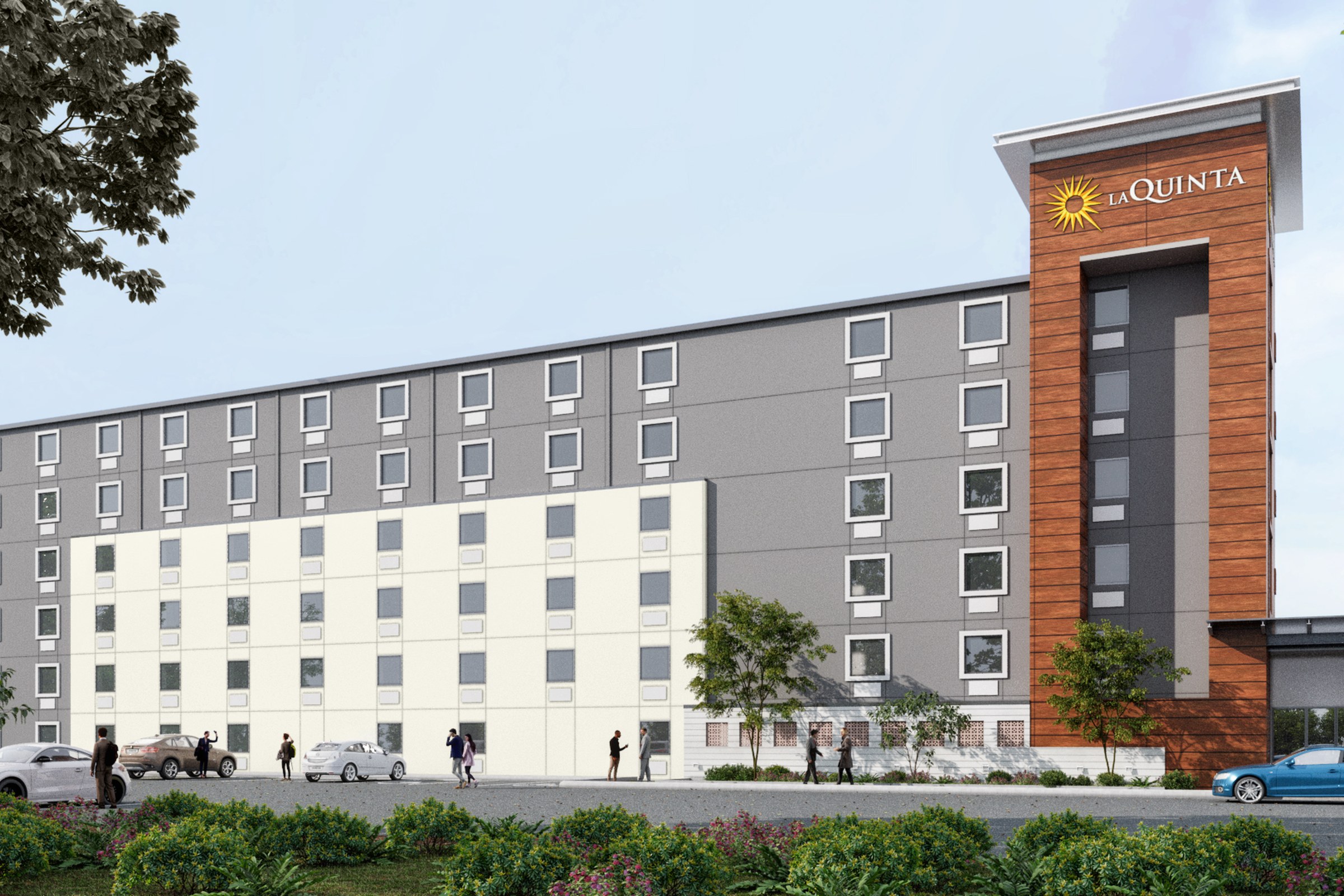
3D rendering of the La Quinta hotel, featuring a multi-story design with a gray panel facade, wood-clad tower, and landscaped surroundings.
Project Overview
Hotel brands operate with strict visual guidelines. When Foster Architects reached out about a La Quinta property visualization in early 2025, we knew the brief would come with a thick brand standards document — and it did. Every panel color, every sign dimension, every landscape setback was specified. Our job was not to design, but to translate a precise set of requirements into an image that felt like a real place rather than a brand manual come to life.
The building was a multi-story hotel with a gray panel facade, a wood-clad tower element, and landscaped surroundings. Ravi took the project. He had handled hospitality work before and understood that hotel renderings serve a different audience than residential or commercial work — they go to franchise owners, brand approval committees, and sometimes directly into investor decks.
The gray panel facade was the dominant material. In real life, these panels have a slight sheen that shifts with the angle of light. In a rendering, they can easily look flat and dull if you treat them as a single uniform surface. Ravi broke the facade into panel groups with subtle variation in reflectivity and a slight color shift between batches — the way panels look when they come from different manufacturing runs, which is how they always arrive on a real job site.
The wood-clad tower was the architectural accent. Brand hotels use these feature elements to break the box of a typical hotel massing, and it needed to feel warm against the cool gray panels. Ravi used a thermally modified ash texture — a material increasingly popular in commercial cladding because it weathers to a silver-gray over time. For the rendering, the client wanted the as-installed warm tone, not the weathered version.
The landscaping was specified down to the species. Foundation plantings, parking lot islands, a few specimen trees. We placed them according to the landscape architect’s plan but added the slight randomness of real planting — a tree leaning two degrees off vertical, ground cover not quite reaching the edge of a bed. These micro-imperfections are what make landscape in a render feel planted rather than placed.
Technical Approach
Brand-standard hotel projects require exact color matching. Ravi calibrated his monitor to the brand’s specified Pantone values for the panel gray and used V-Ray’s color-managed workflow to ensure the final JPEG matched the target within a tolerance the brand committee would accept. The wood cladding used a high-resolution tileable texture at 8K with V-Ray displacement for the board profile depth. Landscaping was built with ForestPack using a curated library of species matching the landscape plan. The daylight rendering used a V-Ray Sun positioned for mid-morning — hotel brands generally prefer bright, optimistic lighting rather than the moody dusk shots that residential clients favor.
The Result
The rendering passed the La Quinta brand review on the first submission, which is not common — brand committees typically request at least one round of color or signage adjustments. Foster Architects attributed the clean approval to the accuracy of the material colors and signage proportions. The image was used in the franchise approval package and the construction loan application.
Tips for Hospitality Architects
-
Send the brand standards PDF early. Hotel brands specify everything from sign fonts to landscape setback distances. The earlier we have this document, the fewer surprises during brand review. We read the whole thing — do not assume we only need the elevations.
-
Clarify whether materials should look new or weathered. Wood cladding, in particular, changes dramatically over its first two years. A rendering showing the day-one appearance versus the year-three appearance can tell very different stories to an investor.
-
Request a mid-morning lighting angle. Hotel renderings benefit from bright, clear light that shows the building at its most approachable. Dusk shots work for boutique hotels, but for branded properties, daylight sells confidence.
Have a project like this? Let’s talk — or explore more work.