Airport Master Plan — mixed-use 3D rendering by Praxis Studio
Mixed-Use

Airport Master Plan

Modern Master Plan Visualization

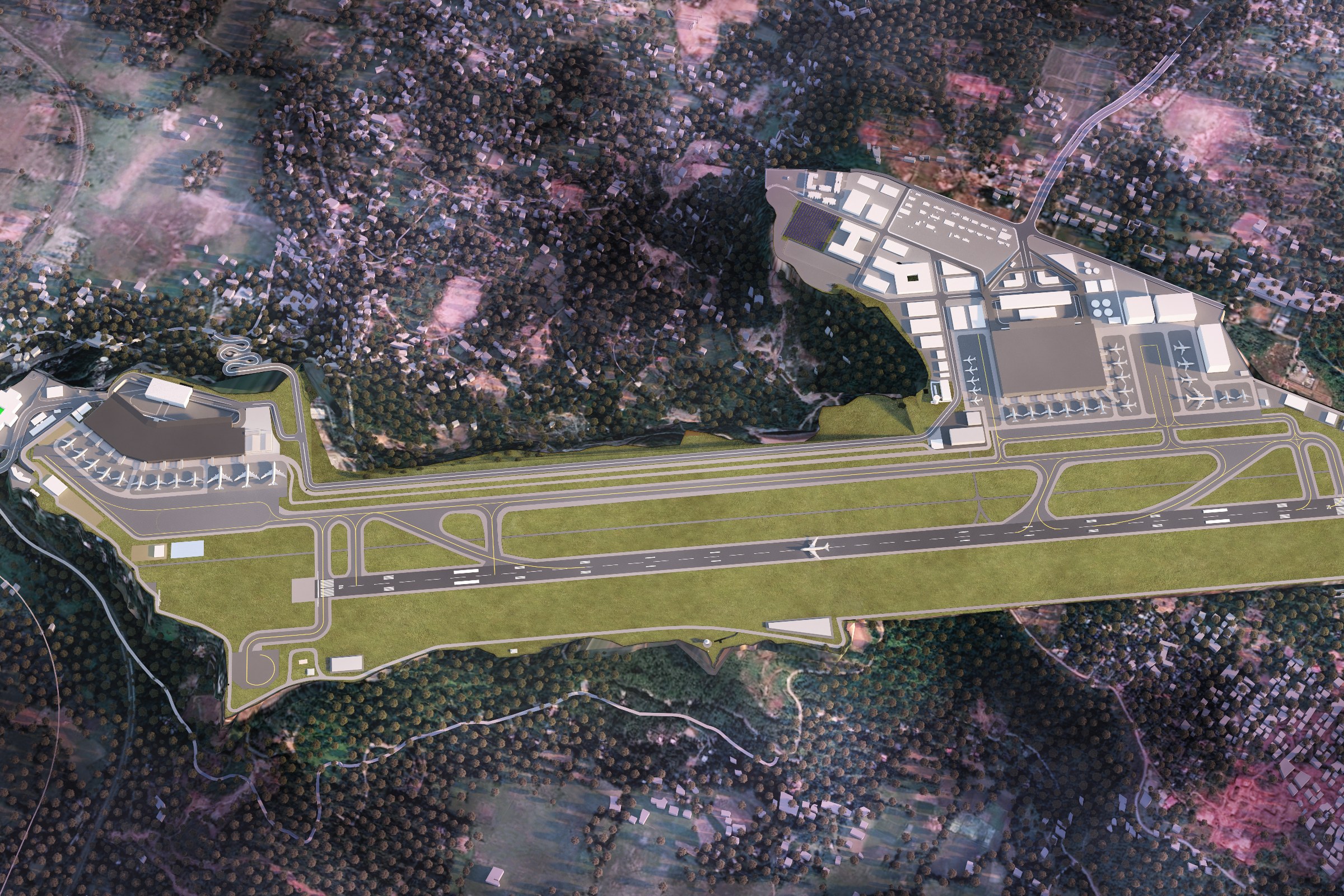
Top-down master plan view of an airport complex with a runway, taxiways, terminal buildings, and surrounding forested terrain.

Project Overview

Airport Master Plan was a quick-turn engagement. The master plan developer had a design they were proud of and needed it visualized — no extras, just one precise, photorealistic render.

Top-down master plan view of an airport complex with a runway, taxiways, terminal buildings, and surrounding forested terrain.

The Result

The image shipped on schedule and has been the go-to visual for this project ever since — presentations, planning submissions, social media, the lot.

Got a project that needs this kind of visual clarity? Get in touch or see more examples.
Frequently Asked Questions

What aerial perspective technique was used to capture the full extent of the airport complex in this master plan visualization?

This top-down orthographic rendering was produced using precision 3D modeling to accurately represent the runway geometry, taxiway layouts, and terminal footprints at true-to-scale proportions. Realistic forested terrain surrounds the airfield to provide contextual grounding for stakeholder presentations.

How does an aerial master plan visualization support the airport planning and approval process?

Airport master plan renders give planning authorities, investors, and transport boards a clear spatial understanding of phased infrastructure across a large and complex site. They effectively communicate runway orientation, terminal zoning, and land-use boundaries in a single, legible document.

What is the typical delivery timeline for an airport-scale aerial master plan visualization like this one?

A project of this complexity — incorporating runways, taxiways, terminal buildings, and surrounding landscape — is typically delivered within 10–15 business days from receipt of CAD or GIS data. Expedited timelines are available upon request for planning submissions with fixed deadlines.

How do master plan developers and architects use these renders during the design and consultation phases?

Developers use aerial master plan visuals in public consultation boards, planning applications, and investor decks to convey the overall vision before construction begins. The bird's-eye format is particularly effective for illustrating site scale, access routes, and environmental integration simultaneously.

What makes aerial master plan visualizations for airports distinctly different from other architectural render categories?

Unlike building-level renders, airport master plans must convey vast ground infrastructure — runways, aprons, taxiways — alongside architecture, landscaping, and surrounding terrain at a scale that demands cartographic precision. The challenge lies in maintaining spatial accuracy while still producing an image that reads as visually compelling rather than purely technical.

Like what you see?

Let's create something extraordinary for your next project.