
The room that won’t read true
Every practice that’s worried about a render can already name the room. That’s not vague — it’s the fastest diagnosis available, before anyone writes a brief.
Ask a designer which room in a scheme worries them most, and the answer comes fast — no hesitation, no “I’d have to check.” That instinct is worth taking seriously, because it isn’t nerves. Different rooms fail in different, predictable ways, for reasons that have nothing to do with how careful the studio is and everything to do with what the room is made of. A kitchen fails differently than a bathroom. A big glazed living room fails differently than a bedroom looking onto a garden. Once you know which condition a room is actually testing, the worry stops being a feeling and becomes a short list — and every item on it has a small, specific fix.
Each one is testing something different
None of these are about the model being good enough. They’re about which material or condition the room is built from — and whether that condition was handled on purpose.
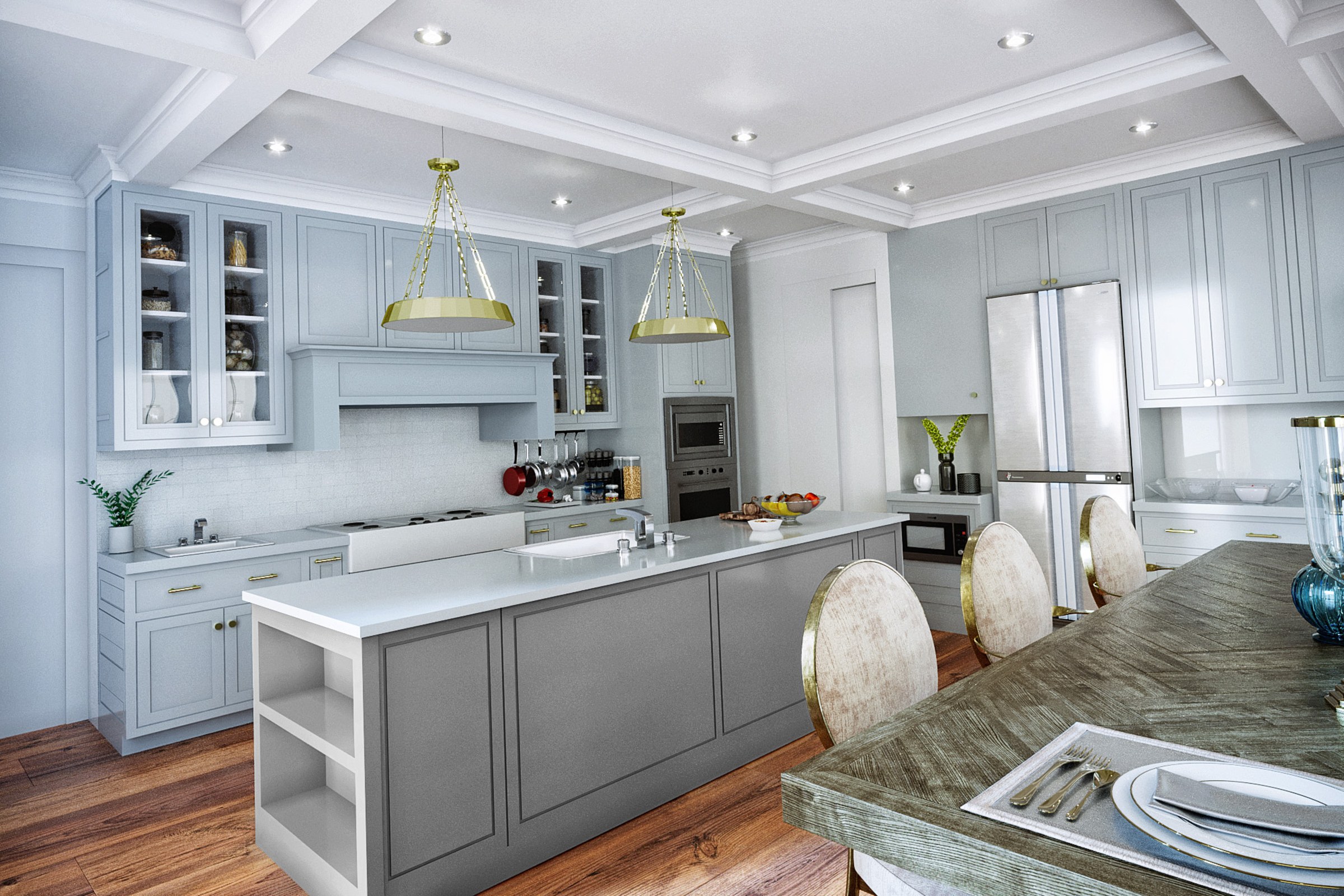
It goes shiny instead of lit
A kitchen has more reflective surfaces per square metre than any other room in the house.
Quartz counters, glass-front cabinetry, brushed and polished hardware, a stainless appliance wall — a kitchen is built from materials whose whole job is to bounce light, and reflectivity in a render is a number, not an instinct. Push every one of those numbers toward “mirror” and the room stops looking lit and starts looking waxed — a showroom, not a house anyone cooks in. The fix isn’t less detail, it’s more variation: matte cabinet fronts against polished hardware against a honed (not glossy) stone, each catching the light a little differently, the way real finishes actually do.
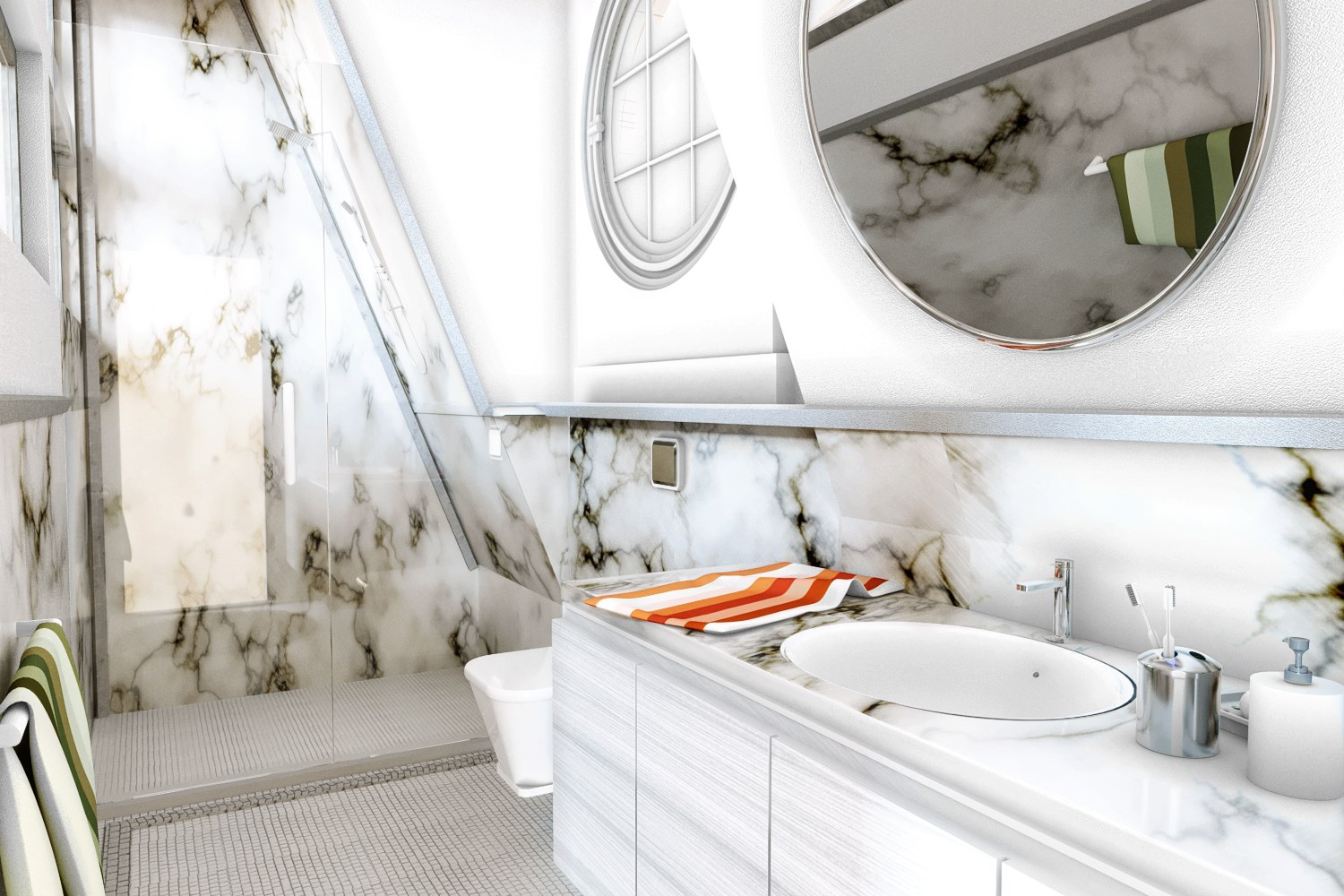
It folds back on itself
A mirror facing a glass shower is asking the render to reflect a reflection, honestly.
No other room stacks this many reflective and translucent surfaces this close together — a mirror, a glass enclosure, wet tile, a marble slab with its own depth of veining. Done wrong, a mirror shows an infinite, slightly wrong recursion, or goes flat and blank because the render simply gave up. Done right, it shows a plausible, finite slice of the room — a towel, a window, nothing more — because a believable mirror isn’t about resolution, it’s about deciding what the room is willing to show back.
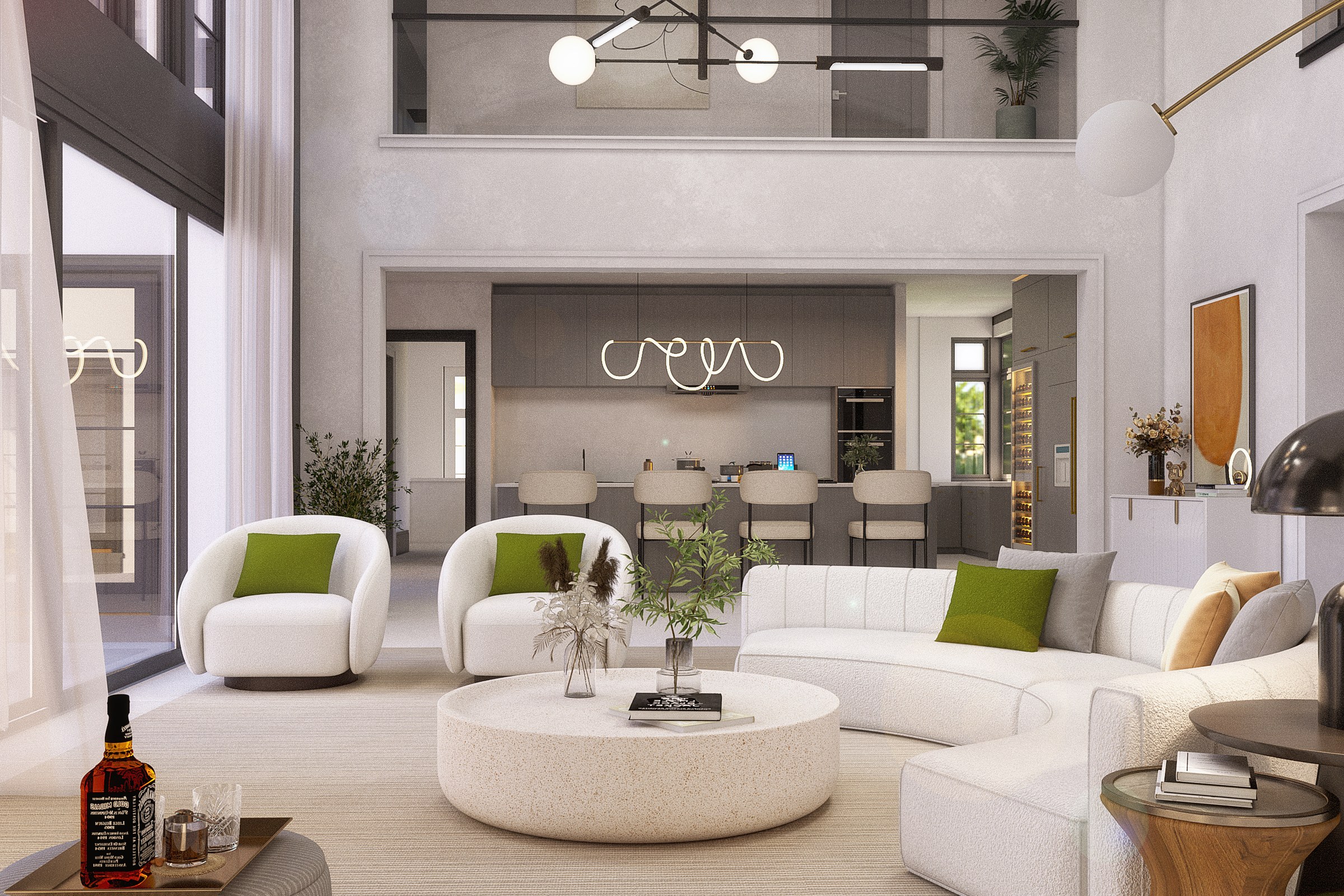
The middle goes flat
A double-height living space has a foreground, a middle distance and a mezzanine — and one exposure can’t hold all three.
Floor-to-ceiling glazing is the room’s best feature and its hardest lighting problem: expose for the sofa in the foreground and the glass blows white; expose for the glass and everything behind it sinks into shadow. The tell that a big glazed room is “off” is almost always a flat, shadowless middle distance — the kitchen beyond the opening reading as one flat grey, no matter how detailed the model is. The fix is exposure by depth, not one flat capture: the foreground, the middle ground and what’s visible through the glass each metered as their own small decision.
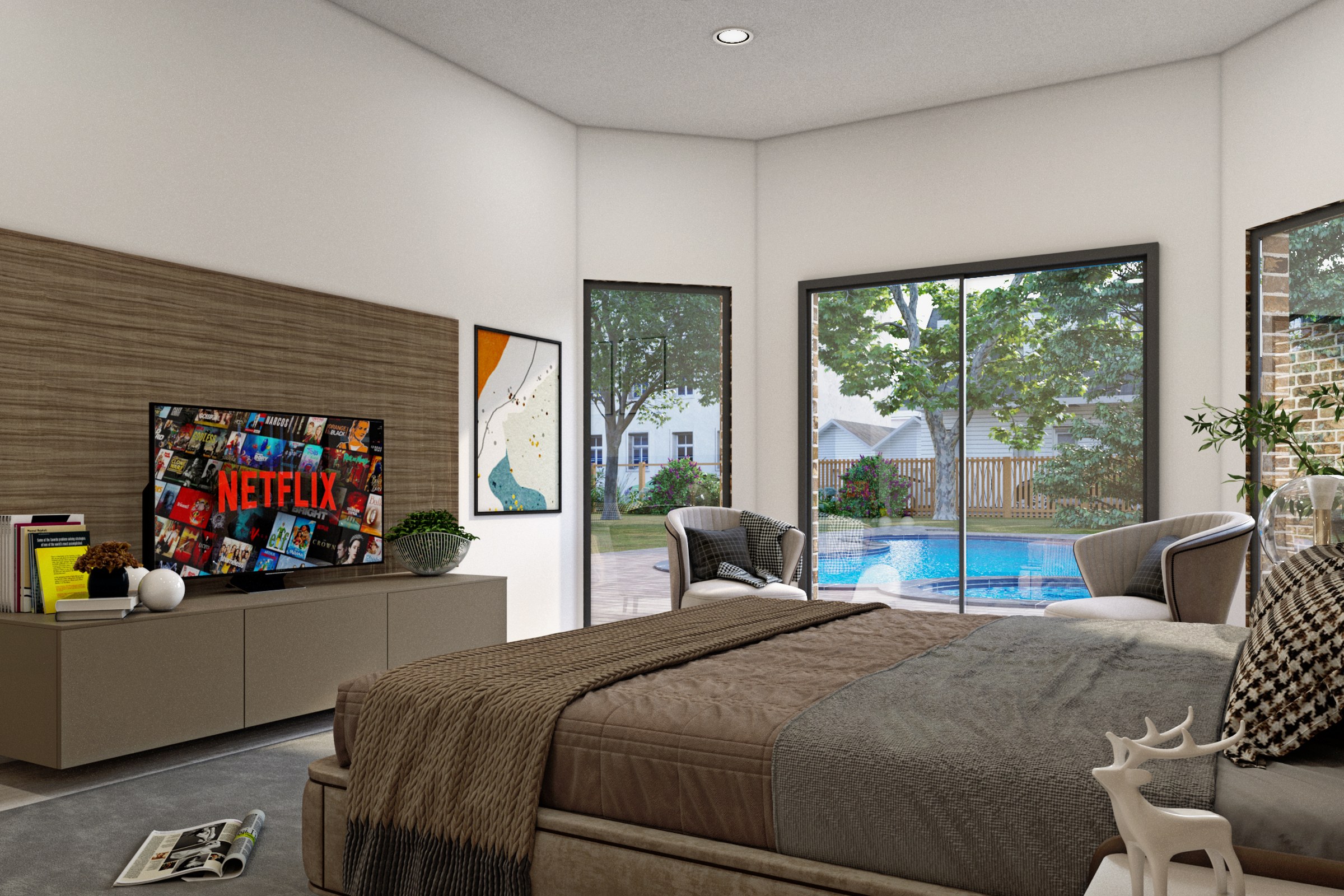
One pane of glass has to do three jobs at once
A bedroom door onto a garden and a pool asks a single sheet of glass to reflect, transmit and tint, all at once.
This is the hardest ordinary combination in a residential render: glazing that has to reflect the room behind the camera, let the garden and pool through clearly, and still read as a real pane and not a hole in the wall — while the foliage outside dapples the light and the water needs its own believable surface. Get the glass right and the room feels like it opens onto somewhere; get it wrong and the garden looks pasted behind a hole, or the glass goes so reflective the garden disappears. The fix is treating the pane as three separate surfaces stacked on top of each other, not one texture doing everything.
Name the room, and you’ve named the condition
This is the short version — what the worry is usually actually about.
- The kitchen Specular control — vary the sheen, don’t mirror everything.
- The bathroom Mirror discipline — decide what it’s allowed to show back.
- The big glazed room Exposure by depth — foreground, middle ground and glass, metered separately.
- The garden-facing room Layered glazing — reflection, transmission and tint as three surfaces, not one.
A room doesn’t fail a render because it’s hard to model. It fails because one material in it was never given a decision.
This is a narrower argument than the studio’s piece on why a render reads as real — that one is about four things every frame needs (people, motion, reflection, a little imperfection). This one is about the room itself: which specific material or condition it’s built from, and whether that condition got a decision made about it on purpose.


