
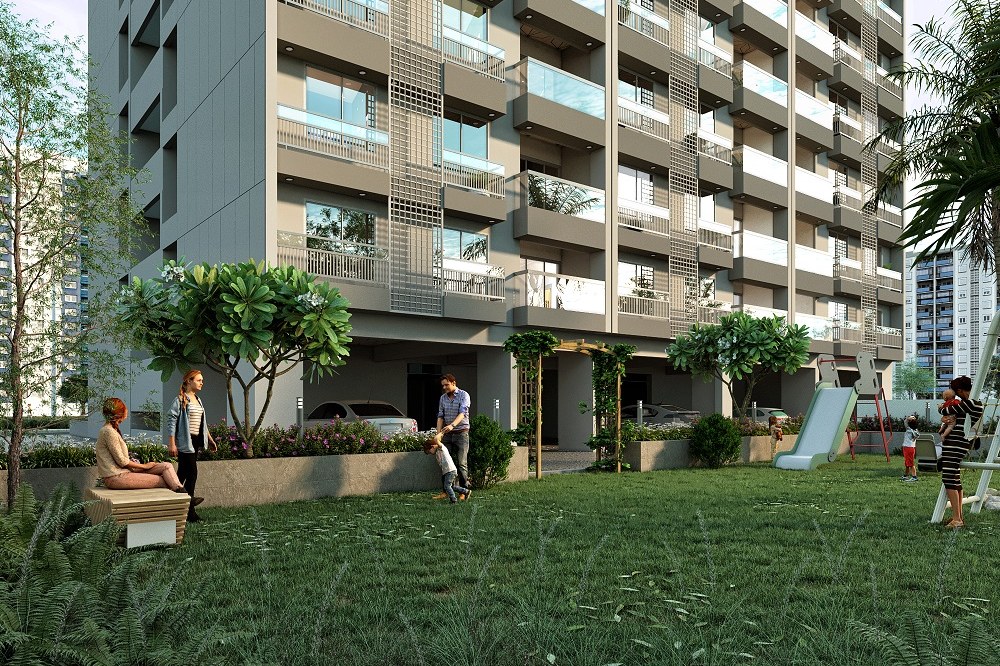
The IRA reshaped US multifamily — now the render has to catch up
It didn't just change the spreadsheet. It changed the building. Four shots that tell your prospect you're rendering this year's scheme, not last year's.
For three years, the Inflation Reduction Act quietly rewrote how US multifamily got designed. The 45L credit and the 179D deduction — sharpened by the state electrification codes and utility programs they reinforced — put real money behind heat pumps, rooftop solar, EV-ready parking and a tighter envelope. Those aren't line items on a pro-forma. They're visible decisions on the plans. And the moment they became normal, the renders that didn't show them started to look a beat behind.
A render is a claim about what the building is
When a developer, a board or a lender looks at your image, they read it as a promise. If the roof is a bare lid, the parking is a field of stalls, and the kitchen has a gas range in the corner, the picture is quietly making a promise about an older building — even when the drawings underneath are current. The fix isn't more polish. It's showing the four things the incentive era actually changed.
 01
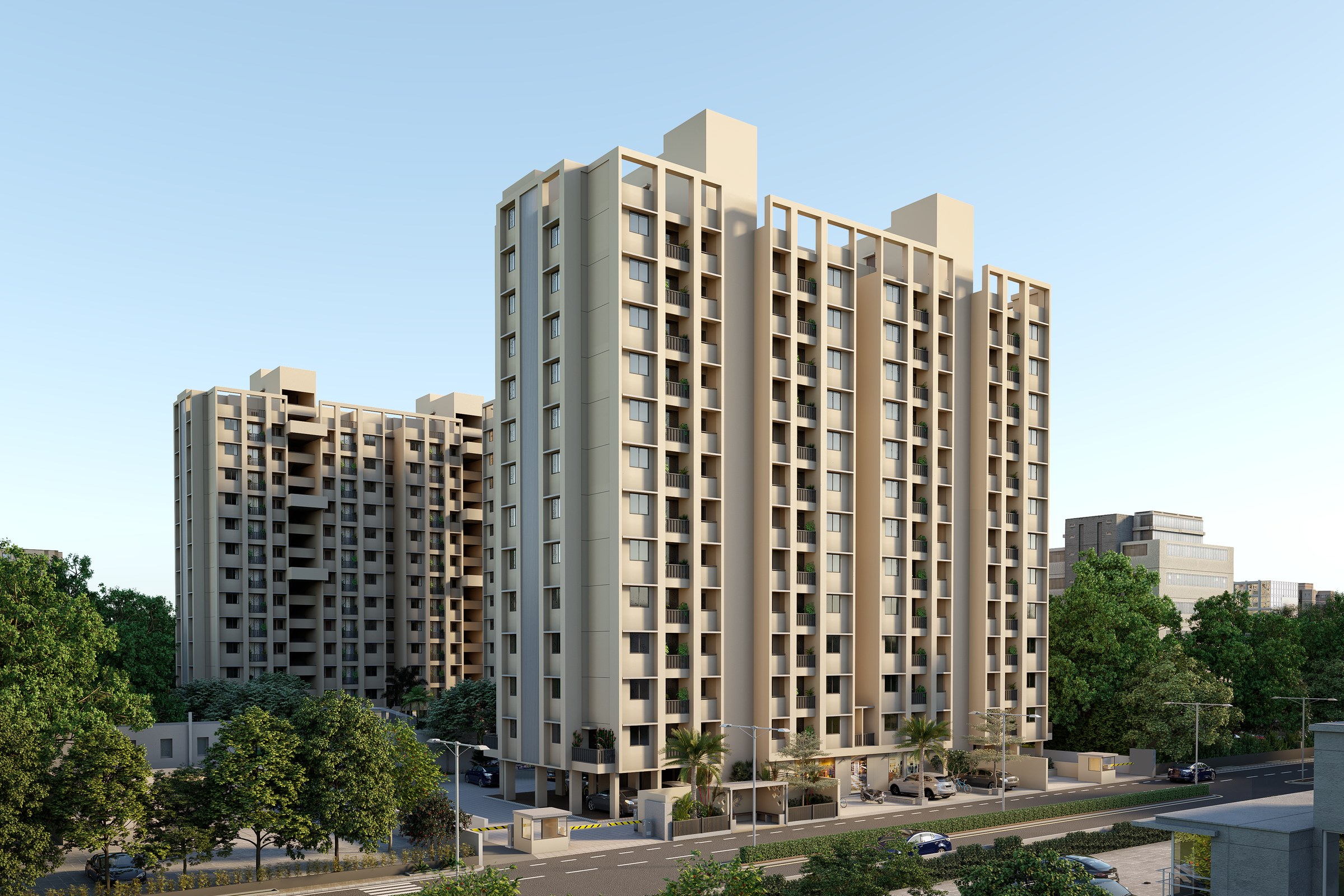
01 A flat lid nobody rendered.
A working plane — solar-ready, heat-pump condensers, the mechanical real estate that earned the credit.
What your render has to show: An aerial or top-corner shot that treats the fifth façade as designed, not blank.
 02
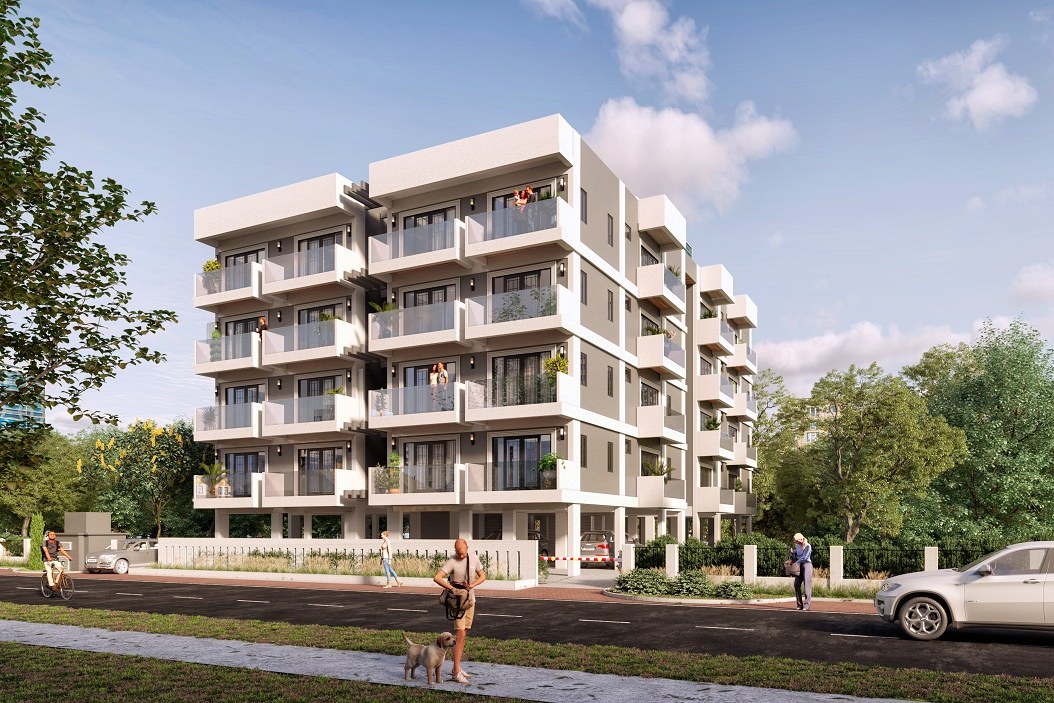
02 As much glass as the budget allowed.
Performance glazing, deeper reveals, projecting balconies and fins doing the shading the mechanical system used to buy.
What your render has to show: The play of self-shading depth across the façade at real sun angles — not a flat curtain wall at noon.
 03
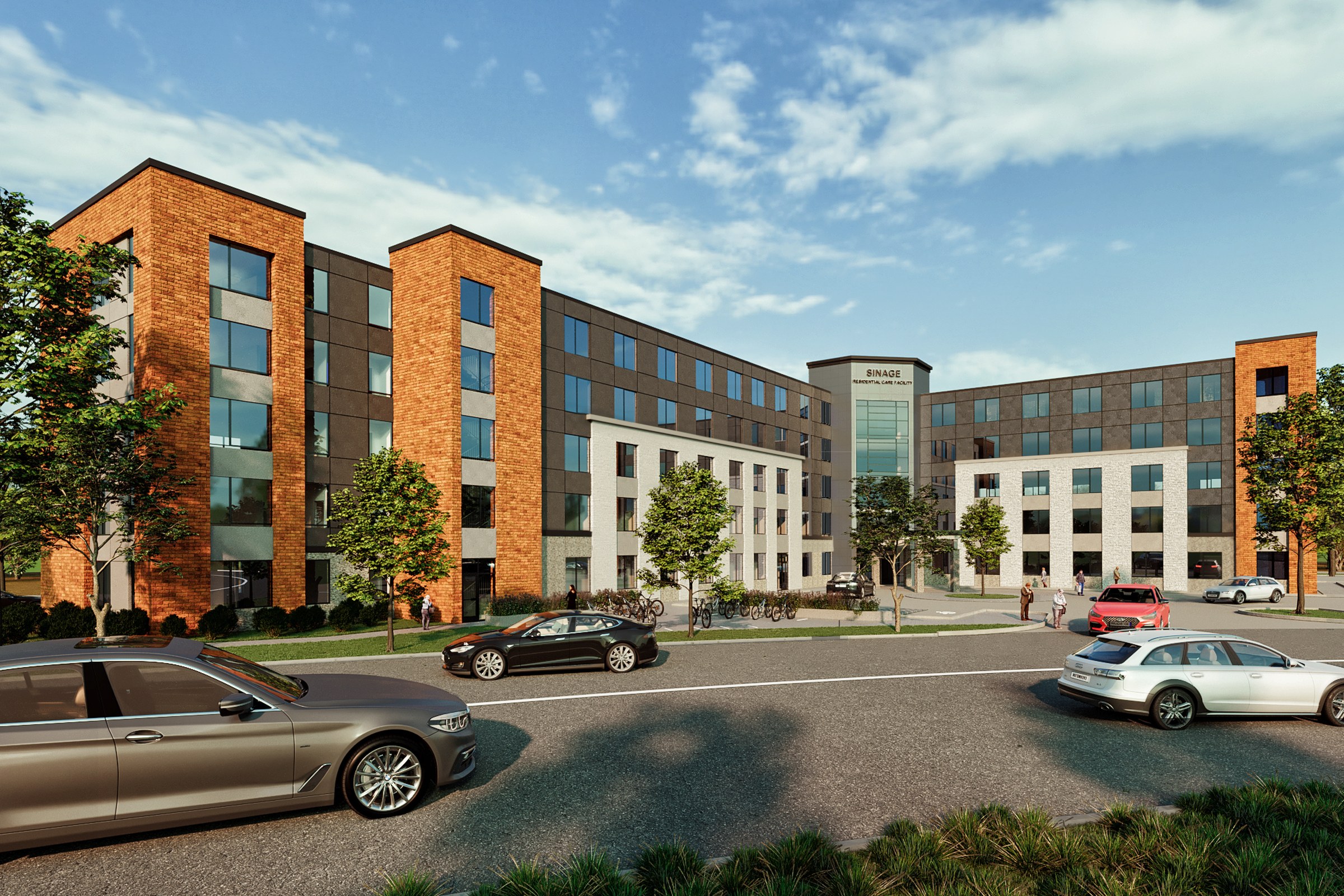
03 A count of parking stalls.
EV-ready bays, a bike room, a charged and walkable arrival — mobility is part of the pitch now.
What your render has to show: The arrival sequence with the mobility story visible: a car at a charger, bikes racked, a forecourt that reads as a place.
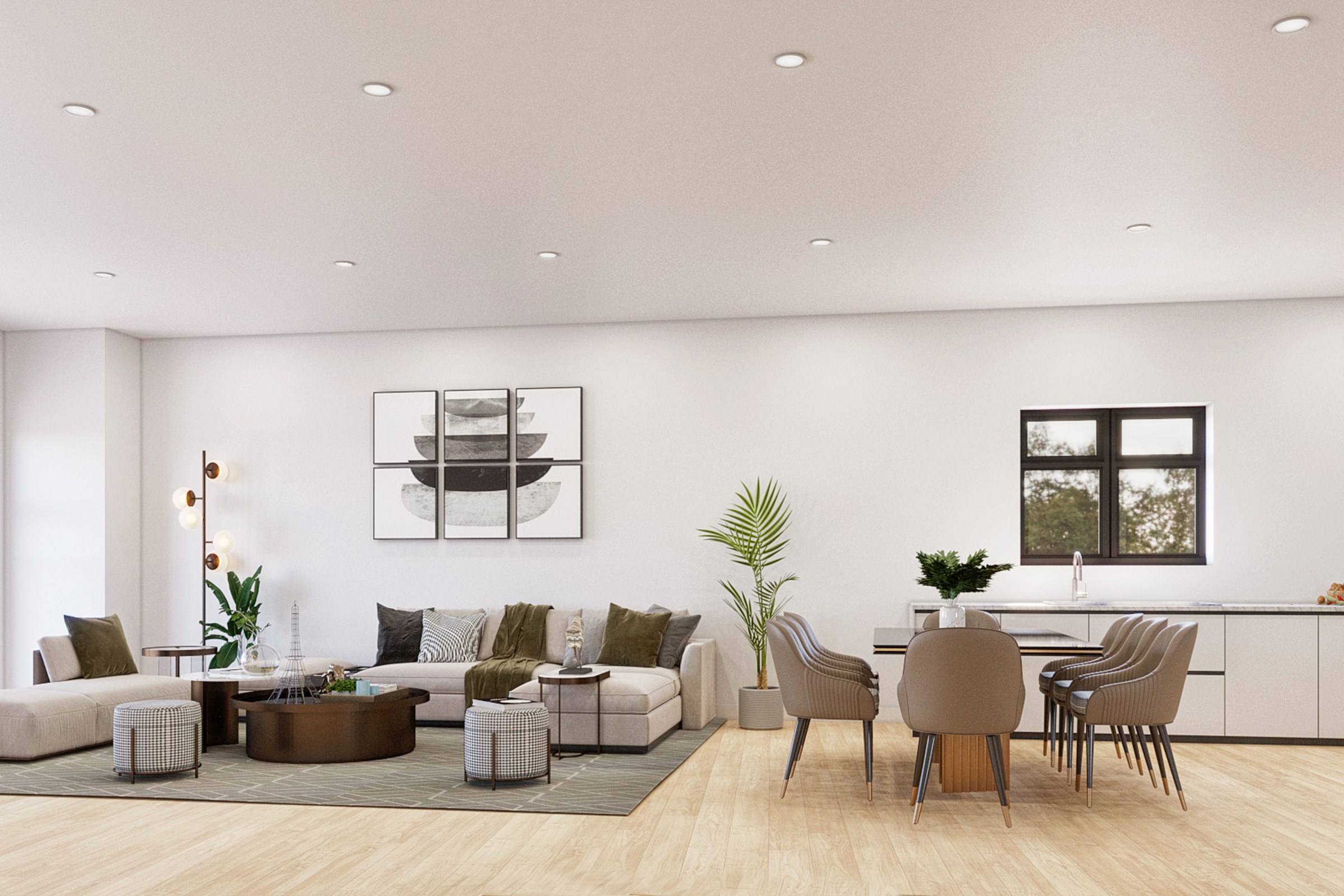 04
04 Sold on square footage and a gas range.
All-electric and heat-pump quiet — a calmer, cleaner, better-daylit room a buyer wants to stand in.
What your render has to show: The lived comfort — light, air, an open plan that breathes — not just the furniture layout.
A render that shows last year's building quietly dates the whole pitch.
Nobody says it out loud. They just feel it — the image reads as slightly behind, and so does the firm behind it. Catching the render up to the design is the cheapest credibility you can buy.
The credits are winding down. The design isn't.
Here's the part worth being honest about: the tax math is fading. Under the 2025 budget law, 45L and 179D are on their way out through mid-2026 — the full timeline is its own story, and we wrote it up here. But the building language the incentives funded didn't leave with the credit. Electrified, solar-ready, EV-ready multifamily is now the market default and, in many states, the code. The scheme on your screen today was shaped by that era whether or not a credit is still attached to it — which is exactly why the render has to keep up.
General commentary, not tax advice — confirm specifics with your advisor. Background: 45L (US Dept. of Energy).


