Brick Arcade Urban Mixed Use
Contemporary Traditional Urban Mixed Use Visualization
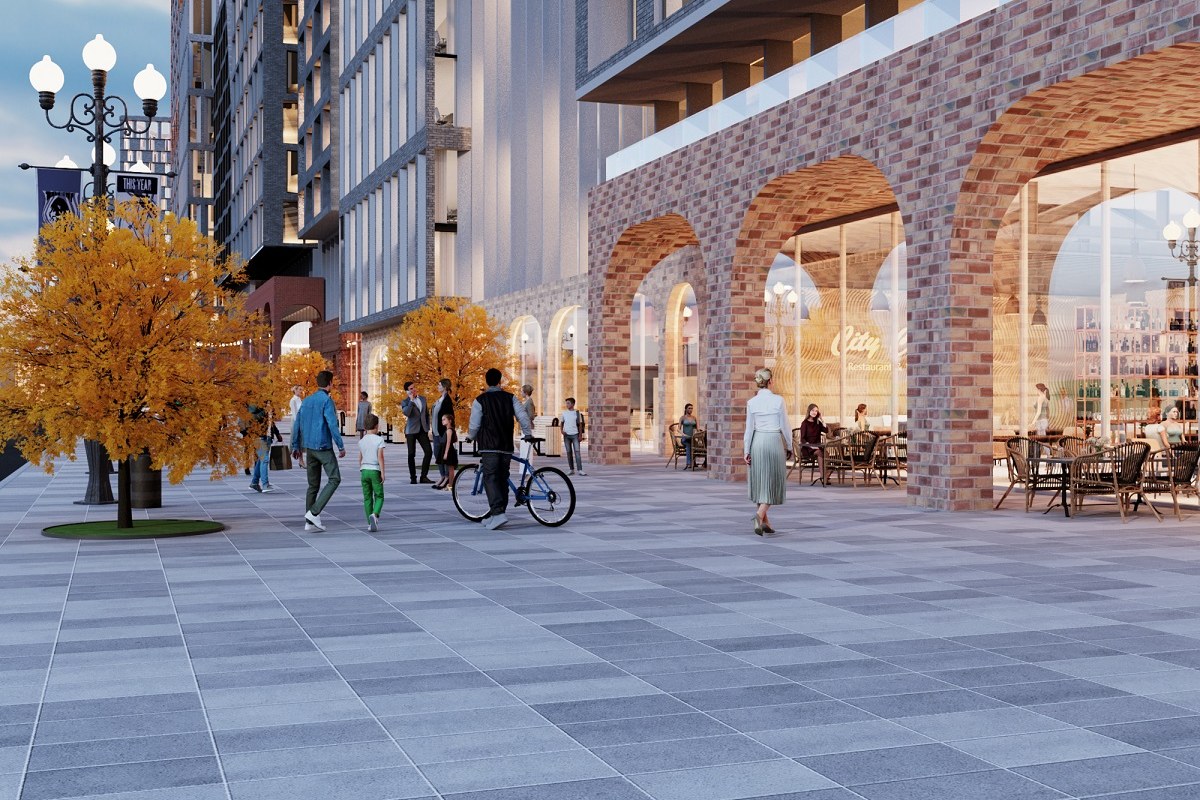
Ground-level pedestrian view of large urban mixed-use building with dramatic red brick arched colonnade at street level housing restaurant with outdoor seating. Multi-story residential/commercial above with varied facade of brick, glass, and metal panels. Autumn trees, ornate street lamps, cyclists, and active pedestrian plaza create vibrant urban scene.
Project Overview
The commercial real estate firm came to us mid-design with Brick Arcade Urban Mixed Use, a retail and mixed-use project in Seattle, WA. They needed 2 images that could work for client presentations now and marketing materials later.
Ground-level pedestrian view of large urban mixed-use building with dramatic red brick arched colonnade at street level housing restaurant with outdoor seating.
The Challenge
The project site has strong character — mature trees, sloping terrain, established neighbours. Ignoring that context would have produced renders that felt disconnected from reality. We had to model the environment as carefully as the building itself.
The design was still evolving when we started. We had to build a model flexible enough to absorb changes mid-stream without derailing the production schedule.
Our Approach
We leaned on physically-based rendering throughout. Every material — glass, stone, metal, timber — was defined by real-world optical properties. That’s what makes the difference between a render that looks ‘nice’ and one that looks true.
Post-production was restrained. We adjusted contrast, corrected any colour casts, and added subtle atmospheric effects — but the goal was always to enhance what was already there, not to paper over problems in the base render.
We ran the first round of test renders at reduced resolution to get quick feedback on composition, materials, and overall mood. This let us catch issues early when changes were cheap, not late when they weren’t.
The Result
We wrapped production within 1-2 weeks, delivering 2 final renders optimised for both digital and print. The hero shot leads the project’s marketing, and the gallery views round out the full story.
Working on something similar? Let’s talk about your project — or browse more of our work.