Transitional Master Bedroom Dark Panel
Transitional Bedroom Visualization
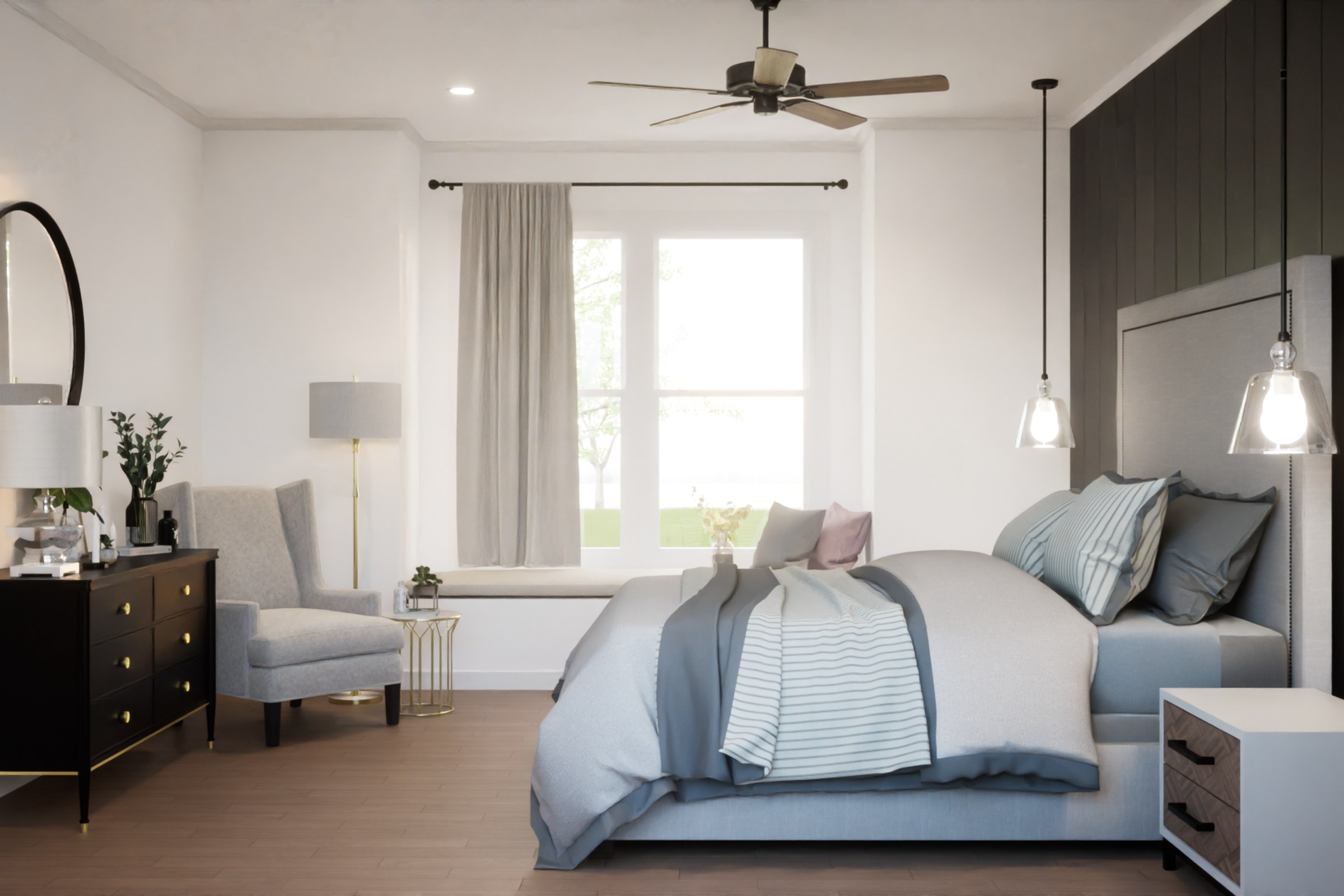
Transitional master bedroom with black paneled accent wall, gray upholstered bed, pendant lights, dark dresser, window seat, ceiling fan, and hardwood flooring.
Project Overview
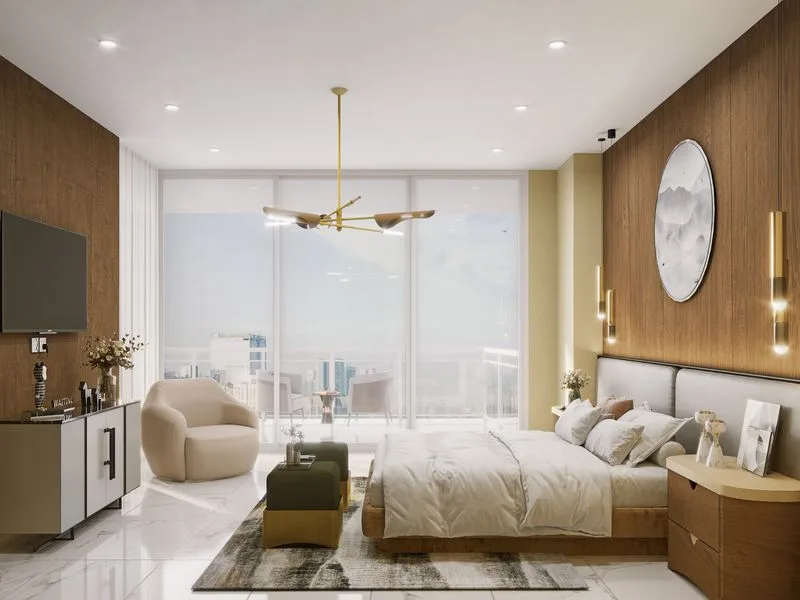
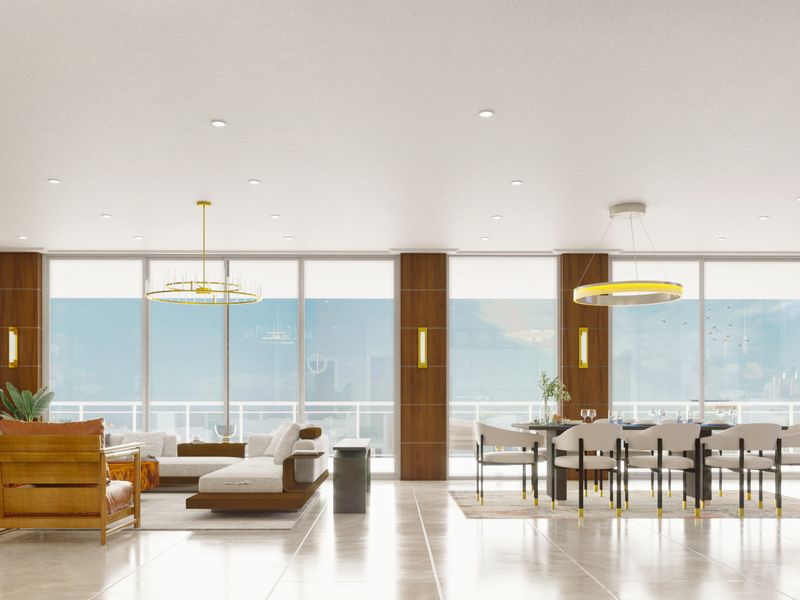
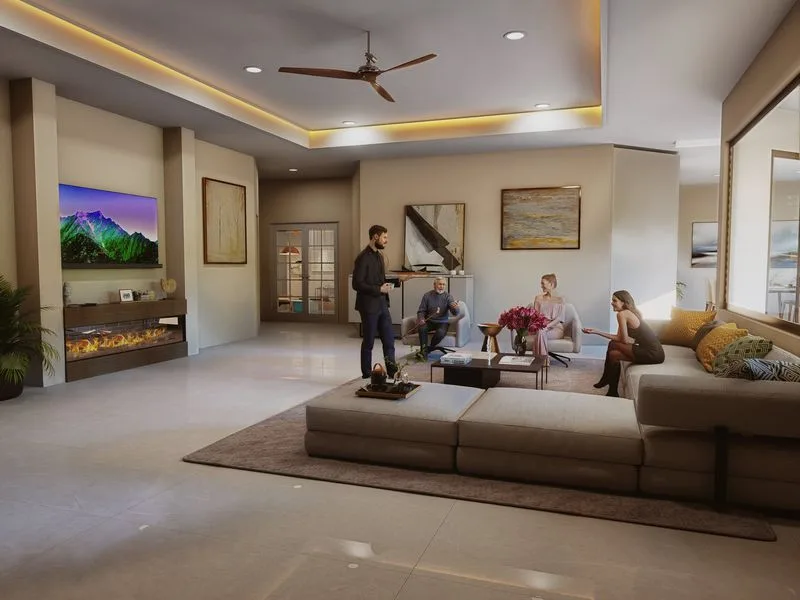
Every project has a story. For Transitional Master Bedroom Dark Panel, we told it across 7 visualizations — from the signature hero shot that anchors the branding down to the granular views that satisfy technical reviewers.
Transitional master bedroom with black paneled accent wall, gray upholstered bed, pendant lights, dark dresser, window seat, ceiling fan, and hardwood flooring.
The Challenge
The project site has strong character — mature trees, sloping terrain, established neighbours. Ignoring that context would have produced renders that felt disconnected from reality. We had to model the environment as carefully as the building itself.
At 7 deliverables, there’s a real risk of redundancy — views that look too similar or don’t add new information. We planned the camera positions deliberately so every image earned its place in the set.
Lighting was the quiet challenge here. The home staging company wanted Daylight conditions, and getting those to look natural — not staged, not oversaturated — is where a lot of archviz falls flat.
Our Approach
Material selection was hands-on. We sourced textures from manufacturer libraries and matched them against the specification documents. Where specs were ambiguous, we sent samples to the home staging company for sign-off before rendering.
Camera positions were planned, not improvised. We mapped out eye-level angles based on the project’s strongest design moments, then refined framing through a series of grey-shaded test renders before committing to final production.
The modelling phase was methodical. We built the geometry from the architectural plans, cross-referencing elevations and sections to catch anything that might read differently in three dimensions than it does on paper.
Landscape and entourage came last but mattered enormously. Trees, people, vehicles, sky — these contextual elements are what make a render feel like a photograph instead of a diagram.
We started where we always start: with the drawings. Every wall thickness, every material notation, every site boundary got translated into the 3D model before we touched a single texture or light.
The Result
All 7 images were delivered on schedule within 3-4 weeks. The home staging company has used the package across their website, printed materials, and investor presentations.
Thinking about visualization for your next project? Reach out — we respond within 24 hours. Or keep exploring.