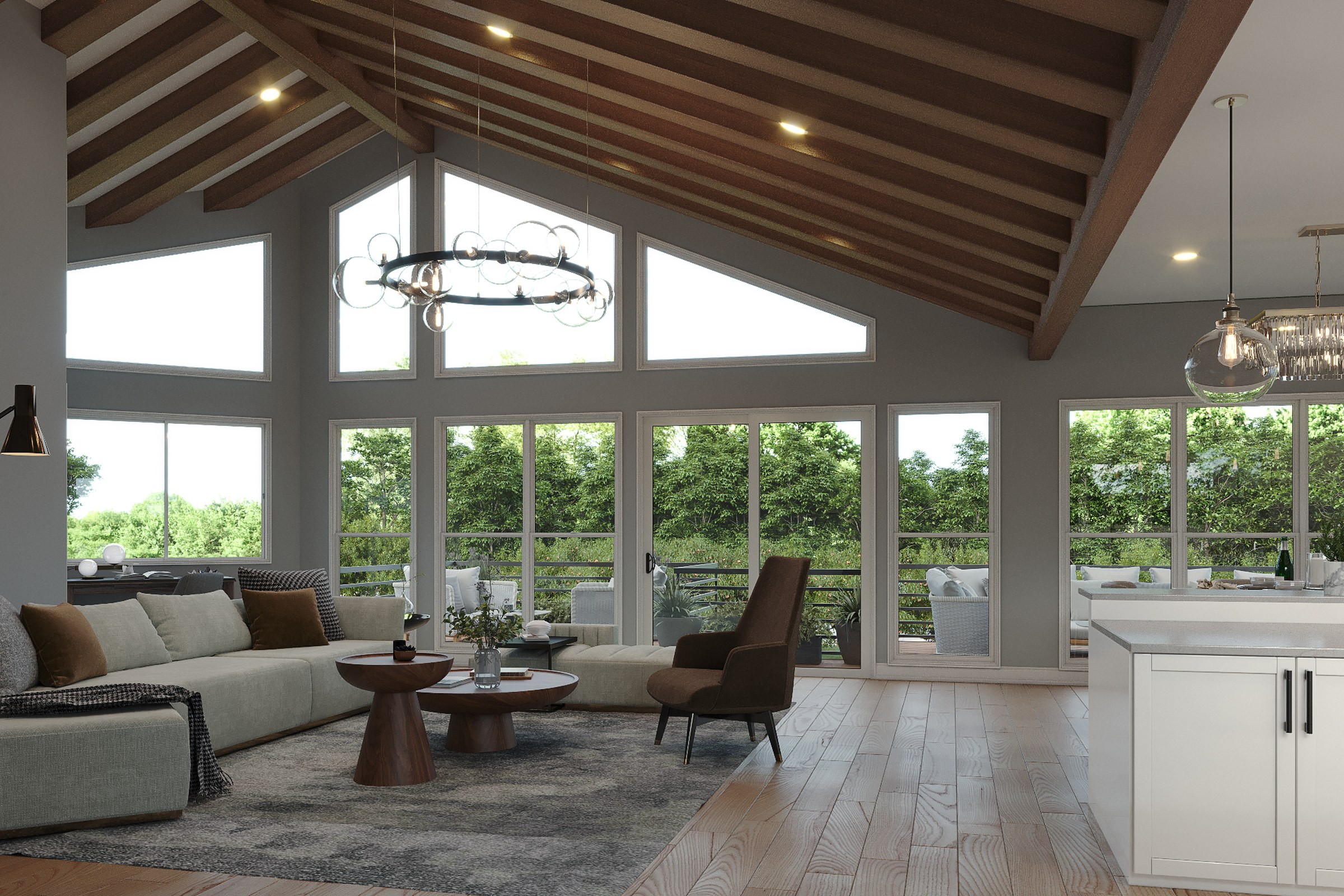
Richard March Living Room — residential 3D rendering by Praxis Studio
Residential

Richard March Living Room

Farmhouse Open Plan Living Visualization

3D interior rendering of an expansive open-plan living space with vaulted timber beam ceiling, floor-to-ceiling windows, large sofa, and walnut coffee tables.

Project Overview

When residential architect reached out about Richard March Living Room, the scope was intentionally tight. One render. No gallery. Just the strongest possible version of this residential interior design.

expansive open-plan living with vaulted timber beam ceiling, floor-to-ceiling windows, large sofa, and walnut coffee tables.

The Result

The final output landed within 3-5 days. Clean, high-resolution, ready for print and screen. It’s been the visual backbone of this project’s public-facing materials.

Thinking about visualization for your next project? Reach out — we respond within 24 hours. Or keep exploring.
Frequently Asked Questions

How do you capture the warmth and scale of a vaulted timber beam ceiling in a 3D render?

We model each timber beam with accurate grain texture and proportions, then use global illumination to simulate how natural light diffuses across the wood surfaces — preserving the warmth and grandeur that defines the space.

What makes rendering open-plan residential living spaces different from other room types?

Open-plan living rooms require careful balance of multiple focal points — seating areas, ceiling architecture, and window views must all read clearly in a single frame without competing, which demands precise camera placement and depth-of-field control.

What is the typical turnaround for a residential living room visualization like this Dallas project?

A single high-resolution living room render with detailed furnishings and natural lighting typically takes 5–7 business days from approved floor plan to final delivery, with one round of revisions included.

How do residential architects use living space renders like this in their client presentations?

Architects present these renders during design development to help homeowners visualize material choices, furniture scale, and natural light behavior — reducing revision cycles and accelerating design approval.

What details make the residential living spaces category stand out in an architectural visualization portfolio?

Residential living spaces demand hyper-realistic soft furnishings, accurate daylight simulation through large glazing, and livable styling cues like coffee table objects and textile textures that make the space feel inhabited rather than sterile.

Like what you see?

Let's create something extraordinary for your next project.