Modern Glass Staircase Double Height Living — residential 3D rendering by Praxis Studio
Residential

Modern Glass Staircase Double Height Living

Modern Staircase Visualization

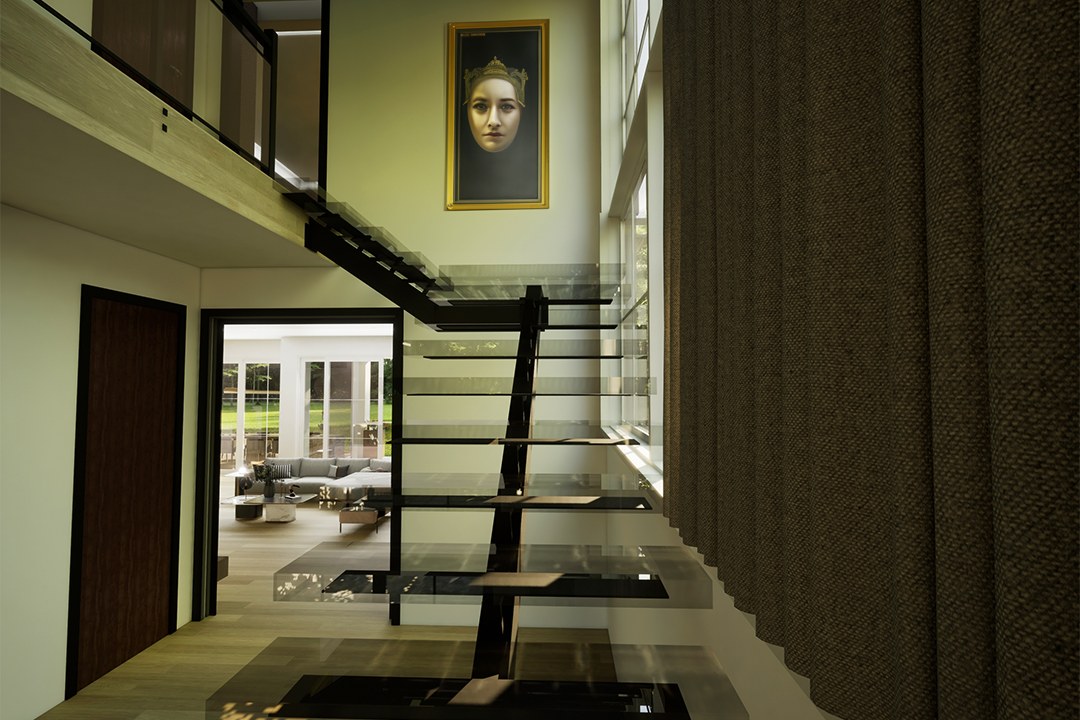
3D rendering of a modern double-height living space featuring a glass-tread staircase, steel stringers, and a mezzanine with wood-panel railing.

Project Overview

The brief for Modern Glass Staircase Double Height Living was refreshingly clear. A residential interior design in Edmonton, AB that needed a single render good enough to carry the entire marketing campaign.

Modern double-height interior viewed from below a glass-tread floating staircase with steel stringers, looking up toward a mezzanine with wood-panel railing, portrait painting in gold frame, floor-to-ceiling curtains, and a living area visible through the glass treads at ground level.

The Result

The final render was delivered within 3-5 days — on time, on brief, ready for immediate use in the interior designer’s marketing and approval workflow.

If this is the kind of quality you’re after, start a conversation with us. Or explore the full portfolio.
Frequently Asked Questions

How do you accurately render light passing through glass staircase treads in a double-height space?

We use physically-based rendering with calibrated refraction and caustic settings for glass materials, ensuring realistic light transmission and shadow patterns cast by the steel stringers and glass treads onto surrounding surfaces.

What makes double-height living space visualizations particularly challenging compared to standard room renders?

Double-height interiors require careful management of vertical scale, multi-level sight lines, and complex natural light behavior across two stories, all of which must read correctly to convey the true spatial drama of the design.

What is the typical turnaround for a residential interior visualization of this complexity?

A double-height interior with detailed elements like floating staircases, mezzanine views, and layered materials is typically delivered within 5-7 business days from confirmed design inputs and material selections.

How do interior designers use renders like this modern glass staircase visualization in their client presentations?

Interior designers use these renders to help clients visualize how transparency, material contrasts, and vertical spatial flow will feel in the finished space, reducing revision cycles and accelerating design approval.

What sets residential living space visualizations apart from other architectural rendering categories?

Residential living spaces demand a focus on warmth, livability, and material intimacy — elements like curtain fabric drape, wood grain detail on railings, and the interplay of art and furnishings must feel curated and inhabitable rather than purely architectural.

Like what you see?

Let's create something extraordinary for your next project.