Modern Floating Staircase Glass Railing — residential 3D rendering by Praxis Studio
Residential

Modern Floating Staircase Glass Railing

Modern Staircase Visualization

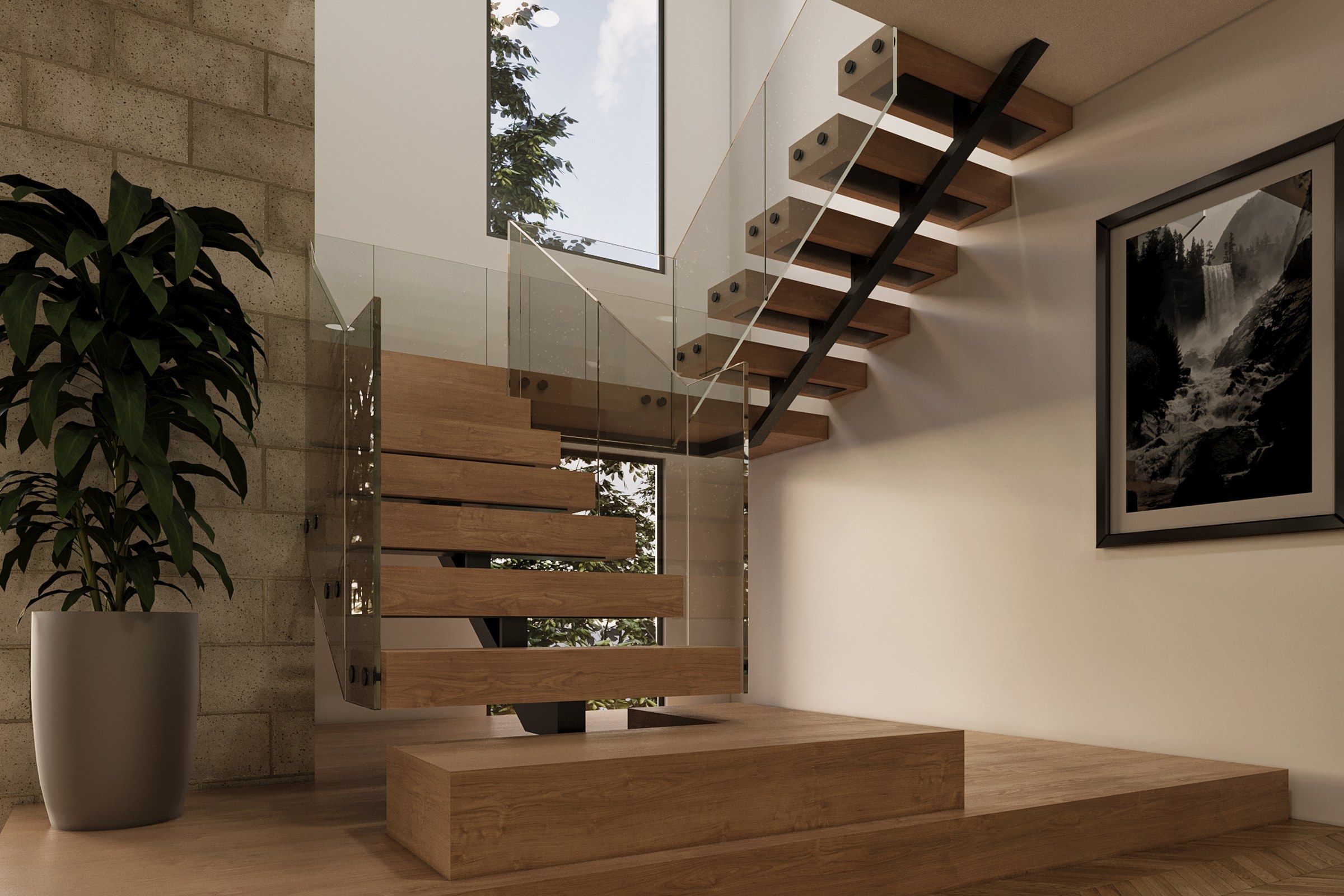
Alternate angle of a modern floating timber staircase with glass balustrade, cinder block feature wall, hardwood flooring, and a framed landscape photograph.

Project Overview

For Modern Floating Staircase Glass Railing, the goal was distilled to its simplest form: produce one render so convincing that it could stand in for the finished building in every pitch deck and planning packet.

Alternate angle of a modern floating timber staircase with glass balustrade, cinder block feature wall, hardwood flooring, and a framed landscape photograph.

The Result

Delivered within 3-5 days, the render slotted straight into the private homeowner’s pitch deck and has been their lead visual for the project.

Working on something similar? Let’s talk about your project — or browse more of our work.
Frequently Asked Questions

How do you capture the transparency and reflections of glass railings in architectural visualization?

We use physically-based rendering with accurate glass shader properties—refraction index, specular transmission, and caustic patterns—to faithfully represent how glass balustrades interact with ambient and directional light in the scene.

Why are multiple camera angles important for residential staircase visualization projects?

Alternate angles reveal how the staircase integrates with surrounding materials like cinder block walls and hardwood flooring, giving homeowners and architects a complete understanding of spatial flow and material relationships before construction begins.

What is the typical turnaround time for a residential interior visualization like this?

A single residential interior scene with detailed material work—timber treads, glass balustrades, and textured feature walls—is typically delivered within 5-7 business days from receipt of approved drawings and material references.

How do UK architects use living space renders like this when presenting to private homeowners?

Architects present these renders during client approval meetings to demonstrate how bespoke elements like floating staircases and feature walls will look in situ, reducing revision cycles and accelerating sign-off on interior design decisions.

What makes residential living space visualizations uniquely challenging compared to other categories?

Living spaces demand extreme material fidelity at close viewing distances—the grain of hardwood flooring, the texture of cinder block, the warmth of timber—because homeowners evaluate these renders against their lived experience of real interiors.

Like what you see?

Let's create something extraordinary for your next project.