Modern Double Height Living Glass Wall
Modern Living Room Visualization
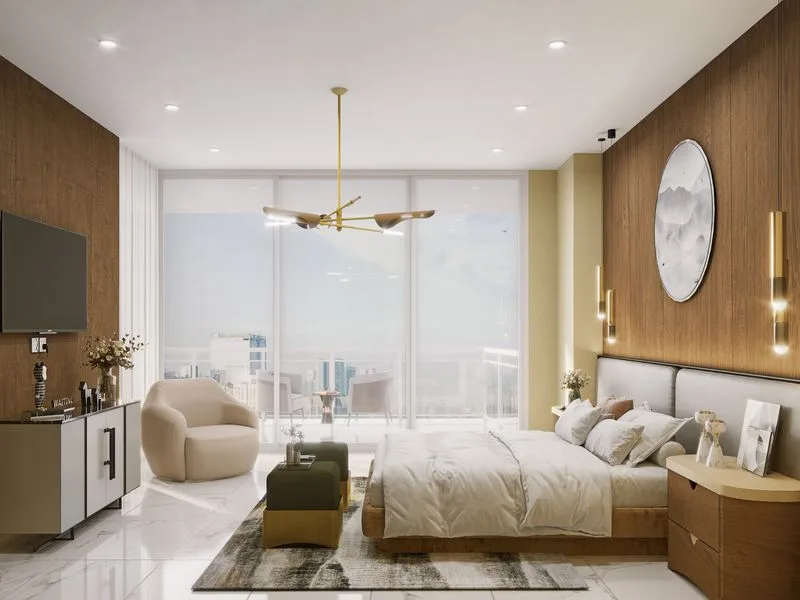
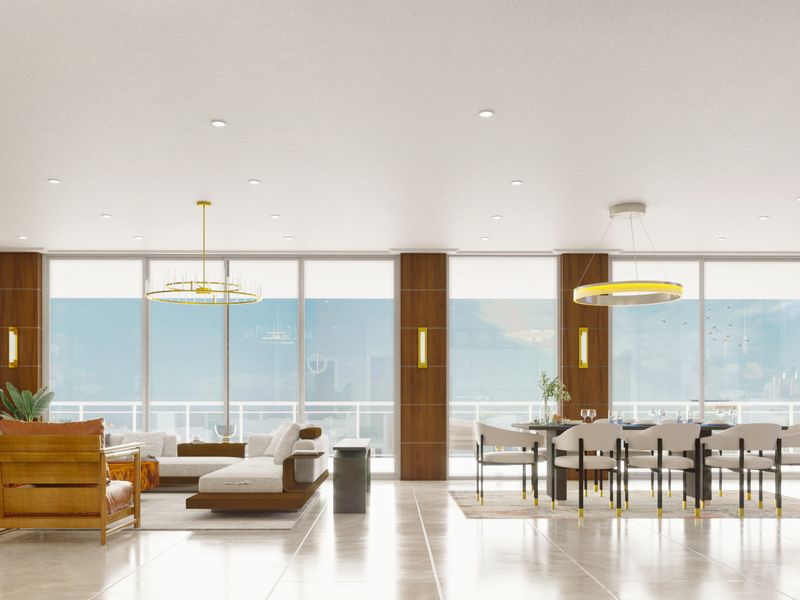
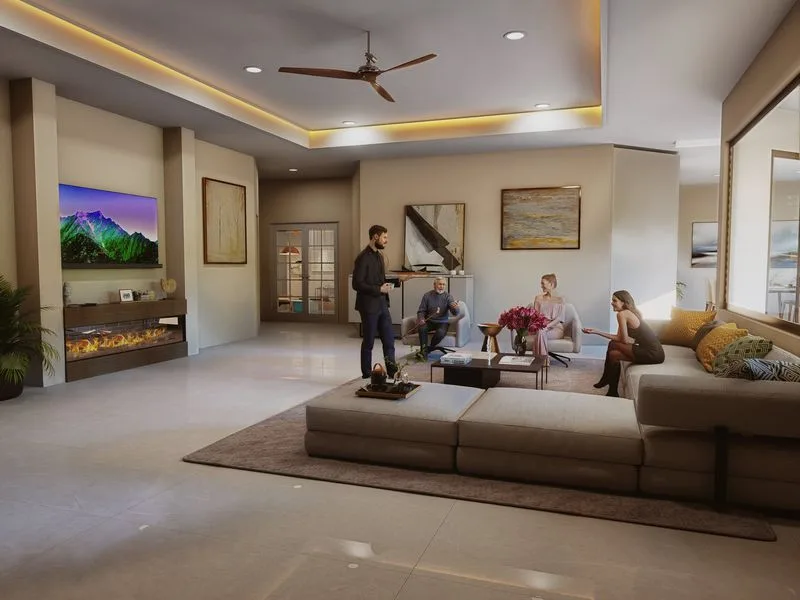
3D rendering of a modern double-height living room featuring a glass curtain wall, classical columns, and an L-shaped sectional sofa in a residential setting.
Project Overview
Interior renderings are a different discipline from exteriors. With an exterior, you control the building and let nature handle the light. With an interior, you control everything — and that makes it harder, not easier. This project from a London-based interior designer in 2024 was a good example of why.
The space was a modern double-height living room with a glass curtain wall, classical columns, and an L-shaped sectional sofa. The designer needed a single eye-level image for a client presentation — the homeowner had seen the floor plan but could not visualize the volume of a double-height space from drawings alone. That is one of the most common reasons interior designers come to us: the moment when a 2D plan fails to communicate the feeling of a room.
Shruti and Amit worked on this together. Shruti handled the architecture and lighting, Amit handled the furniture and soft furnishings. This division of labor is common on our interior projects — the skills for getting a room’s light right are different from the skills for making a sofa cushion look inviting.
The glass curtain wall was the primary light source and the primary challenge. A double-height glass wall floods the space with light, but it also creates harsh contrast between the window side and the interior wall. In reality, your eyes adjust as they scan the room. In a photograph — or a rendering — you have one exposure, and the bright glass wall can easily blow out while the opposite wall goes dark.
Shruti used V-Ray’s exposure controls combined with a subtle fill light placed high on the interior wall opposite the glass. The fill light was invisible in the final image — it simply lifted the shadow side enough to read the material details without flattening the natural directionality of the window light. This is a technique she developed over several projects and now uses as a starting point for any interior with large glazing.
The classical columns were unexpected in a modern interior. The designer was working with an existing structure that had these columns, and rather than hiding them, the design embraced them as a contrast element. Amit modeled the columns with V-Ray displacement for the fluting and a painted stone material — smooth, cool, and slightly reflective, sitting in visual tension with the warm fabric of the sofa and the clean lines of the modern furniture.
The L-shaped sectional was the room’s anchor. The designer had chosen a specific product — a low-profile Italian piece in a warm gray fabric. Amit modeled it from the manufacturer’s dimensions and used a V-Ray fabric material with a fine weave pattern visible at close range. The cushions had slight compression on the seat surfaces, as if someone had been sitting there recently. These details are not visible in a thumbnail, but at full resolution they are what make a viewer feel the room is real.
Technical Approach
Double-height interiors push render times because of the light bouncing. The glass wall admits direct sunlight plus sky illumination, which then bounces off the floor, up to the ceiling, back down — each bounce adding render time. Shruti used V-Ray’s brute force GI for the first bounce and light cache for secondary bounces, with the light cache resolution increased to handle the large vertical space. The floor material — a polished concrete with slight aggregate variation — was critical because it is the primary bounce surface, and its reflectivity directly affected the color and intensity of light reaching the upper portions of the room. The rendering took approximately five hours at 2400 x 1600, which is longer than a typical single-story interior due to the additional light complexity.
The Result
The interior designer presented the rendering to the homeowner, who immediately understood the spatial volume for the first time. The designer told us the client’s reaction was ‘I had no idea it would feel this open’ — which is exactly the response a double-height space should provoke. The design was approved with only minor furniture changes, and the rendering served as the reference image during the build-out phase, with the contractor using it to verify ceiling heights and column positions on site.
Tips for Interior Designers
-
Tell us about the existing structure. If the space has features you are working around — columns, beams, unusual ceiling heights — share photos of the existing conditions. Understanding what is given versus what is designed helps us light and compose the image to emphasize your design choices.
-
Share specific product links for key furniture. When you have chosen a particular sofa, table, or light fixture, the manufacturer’s product page gives us dimensions, materials, and photographs that let us match the piece accurately. Generic stand-in furniture can undermine the specificity of your design.
-
Request the image at the sightline your client will experience. A double-height room looks different from the entry doorway versus from the sofa. Tell us where a person would stand when they first see the space, and we will set the camera there.
Have a project like this? Let’s talk — or explore more work.