March Residential Mud Room — residential 3D rendering by Praxis Studio
Residential

March Residential Mud Room

Farmhouse Mudroom Visualization

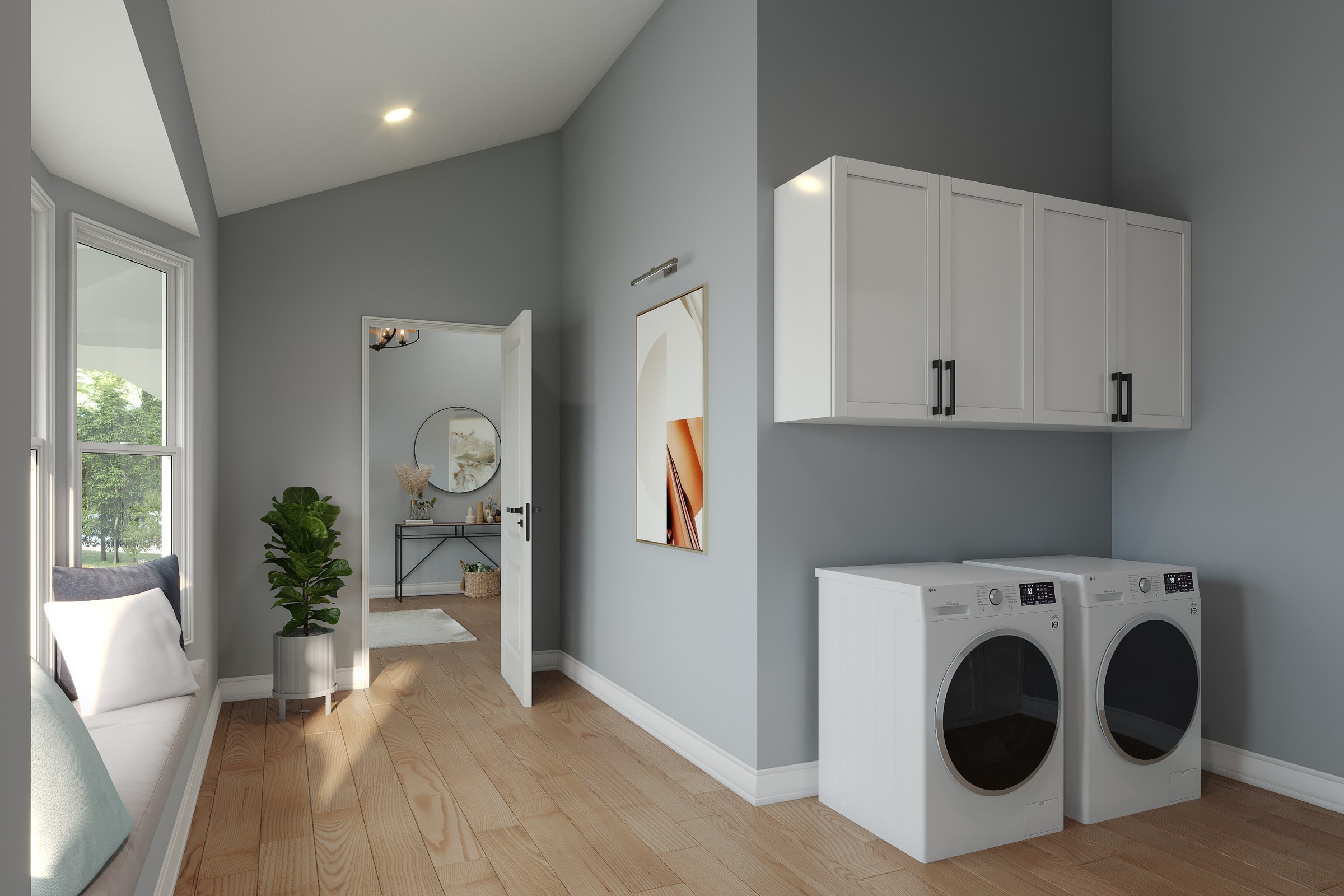
Mud room / laundry area with gray walls, vaulted ceiling, washer and dryer, wall-mounted cabinets, window seat with cushions, and view into entryway through open door.

Project Overview

March Residential Mud Room was a quick-turn engagement. The residential architect had a design they were proud of and needed it visualized — no extras, just one precise, photorealistic render.

Mud room / laundry area with gray walls, vaulted ceiling, washer and dryer, wall-mounted cabinets, window seat with cushions, and view into entryway through open door.

The Result

The final render was delivered within 3-5 days — on time, on brief, ready for immediate use in the residential architect’s marketing and approval workflow.

Need renders for your own project? Tell us about it — we’d like to hear what you’re working on. Or see more work like this.
Frequently Asked Questions

How do you accurately render the natural light coming through a mud room window to show how the space feels during the day?

We simulate precise sun angles based on the project's geographic orientation and latitude—in this case Dresden's northern European light—to show how daylight washes across cabinetry, cushions, and flooring so architects can validate material selections under realistic conditions.

Why would an architect need a 3D visualization for a utility space like a mud room or laundry area?

Mud rooms pack storage, appliances, seating, and circulation into a compact footprint, so a visualization lets the architect and client confirm that every element fits ergonomically before construction begins, avoiding costly change orders.

What is the typical turnaround time for a residential interior render like this mud room scene?

A single-room interior visualization at this level of detail is typically delivered within 3–5 business days from receiving finalized plans, elevations, and material specifications.

How do residential architects use mud room renders like this when presenting to homeowner clients?

Architects embed these renders in design presentations to help homeowners understand spatial flow—such as the transition from entryway to mud room—and to gain faster approval on built-in cabinetry, bench seating, and finish selections.

What makes visualizing residential living spaces like mud rooms different from rendering larger open-plan areas?

Compact utility spaces demand precise attention to fixture clearances, cabinet hardware, and material transitions at close range, since the camera is near every surface—any shortcut in texture resolution or object placement is immediately visible to the viewer.

Like what you see?

Let's create something extraordinary for your next project.