March Residential Away Room — residential 3D rendering by Praxis Studio
Residential

March Residential Away Room

Transitional Living Room Visualization

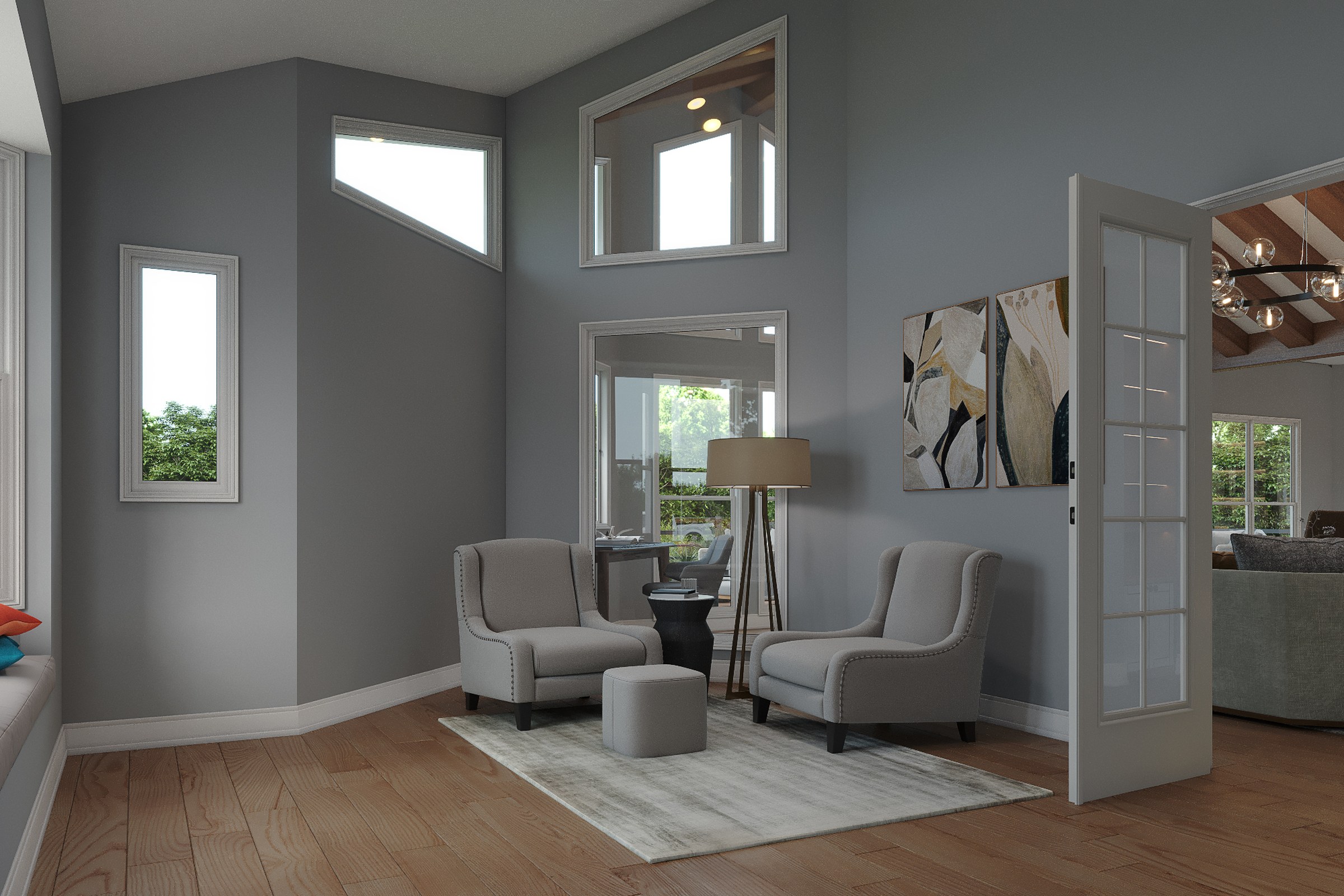
Cozy sitting room with gray walls, two upholstered armchairs, a tripod floor lamp, double-height windows, French door entry, and hardwood flooring.

Project Overview

March Residential Away Room was a quick-turn engagement. The private homeowner had a design they were proud of and needed it visualized — no extras, just one precise, photorealistic render.

Cozy sitting room with gray walls, two upholstered armchairs, a tripod floor lamp, double-height windows, French door entry, and hardwood flooring.

The Result

The final output landed within 3-5 days. Clean, high-resolution, ready for print and screen. It’s been the visual backbone of this project’s public-facing materials.

Need renders for your own project? Tell us about it — we’d like to hear what you’re working on. Or see more work like this.
Frequently Asked Questions

How do you capture the warmth and intimacy of a residential sitting room in a 3D render?

We use carefully calibrated warm lighting, realistic fabric textures on upholstered pieces like armchairs, and natural light simulation through the double-height windows to convey the cozy, lived-in atmosphere homeowners want to feel before construction begins.

Why is 3D visualization valuable for a private homeowner renovating a living space in Brooklyn?

It lets homeowners see exactly how design choices—wall colors, furniture scale, flooring finish—work together in their actual room dimensions, reducing costly change orders and ensuring the final space matches their vision.

What is the typical turnaround for a residential living space rendering like this sitting room?

A single-room interior visualization with defined furnishings and finishes is typically delivered within 5–7 business days, with one round of revisions included to fine-tune materials or lighting.

How do interior designers and architects use renders of residential living spaces with their clients?

They present these renders during design approval meetings to help clients confidently sign off on spatial layout, furniture placement, and finish selections—especially for detail-sensitive rooms like sitting areas where comfort and proportion are critical.

What makes residential living space renders unique compared to other architectural visualization categories?

Residential living spaces demand exceptional attention to soft textures, ambient warmth, and human-scale proportions—elements like the interplay between hardwood flooring grain and natural light through French doors must feel inviting rather than sterile.

Like what you see?

Let's create something extraordinary for your next project.