Luxury Dining Kitchen Green Chairs — residential 3D rendering by Praxis Studio
Residential

Luxury Dining Kitchen Green Chairs

Luxury Open Plan Living Visualization

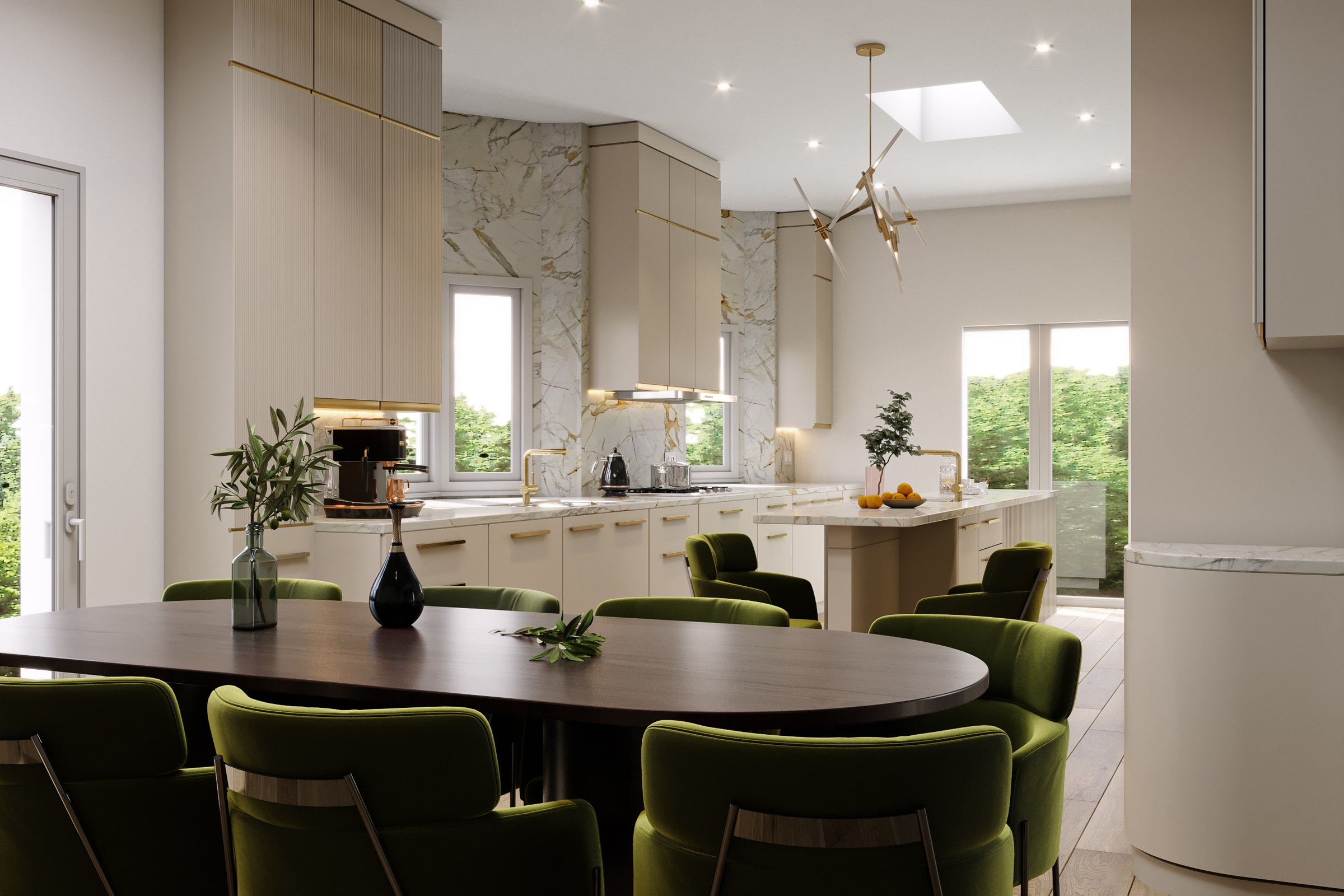
High-end dining-kitchen with large dark wood oval table, olive-green velvet chairs, marble backsplash, skylight, gold sputnik chandelier, and cream cabinetry with gold accents.

Project Overview

Sometimes a single image is all it takes to make a design click. That was the brief for Luxury Dining Kitchen Green Chairs — one hero render that would carry the weight of the entire presentation.

High-end dining-kitchen with large dark wood oval table, olive-green velvet chairs, marble backsplash, skylight, gold sputnik chandelier, and cream cabinetry with gold accents.

The Result

Turnaround was 3-5 days. The render now serves as the primary visual for the project — anchoring everything from the website header to the investor summary.

Have a project in mind? Drop us a brief and we’ll get back to you with a quote within a day. Or see what else we’ve done.
Frequently Asked Questions

How do you capture the contrast between dark wood furniture and light cabinetry in a dining-kitchen visualization?

We use carefully calibrated interior lighting setups—combining the skylight's natural wash with the warm glow of decorative fixtures like the sputnik chandelier—to render accurate tonal separation between dark wood surfaces and cream cabinetry without losing detail in either.

Why is 3D visualization especially valuable for open-concept dining-kitchen designs?

Open dining-kitchens blend living and cooking zones into one space, so visualization lets homeowners and designers evaluate sightlines, material flow, and furniture scale before committing to finishes like marble backsplashes or statement lighting.

What is the typical turnaround for a residential dining-kitchen rendering of this complexity?

A high-detail interior scene with specialty materials—velvet upholstery, polished marble, gold-accented hardware—typically delivers in 5–7 business days from approved concept, including one round of revisions.

How do architects use dining-space renders like this when presenting to private homeowners?

Architects present these renders during design-approval meetings to help clients visualize finish combinations and spatial proportions, significantly reducing mid-construction change orders on elements like countertop materials or lighting fixtures.

What makes residential living-space visualizations more demanding than other interior categories?

Living spaces require photorealistic rendering of soft furnishings, natural fabrics, and reflective accent materials at close viewing distances, where even small inaccuracies in texture or light behavior—like how velvet absorbs light versus how gold reflects it—break the realism immediately.

Like what you see?

Let's create something extraordinary for your next project.