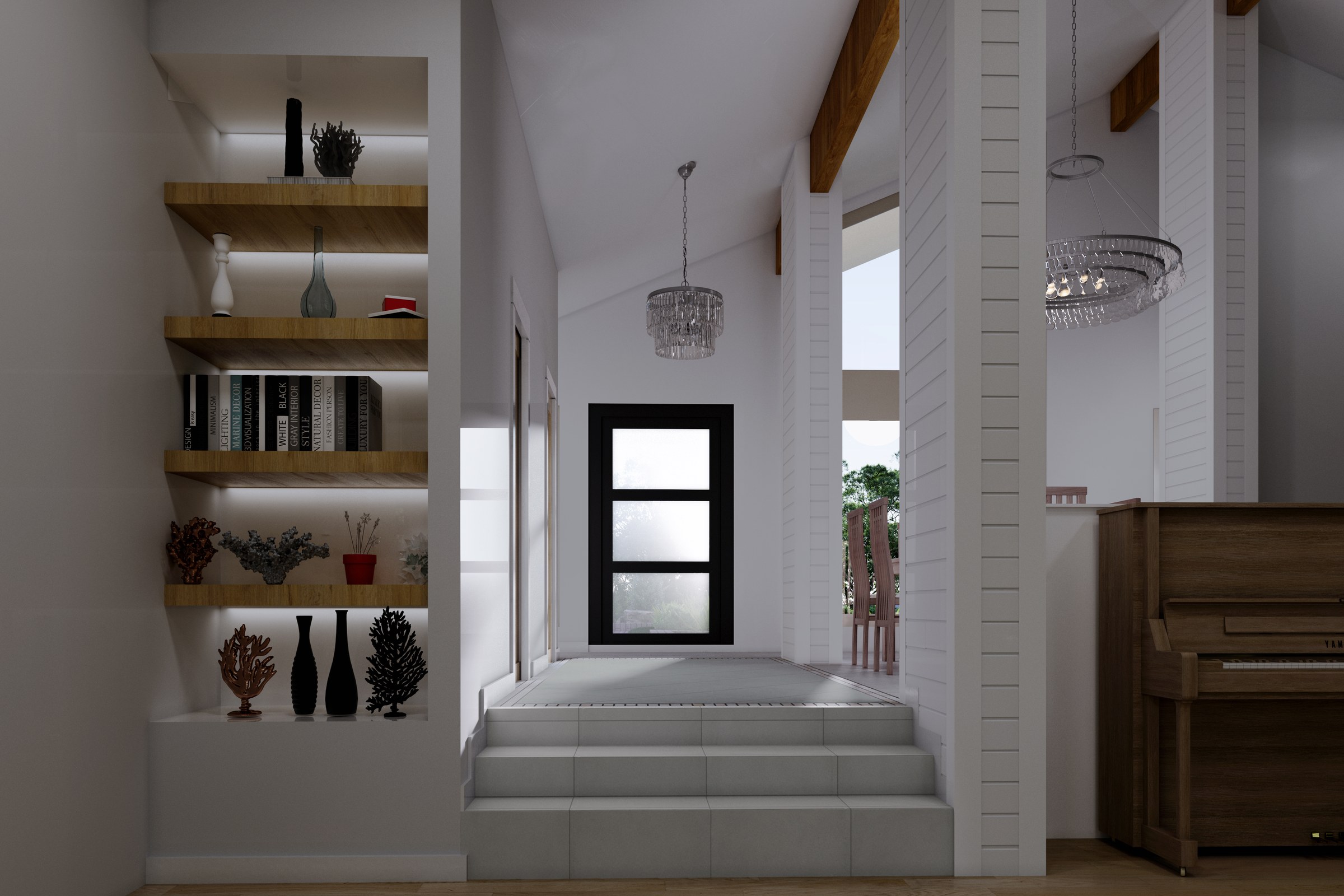
Farmhouse Entry Vaulted Ceiling — residential 3D rendering by Praxis Studio
Residential

Farmhouse Entry Vaulted Ceiling

Farmhouse Entryway Visualization

Vaulted-ceiling entry hall with white shiplap walls, exposed wood beams, built-in bookshelf nook, piano, crystal chandeliers, and steps leading to a glass front door.

Project Overview

For Farmhouse Entry Vaulted Ceiling, the goal was distilled to its simplest form: produce one render so convincing that it could stand in for the finished building in every pitch deck and planning packet.

Vaulted-ceiling entry hall with white shiplap walls, exposed wood beams, built-in bookshelf nook, piano, crystal chandeliers, and steps leading to a glass front door.

The Result

The final render was delivered within 3-5 days — on time, on brief, ready for immediate use in the interior designer’s marketing and approval workflow.

Thinking about visualization for your next project? Reach out — we respond within 24 hours. Or keep exploring.
Frequently Asked Questions

How do you capture the sense of height and grandeur in a vaulted ceiling entry hall rendering?

We use carefully positioned camera angles and accurate vertical scale references—such as the chandelier drop and beam spacing—to convey the full double-height volume, ensuring the render feels as expansive as the real space.

What makes residential entry hall visualizations particularly challenging compared to other living spaces?

Entry halls are transition zones that must balance natural light from the front door with interior warmth, and every material—shiplap, wood beams, stone steps—needs to read correctly at close range since this is the first space visitors experience.

What is the typical turnaround time for a detailed residential interior visualization like this?

A high-detail entry hall render with complex elements like exposed beams, crystal chandeliers, and built-in millwork typically takes 5–7 business days from approved concept to final delivery.

How do interior designers use a vaulted entry hall rendering when presenting to their clients?

Designers use these renders to validate material palettes, fixture selections, and spatial proportions with homeowners before procurement begins, reducing costly changes during construction.

What sets residential living space visualizations apart from commercial interior renders?

Residential living spaces demand a lived-in warmth—soft textiles, personal objects like the piano, and nuanced ambient lighting—that commercial renders rarely require, making material accuracy and mood-setting the defining priorities.

Like what you see?

Let's create something extraordinary for your next project.