Eric Traditional Kitchen Open Plan — residential 3D rendering by Praxis Studio
Residential

Eric Traditional Kitchen Open Plan

Traditional Open Plan Living Visualization

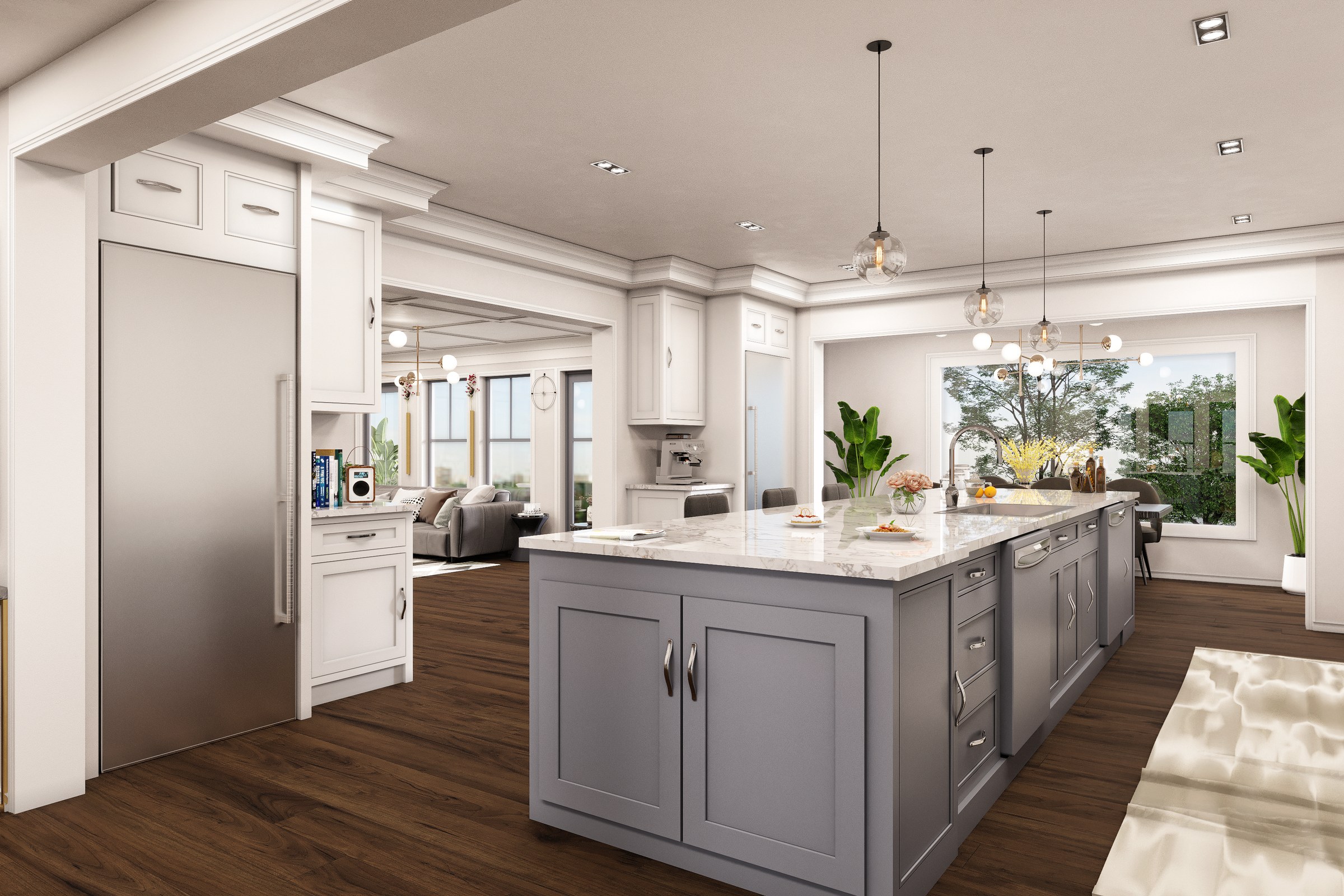
Traditional open-plan kitchen with large gray island, marble countertop, pendant globe lights, white cabinetry with crown molding, dark hardwood floors, and a dining area beyond.

Project Overview

The team behind Eric Traditional Kitchen Open Plan came to us with a clear ask — a single, definitive render that would capture the essence of this residential interior project in Portland, OR.

Traditional open-plan kitchen with large gray island, marble countertop, pendant globe lights, white cabinetry with crown molding, dark hardwood floors, and a dining area beyond.

The Result

The image shipped on schedule and has been the go-to visual for this project ever since — presentations, planning submissions, social media, the lot.

Thinking about visualization for your next project? Reach out — we respond within 24 hours. Or keep exploring.
Frequently Asked Questions

How do you accurately render the veining and translucency of marble countertops in a kitchen visualization?

We use high-resolution scanned marble textures with subsurface scattering to replicate how light penetrates and reflects off natural stone, ensuring the countertop reads as authentic marble rather than a flat printed surface.

What challenges come with visualizing an open-plan kitchen that transitions into a dining area?

The key challenge is maintaining correct lighting continuity and depth across both zones — we carefully balance pendant light pools over the island with ambient daylight reaching the dining area so each space feels connected yet distinct.

What is the typical turnaround for a residential kitchen visualization of this scope?

A single high-resolution render of a detailed traditional kitchen like this is typically delivered within 5–7 business days, including one round of revisions for material or lighting adjustments.

How do architects use open-plan kitchen renders like this during the client approval process?

Architects present these renders to homeowners to confirm finish selections — cabinet profiles, countertop stone, flooring tone, and fixture styles — before procurement begins, reducing costly change orders during construction.

What makes residential living space visualizations unique compared to commercial interior renders?

Residential living spaces demand a warmth and livability that commercial renders don't — details like the patina of hardwood floors, the soft glow of pendant globes, and the scale of crown molding must feel inviting and personal rather than sterile or showroom-like.

Like what you see?

Let's create something extraordinary for your next project.