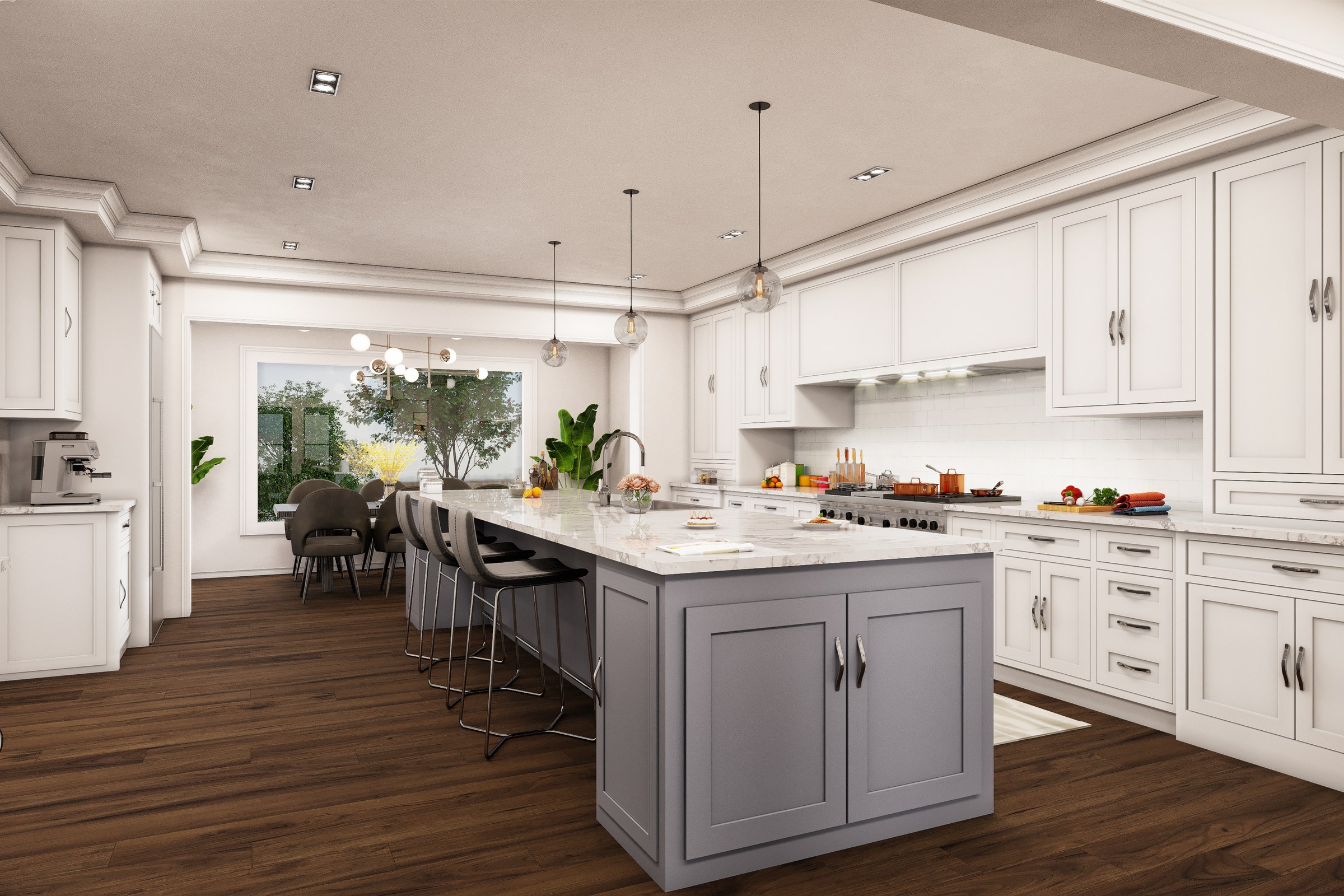
Eric Traditional Kitchen Alternate — residential 3D rendering by Praxis Studio
Residential

Eric Traditional Kitchen Alternate

Traditional Open Plan Living Visualization

Alternate view of the traditional kitchen showing white cabinetry, gray island with bar stools, globe pendants, subway tile backsplash, dining nook, and dark hardwood flooring.

Project Overview

Eric Traditional Kitchen Alternate needed one image that could do it all: sell the vision, anchor the marketing, and give stakeholders something concrete to rally behind.

Alternate view of the traditional kitchen showing white cabinetry, gray island with bar stools, globe pendants, subway tile backsplash, dining nook, and dark hardwood flooring.

The Result

The image shipped on schedule and has been the go-to visual for this project ever since — presentations, planning submissions, social media, the lot.

Need renders for your own project? Tell us about it — we’d like to hear what you’re working on. Or see more work like this.
Frequently Asked Questions

How do you capture the warmth of traditional kitchen elements like subway tile and globe pendants in a 3D render?

We carefully calibrate material shaders and lighting to replicate the tactile quality of handmade subway tiles, the translucency of glass globe pendants, and the reflective warmth of polished hardware, ensuring every traditional detail feels authentic rather than digitally flat.

Why would an architect need an alternate-angle render of the same kitchen design?

Alternate views reveal spatial relationships that a single hero shot cannot, such as how the dining nook connects to the island workflow or how bar-stool sightlines interact with pendant heights — critical details residential clients need to approve before construction.

What is the typical turnaround for a set of residential kitchen visualization alternates?

Once the primary kitchen render is approved, additional alternate-angle views are typically delivered within 2–3 business days since lighting, materials, and scene setup are already established.

How do residential architects use kitchen renders like this when presenting to homeowner clients?

Architects embed these renders in design presentations to help homeowners visualize finish combinations — such as white cabinetry against a gray island and dark hardwood flooring — eliminating guesswork and reducing costly change orders during construction.

What makes residential living-space visualizations more demanding than other architectural categories?

Living spaces are judged at an intimate, human scale where clients notice every material grain, light reflection, and furniture proportion, so the rendering must achieve a level of photorealistic detail and warmth that commercial or exterior categories rarely require.

Like what you see?

Let's create something extraordinary for your next project.