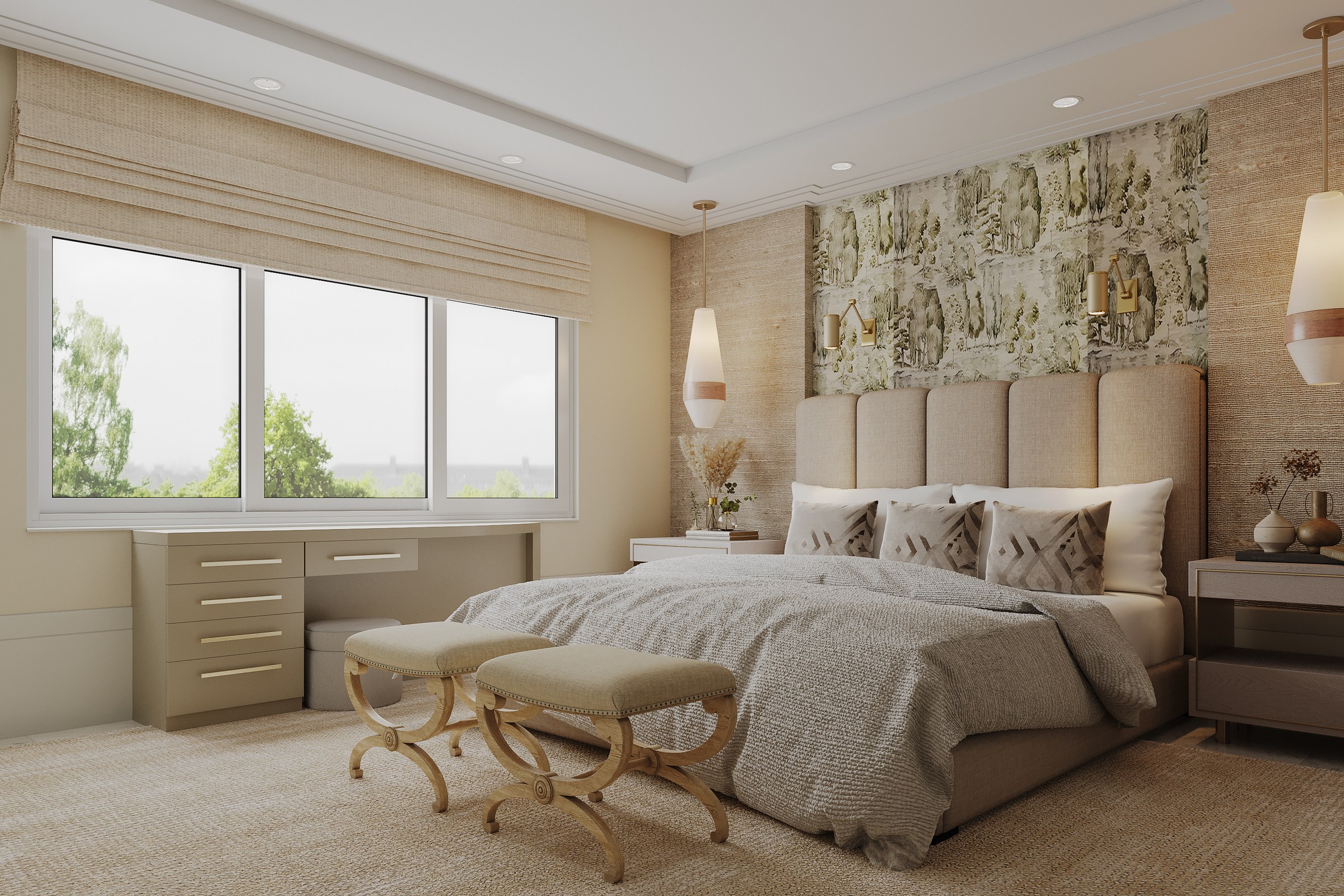
David Traditional Master Bedroom — residential 3D rendering by Praxis Studio
Residential

David Traditional Master Bedroom

Traditional Master Bedroom Visualization

Traditional master bedroom with botanical upholstered headboard, textured grasscloth walls, Roman blinds, built-in desk area, twin bench stools, and warm beige tones.

Project Overview

Sometimes a single image is all it takes to make a design click. That was the brief for David Traditional Master Bedroom — one hero render that would carry the weight of the entire presentation.

Traditional master bedroom with botanical upholstered headboard, textured grasscloth walls, Roman blinds, built-in desk area, twin bench stools, and warm beige tones.

The Result

The image shipped on schedule and has been the go-to visual for this project ever since — presentations, planning submissions, social media, the lot.

Need renders for your own project? Tell us about it — we’d like to hear what you’re working on. Or see more work like this.
Frequently Asked Questions

How do you accurately render intricate textile details like a botanical upholstered headboard in 3D?

We use high-resolution texture mapping and physically based material shaders to replicate fabric weaves, botanical print patterns, and upholstery stitching so the headboard reads as true-to-life in the final render.

What makes a traditional master bedroom visualization different from modern bedroom projects?

Traditional bedrooms rely on layered textures—grasscloth walls, Roman blinds, warm wood tones—so the visualization must capture subtle tonal depth and material interplay rather than the clean-line contrasts typical of modern designs.

What is the typical turnaround time for a residential bedroom visualization like this?

A single master bedroom scene with finalized material selections is typically delivered within 5–7 business days, including one round of revisions for furniture placement and colour adjustments.

How do interior designers and homeowners use a bedroom render like this before construction begins?

The render lets designers confirm that elements like the built-in desk area, twin bench stools, and wall treatments work together spatially and tonally, reducing costly material changes once installation starts.

Why do residential living-space visualizations require a different lighting approach than commercial interiors?

Residential bedrooms depend on soft, warm ambient light mixed with natural window light through treatments like Roman blinds, so we carefully simulate indirect bounce and fabric-filtered daylight to convey the inviting atmosphere homeowners expect.

Like what you see?

Let's create something extraordinary for your next project.