David Luxury Open Plan Dining — residential 3D rendering by Praxis Studio
Residential

David Luxury Open Plan Dining

Luxury Open Plan Living Visualization

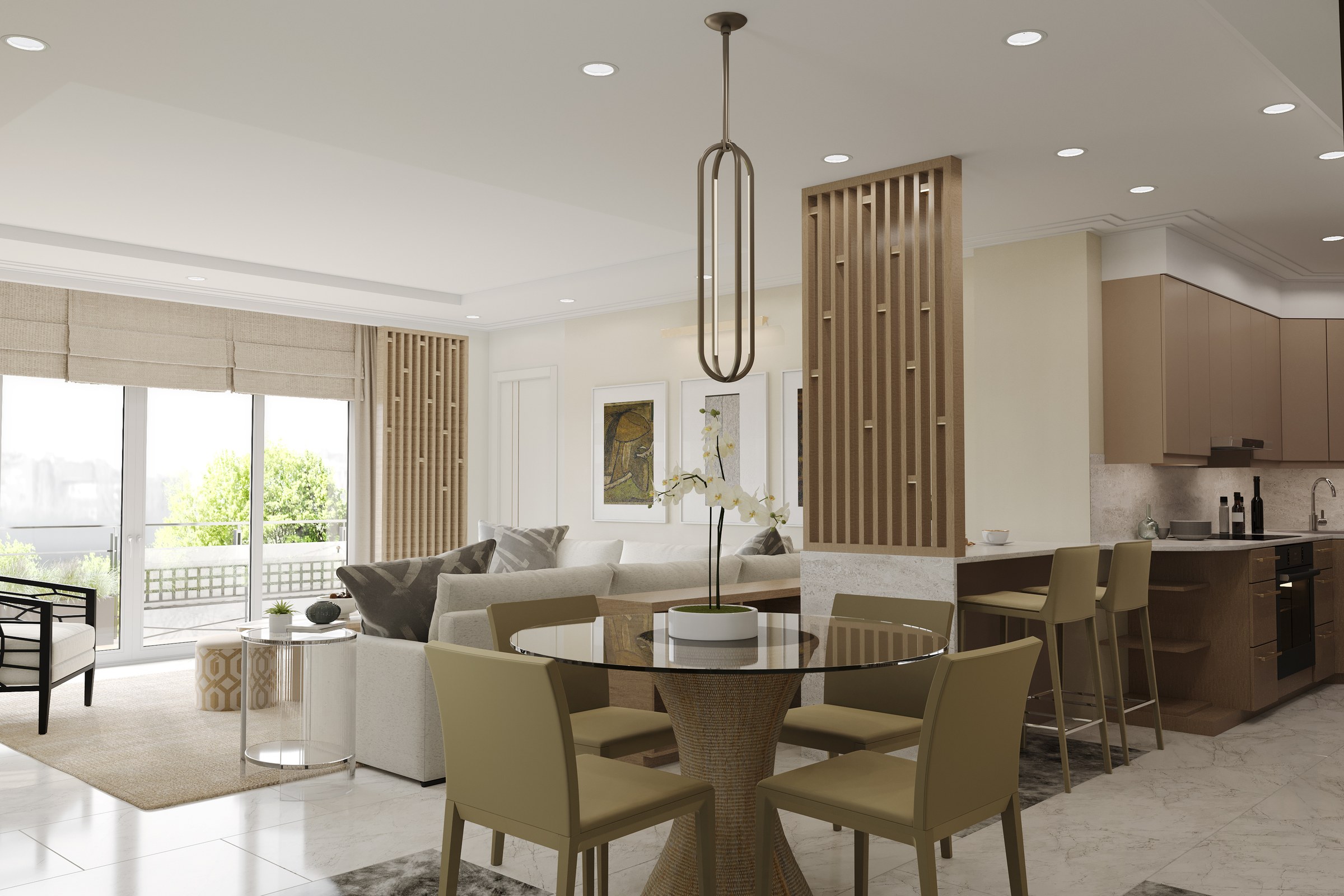
Open-plan living-dining space with glass-top round dining table, cream chairs, wood slat room divider, pendant light, balcony doors, and a connecting kitchen area.

Project Overview

Not every project needs a dozen views. David Luxury Open Plan Dining called for one carefully considered image — the kind that stops a client mid-scroll and gets a meeting scheduled.

Open-plan living-dining space with glass-top round dining table, cream chairs, wood slat room divider, pendant light, balcony doors, and a connecting kitchen area.

The Result

Delivered within 3-5 days, the render slotted straight into the residential architect’s pitch deck and has been their lead visual for the project.

If this is the kind of quality you’re after, start a conversation with us. Or explore the full portfolio.
Frequently Asked Questions

How do you capture the spatial flow between the dining and kitchen areas in an open-plan render?

We use carefully positioned camera angles and natural sight lines to emphasize the seamless transition between zones, ensuring the glass-top dining table, wood slat divider, and kitchen entry all read as one cohesive living environment.

Why is 3D visualization particularly valuable for open-plan residential living-dining spaces?

Open-plan layouts rely on proportional balance between furniture groupings, dividers, and circulation paths — a photorealistic render lets architects and clients evaluate spatial harmony before construction begins.

What is the typical turnaround for a residential interior visualization like this Orlando dining space?

A single-room interior render at this level of detail is typically delivered within 5–7 business days, including one round of revisions for furniture placement and lighting adjustments.

How do residential architects use renders of living-dining spaces in their client presentations?

Architects present these renders during design-development meetings to help homeowners visualize material choices like wood slat dividers and pendant lighting, reducing change orders and accelerating approvals.

What makes residential living-space visualizations unique compared to other architectural categories?

These renders demand a lived-in warmth — accurate soft furnishings, natural daylight through balcony doors, and subtle material textures on elements like cream upholstery and glass tabletops that make the space feel inviting rather than sterile.

Like what you see?

Let's create something extraordinary for your next project.