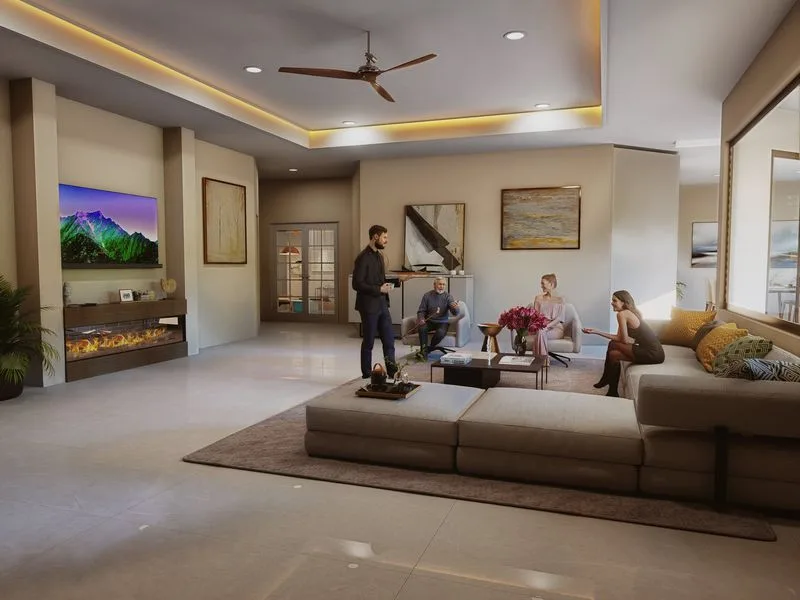
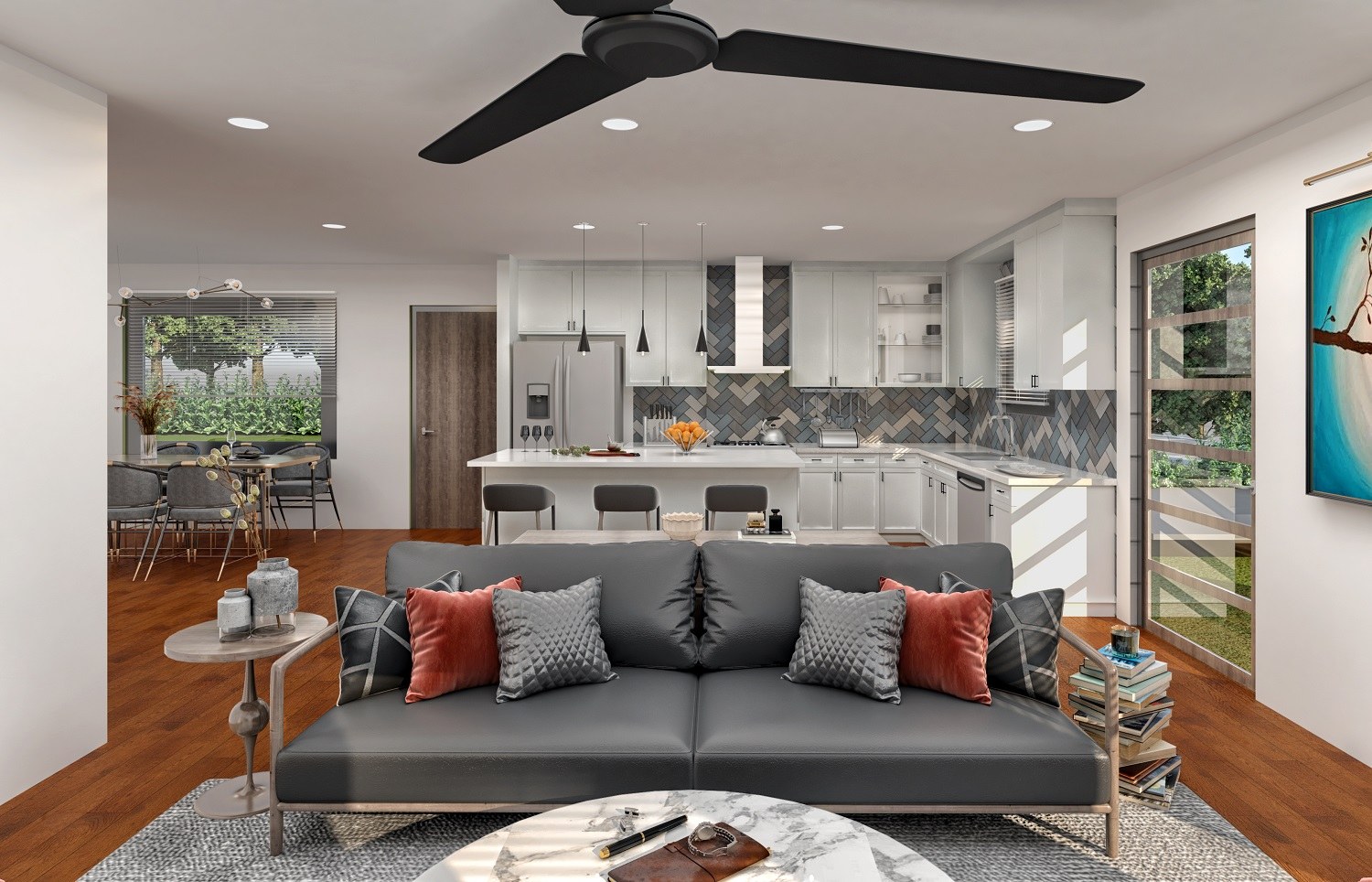
Darsh Living Kitchen Open Plan — residential 3D rendering by Praxis Studio
Residential

Darsh Living Kitchen Open Plan

Contemporary Open Plan Living Visualization

Open-concept living room and kitchen with gray leather sofa, red and patterned accent pillows, herringbone tile backsplash, white cabinetry, ceiling fan, and marble-top coffee table.

Project Overview

For Darsh Living Kitchen Open Plan, the goal was distilled to its simplest form: produce one render so convincing that it could stand in for the finished building in every pitch deck and planning packet.

Open-concept living room and kitchen with gray leather sofa, red and patterned accent pillows, herringbone tile backsplash, white cabinetry, ceiling fan, and marble-top coffee table.

The Result

Turnaround was 3-5 days. The render now serves as the primary visual for the project — anchoring everything from the website header to the investor summary.

Have a project in mind? Drop us a brief and we’ll get back to you with a quote within a day. Or see what else we’ve done.
Frequently Asked Questions

How do you capture the seamless flow between the living and kitchen areas in an open-plan rendering?

We use carefully positioned camera angles and consistent lighting across both zones to emphasize spatial continuity, ensuring the transition from living area to kitchen feels natural and architecturally intentional.

What design elements make open-concept residential living spaces challenging to visualize?

Open-plan layouts require balancing multiple material palettes — such as herringbone tile, leather upholstery, and marble surfaces — within a single frame while maintaining visual coherence and accurate color relationships under unified lighting.

What is the typical turnaround for a residential living space visualization like this open-plan kitchen and living room?

A detailed open-concept interior like this typically takes 5-7 business days from approved modeling to final delivery, including two rounds of revisions for material and lighting adjustments.

How do residential architects use open-plan living renders during the client approval process?

Architects present these visualizations to help homeowners understand spatial proportions, furniture scale, and finish selections — reducing costly change orders by resolving design decisions before construction begins.

What makes residential living space visualizations unique compared to other interior categories?

Living spaces demand a lifestyle-driven approach where soft furnishings, accent details like patterned pillows, and ambient elements like ceiling fans must convey warmth and livability rather than just architectural accuracy.

Like what you see?

Let's create something extraordinary for your next project.