Contemporary Living Room Blue Tile — residential 3D rendering by Praxis Studio
Residential

Contemporary Living Room Blue Tile

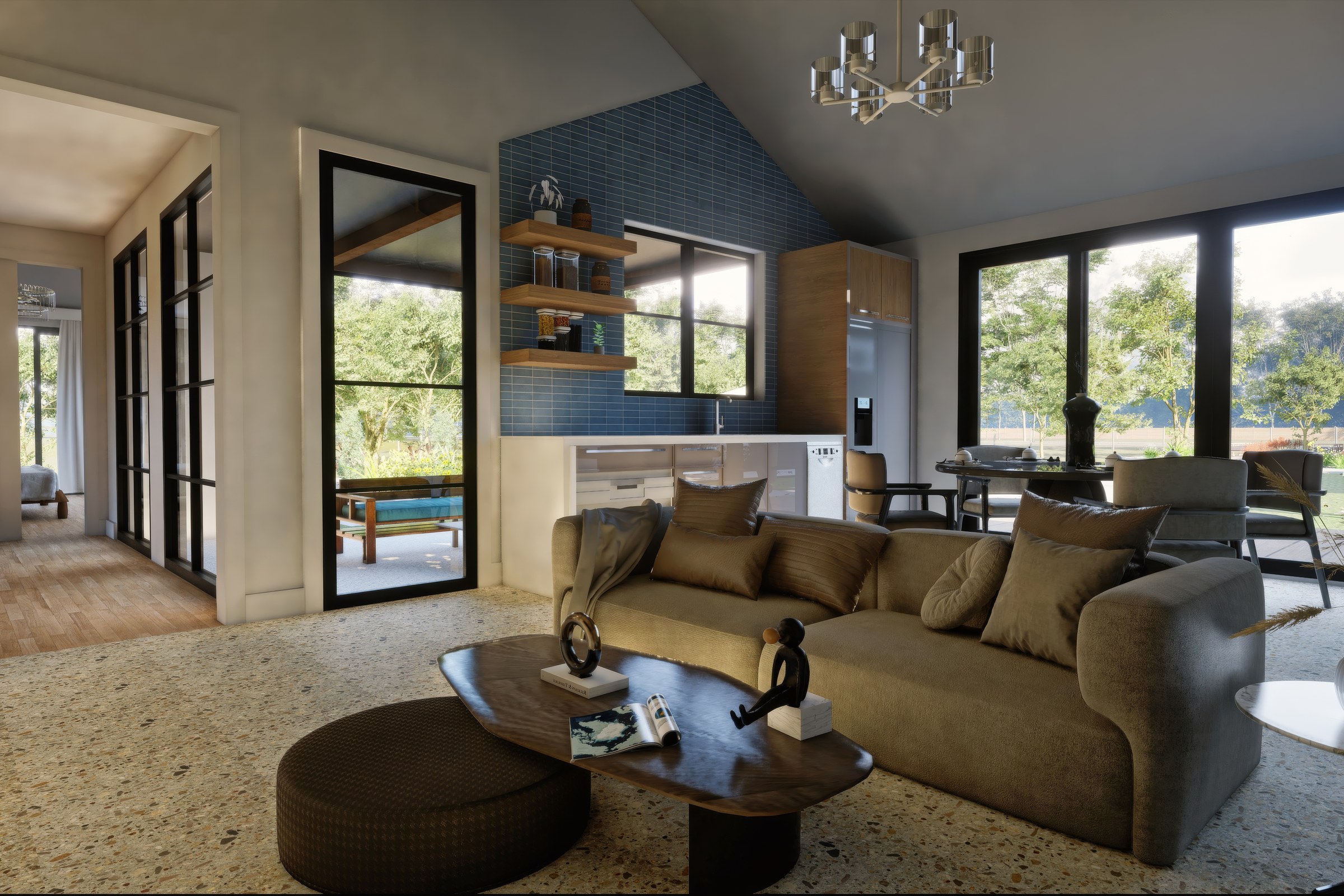
Contemporary Living Room Visualization

Contemporary living room with vaulted ceiling, olive-brown sofa, round wood coffee table, blue tile accent wall and kitchen visible, terrazzo flooring, and steel-framed glass doors to garden.

Project Overview

The team behind Contemporary Living Room Blue Tile came to us with a clear ask — a single, definitive render that would capture the essence of this residential interior project in Malibu, CA.

Contemporary living room with vaulted ceiling, olive-brown sofa, round wood coffee table, blue tile accent wall and kitchen visible, terrazzo flooring, and steel-framed glass doors to garden.

The Result

We delivered the finished image within 3-5 days. It’s since been used across the project’s marketing materials, from digital listings to printed collateral.

Got a project that needs this kind of visual clarity? Get in touch or see more examples.
Frequently Asked Questions

How did you achieve the realistic light interaction on the blue tile accent wall in this living room render?

We used physically-based material shading to accurately simulate how natural light from the steel-framed glass doors reflects and diffuses across the glazed tile surface, capturing the subtle color shifts between direct and ambient lighting conditions.

Why is architectural visualization particularly valuable for home staging companies marketing contemporary residential properties?

High-quality 3D renders allow home staging companies to present fully styled interiors before any physical furniture is placed, enabling pre-sale marketing materials and helping prospective buyers visualize the lifestyle potential of spaces like this Malibu living room.

What is the typical turnaround time for a contemporary living room visualization of this complexity?

A residential living space render with this level of detail—including custom materials like terrazzo flooring, vaulted ceilings, and visible adjacent rooms—is typically delivered within 5-7 business days from approved brief to final output.

How do architects use living room renders like this during the design approval process?

Architects present these visualizations to clients and review boards to communicate spatial relationships, material palettes, and natural light behavior, making it far easier to secure design approvals than with floor plans or mood boards alone.

What makes residential living space visualizations uniquely challenging compared to other architectural categories?

Living spaces demand exceptional attention to soft furnishing textures, warm ambient lighting, and the seamless visual flow between connected areas—like the kitchen visible beyond the accent wall here—because viewers intuitively judge residential renders against their own lived experience of home interiors.

Like what you see?

Let's create something extraordinary for your next project.