96 Master Bedroom Alternate — residential 3D rendering by Praxis Studio
Residential

96 Master Bedroom Alternate

Contemporary Master Bedroom Visualization

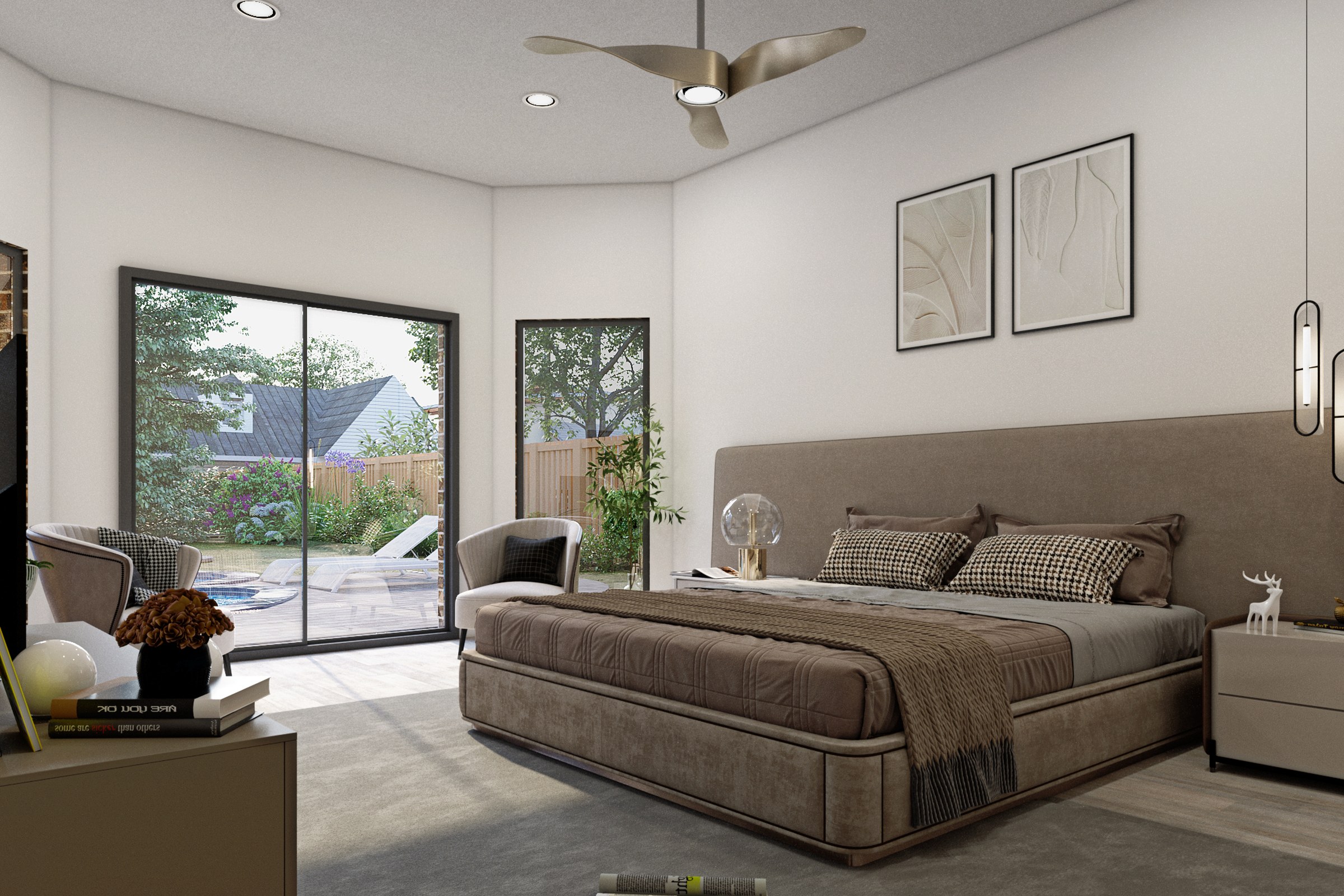
Master bedroom alternate view with upholstered king bed, ceiling fan, sliding glass doors to pool and garden, abstract artwork, and neutral earth-tone bedding.

Project Overview

This one’s straightforward in scope but not in ambition. 96 Master Bedroom Alternate required a single render that could represent weeks of design work in one frame.

Master bedroom alternate view with upholstered king bed, ceiling fan, sliding glass doors to pool and garden, abstract artwork, and neutral earth-tone bedding.

The Result

We delivered the finished image within 3-5 days. It’s since been used across the project’s marketing materials, from digital listings to printed collateral.

Thinking about visualization for your next project? Reach out — we respond within 24 hours. Or keep exploring.
Frequently Asked Questions

How do you achieve realistic fabric textures on upholstered furniture like the king bed in this rendering?

We use high-resolution tileable fabric maps with displacement and subsurface scattering to replicate the weight and weave of upholstery materials, ensuring the bed reads as authentically tactile in the final render.

What design elements are typically highlighted in a master bedroom alternate view?

An alternate view showcases secondary focal points such as the relationship between the bed and outdoor access through sliding glass doors, ceiling fixture placement, and how artwork anchors the wall composition — details that a primary camera angle may not fully capture.

What is the typical turnaround for a residential bedroom visualization with indoor-outdoor context like this one?

A single master bedroom scene with pool and garden visibility through glass doors is typically delivered within 5–7 business days, including one round of revisions for furniture placement and lighting adjustments.

How do interior designers use a rendering like this when presenting a master bedroom concept to their clients?

Designers use these renders to validate material palettes — such as the earth-tone bedding against neutral walls — and to demonstrate spatial flow between the bedroom and outdoor living areas before any purchasing or construction commitments are made.

What makes residential living space visualizations more nuanced than other architectural rendering categories?

Living spaces demand a careful balance of warmth and realism — natural light interaction with soft furnishings, believable art placement, and an inviting atmosphere — because clients judge these rooms on emotional comfort, not just architectural accuracy.

Like what you see?

Let's create something extraordinary for your next project.