93 Living Kitchen Open Plan — residential 3D rendering by Praxis Studio
Residential

93 Living Kitchen Open Plan

Contemporary Open Plan Living Visualization

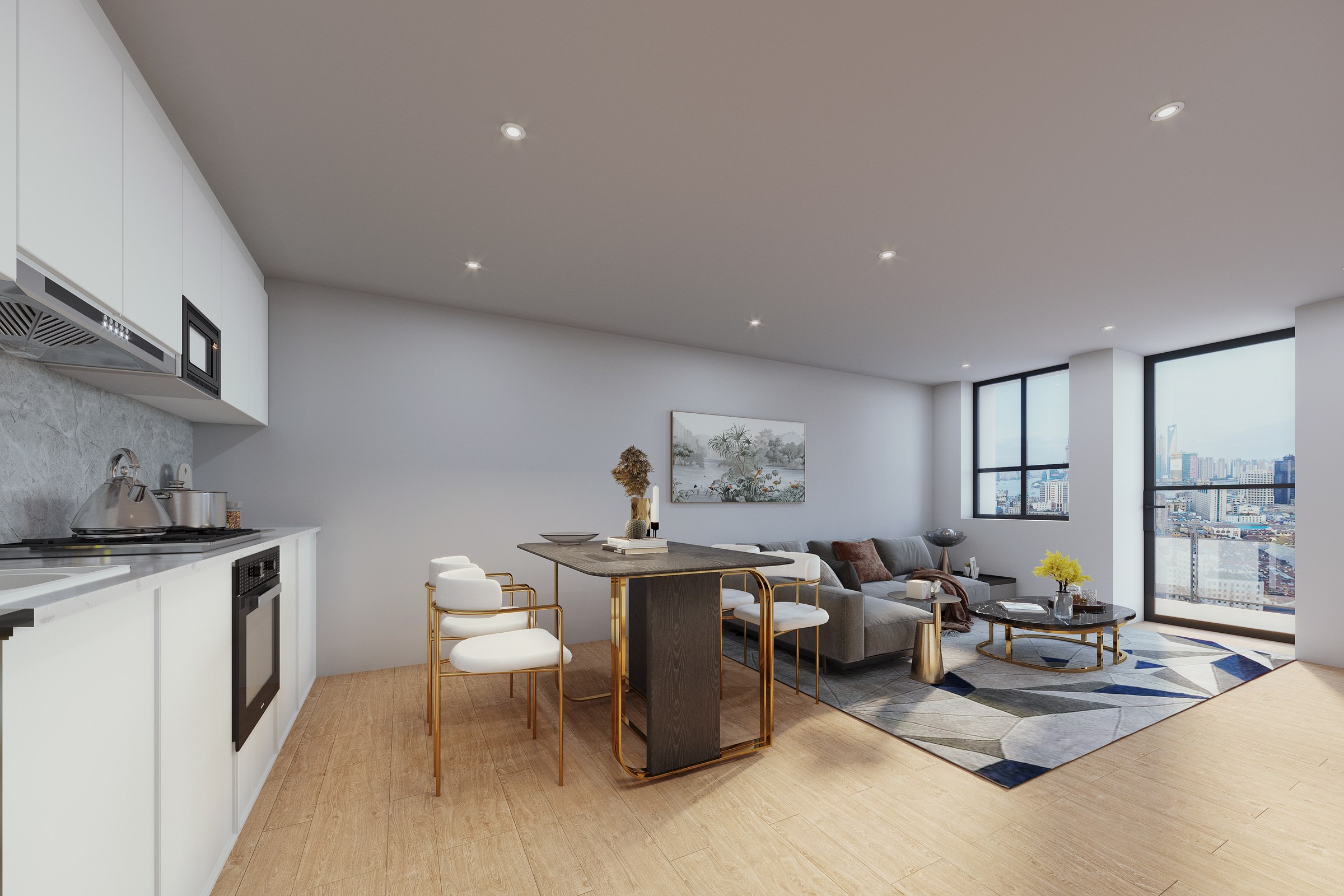
Modern open-plan apartment with kitchenette, dark dining table with gold-framed chairs, gray sofa, geometric area rug, and city views through floor-to-ceiling windows.

Project Overview

For 93 Living Kitchen Open Plan, the goal was distilled to its simplest form: produce one render so convincing that it could stand in for the finished building in every pitch deck and planning packet.

Modern open-plan apartment with kitchenette, dark dining table with gold-framed chairs, gray sofa, geometric area rug, and city views through floor-to-ceiling windows.

The Result

The final render was delivered within 3-5 days — on time, on brief, ready for immediate use in the residential architect’s marketing and approval workflow.

If this is the kind of quality you’re after, start a conversation with us. Or explore the full portfolio.
Frequently Asked Questions

How do you capture the seamless flow between kitchen, dining, and living areas in an open-plan visualization?

We use carefully positioned camera angles and consistent lighting to emphasize spatial continuity, ensuring the kitchenette, dining zone, and lounge read as one cohesive environment rather than separate rooms.

What details matter most when rendering a modern residential open-plan living space?

Material contrast is key — here the dark dining table against gold-framed chairs, the geometric rug grounding the gray sofa, and reflective city-view glazing all need accurate texture and light interaction to feel authentic.

What is the typical turnaround for a residential interior visualization like this Hamburg apartment?

A single high-resolution interior render of this complexity is typically delivered within 3–5 business days, with one round of revisions included to fine-tune materials, lighting, or camera framing.

How do residential architects use open-plan living renders like this during the design process?

Architects present these renders to clients and developers to validate furniture layouts, material palettes, and the relationship between interior living areas and exterior views before construction begins.

What makes residential living-space visualizations uniquely challenging compared to other architectural categories?

Living spaces demand a livable warmth that commercial renders don't — every cushion texture, ambient light bounce from city windows, and subtle material grain must feel inviting enough for a buyer to picture themselves at home.

Like what you see?

Let's create something extraordinary for your next project.