115 Lounge Fireplace — residential 3D rendering by Praxis Studio
Residential

115 Lounge Fireplace

Transitional Open Plan Living Visualization

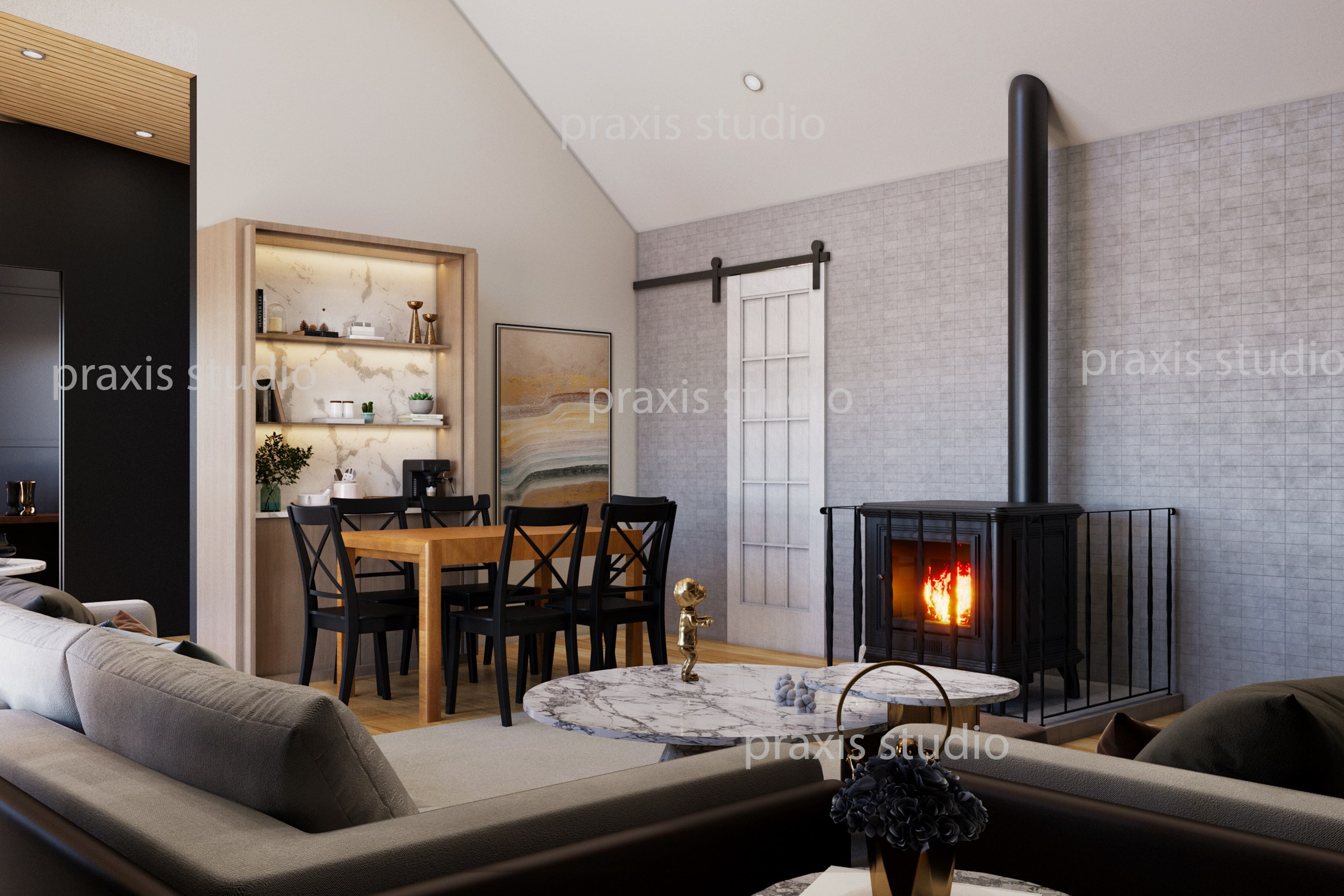
Open-plan living-dining room with vaulted ceiling, dark sectional sofa, marble coffee table, freestanding wood-burning stove against tiled feature wall, barn door, and built-in shelving with Praxis Studio watermark.

Project Overview

The team behind 115 Lounge Fireplace came to us with a clear ask — a single, definitive render that would capture the essence of this residential interior project in Napa Valley, CA.

Open-plan living-dining room with vaulted ceiling, dark sectional sofa, marble coffee table, freestanding wood-burning stove against tiled feature wall, barn door, and built-in shelving with Praxis Studio watermark.

The Result

The final output landed within 3-5 days. Clean, high-resolution, ready for print and screen. It’s been the visual backbone of this project’s public-facing materials.

Have a project in mind? Drop us a brief and we’ll get back to you with a quote within a day. Or see what else we’ve done.
Frequently Asked Questions

How do you capture the warmth and ambiance of a freestanding wood-burning stove in a 3D render?

We simulate realistic fire glow and light scattering using physically-based rendering, ensuring the stove becomes a natural focal point with accurate warmth tones radiating across surrounding surfaces like the tiled feature wall and ceiling.

What details matter most when visualizing an open-plan living-dining room with vaulted ceilings?

Vaulted ceilings demand precise handling of scale, natural light bounce, and material transitions — we ensure the vertical volume feels authentic while maintaining visual cohesion between the living and dining zones.

How quickly can 3D Praxis Studio deliver interior renders for a residential living space project?

Residential living space renders like this are typically delivered within 5–7 business days from receiving finalized plans and material selections, with a preliminary draft shared at the midpoint for feedback.

How do architects use living room visualizations like this during the client approval process?

Architects present these renders to homeowners to confirm spatial flow, furniture scale, and finish selections — reducing costly revisions during construction by aligning expectations on elements like the barn door placement and built-in shelving layout.

What makes residential living space visualizations uniquely challenging compared to other interior categories?

Living spaces require balancing soft material textures like upholstery and wood grain with hard surfaces like marble and tile, while conveying an inviting, lived-in atmosphere that resonates emotionally with homeowners making personal design decisions.

Like what you see?

Let's create something extraordinary for your next project.