Alpine Inn Renovation
Rustic Modern Restaurant Bar Visualization
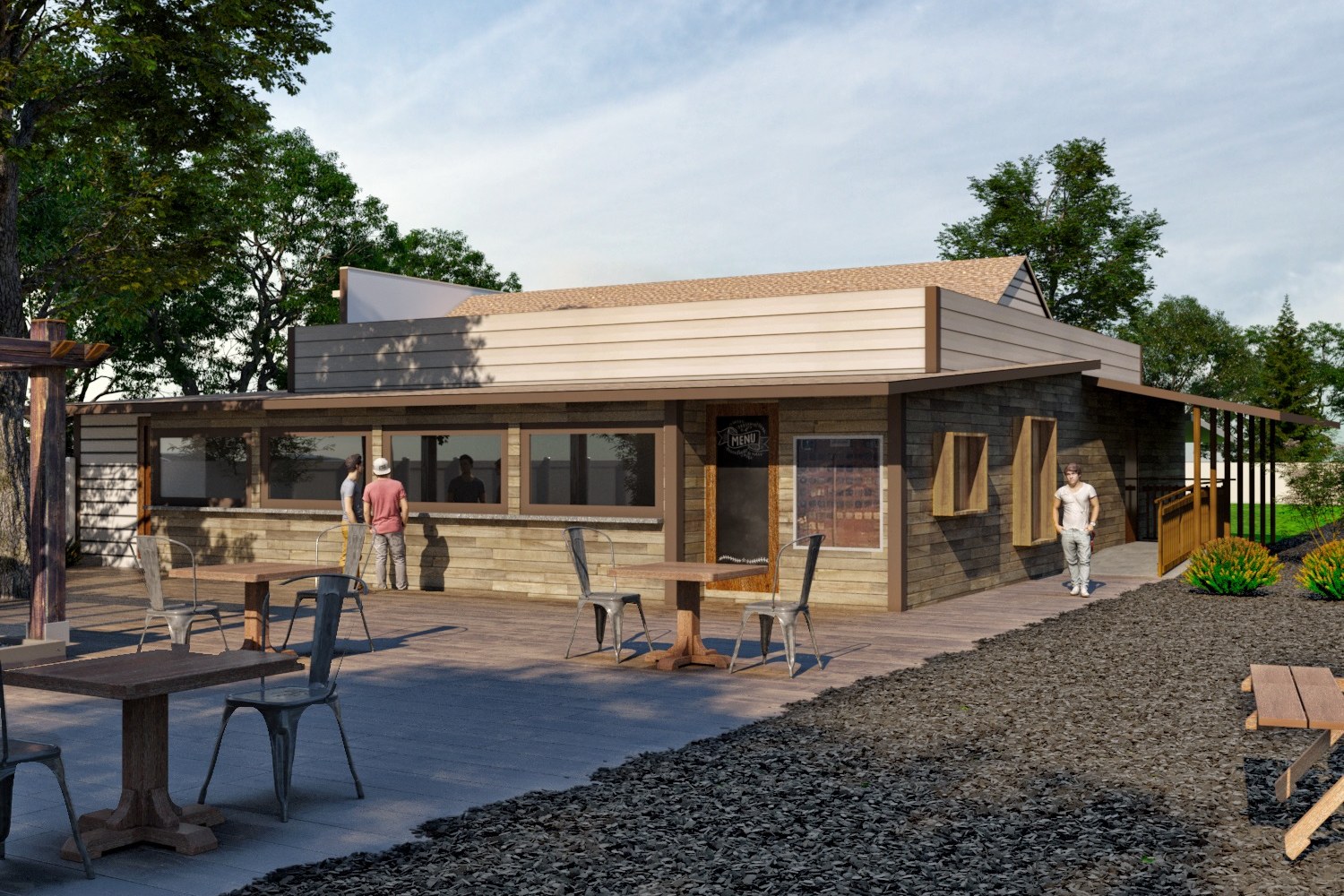
3D photomontage of a rustic-modern restaurant featuring wood-plank and metal-panel cladding, outdoor dining patio, and a covered terrace with pergola.
Project Overview
5 renders. Zurich, Switzerland. A photomontage project called Alpine Inn Renovation that the planning & zoning board needed visualized before ground broke. That was the starting point.
Photomontage of a single-story rustic-modern restaurant or bar building with an outdoor dining patio.
The Challenge
Each viewpoint served a different audience. The hero shot needed marketing punch. The detail views needed technical precision. The aerial needed context. Making all of them feel cohesive while serving different purposes was the real puzzle.
One of the trickier aspects was environmental context. A building doesn’t exist in a vacuum, and placing this photomontage design convincingly into its Zurich, Switzerland surroundings required careful attention to vegetation, street furniture, lighting conditions, and neighbouring structures.
The timeline was compressed. The planning & zoning board had a launch date that wasn’t moving, which meant our production schedule had zero slack for extended revision cycles.
Our Approach
Feedback cycles were structured. We presented renders in context — placed into the marketing layout or presentation deck — so the planning & zoning board could evaluate them as their audience would see them, not as isolated files on a white background.
Material selection was hands-on. We sourced textures from manufacturer libraries and matched them against the specification documents. Where specs were ambiguous, we sent samples to the planning & zoning board for sign-off before rendering.
The rendering pipeline was set up to handle 5 outputs efficiently. Shared lighting rigs, consistent material libraries, and a standardised colour pipeline meant every image maintained the same visual standard.
We leaned on physically-based rendering throughout. Every material — glass, stone, metal, timber — was defined by real-world optical properties. That’s what makes the difference between a render that looks ‘nice’ and one that looks true.
We shared work-in-progress renders with the planning & zoning board at two key milestones: after initial composition lock and after material refinement. Both rounds stayed tight — targeted feedback, fast turnarounds.
The Result
We delivered the complete package of 5 renders within the agreed 2-3 weeks window. The planning & zoning board confirmed the images are now central to their sales and approval materials.
If this is the kind of quality you’re after, start a conversation with us. Or explore the full portfolio.