Sam Final Apartment
Contemporary Apartment Building Visualization
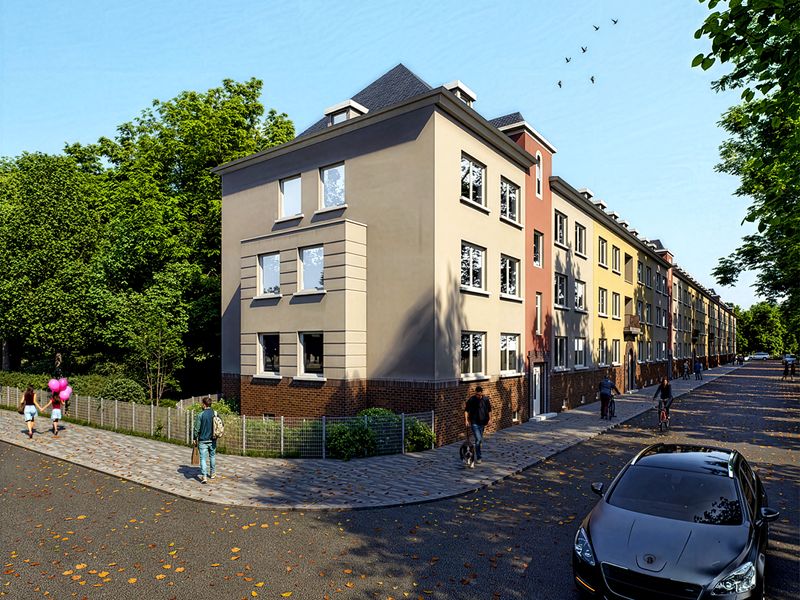
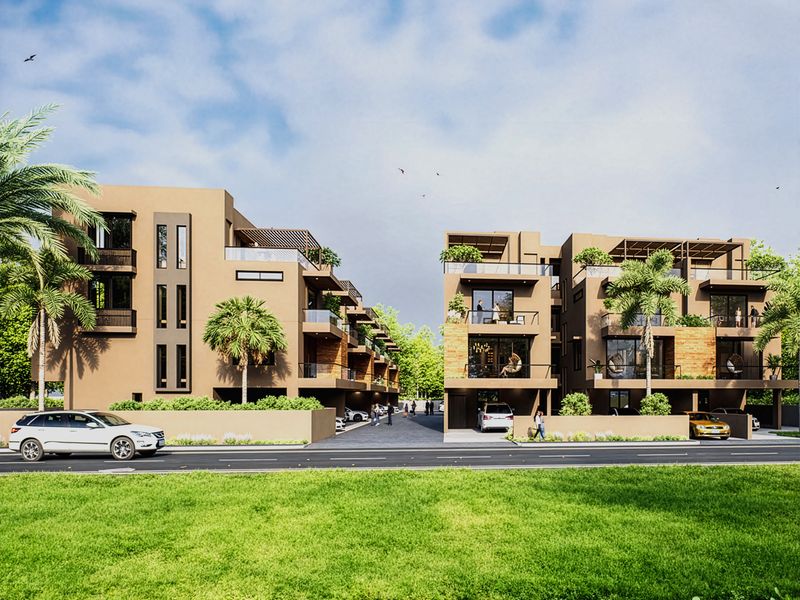
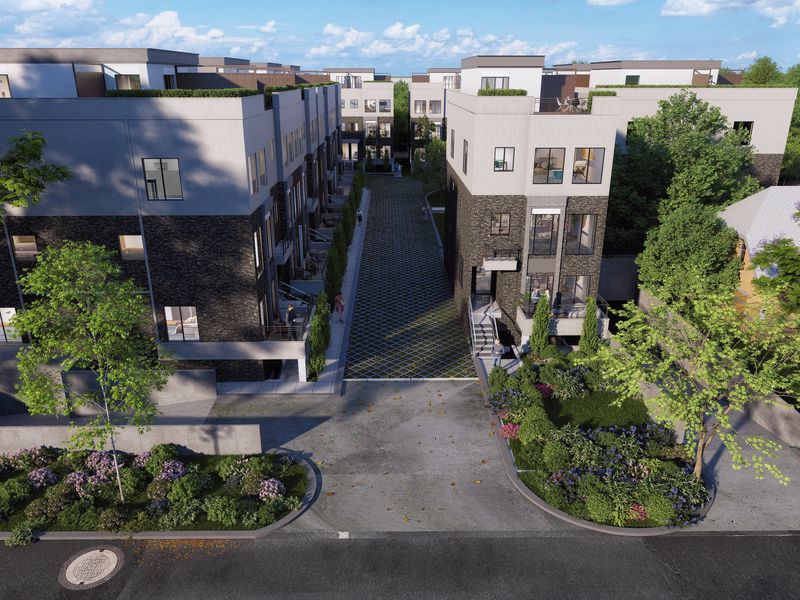
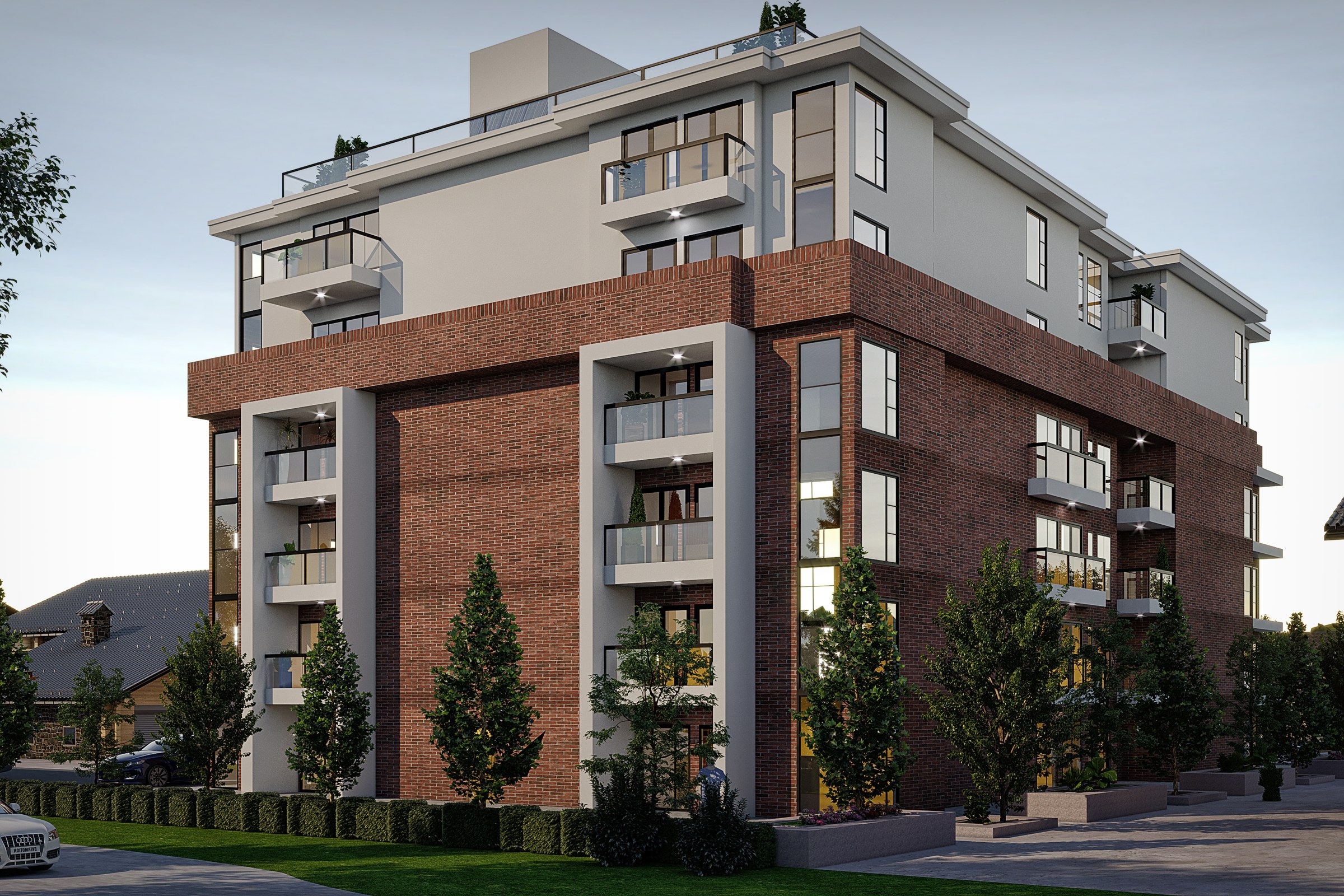
Dusk corner view of a five-story contemporary apartment building with red brick lower floors, white render penthouse level, glass balconies, and rooftop terrace.
Project Overview
Sam Final Apartment is a multi-family residential project in Portland, OR where the design speaks through its details. The multifamily housing developer asked us for 4 views that would let those details do the talking.
Dusk corner view of a five-story contemporary apartment building with red brick lower floors, white render penthouse level, glass balconies, and rooftop terrace.
The Challenge
At 4 deliverables, there’s a real risk of redundancy — views that look too similar or don’t add new information. We planned the camera positions deliberately so every image earned its place in the set.
Lighting was the quiet challenge here. The multifamily housing developer wanted Daylight, Dusk / Twilight conditions, and getting those to look natural — not staged, not oversaturated — is where a lot of archviz falls flat.
The design language was distinctive — a mix of forms and materials that doesn’t photograph itself. Translating that into a render that feels lived-in rather than clinical took several rounds of material and lighting refinement.
Our Approach
We started where we always start: with the drawings. Every wall thickness, every material notation, every site boundary got translated into the 3D model before we touched a single texture or light.
The modelling phase was methodical. We built the geometry from the architectural plans, cross-referencing elevations and sections to catch anything that might read differently in three dimensions than it does on paper.
We leaned on physically-based rendering throughout. Every material — glass, stone, metal, timber — was defined by real-world optical properties. That’s what makes the difference between a render that looks ‘nice’ and one that looks true.
Post-production was restrained. We adjusted contrast, corrected any colour casts, and added subtle atmospheric effects — but the goal was always to enhance what was already there, not to paper over problems in the base render.
Material selection was hands-on. We sourced textures from manufacturer libraries and matched them against the specification documents. Where specs were ambiguous, we sent samples to the multifamily housing developer for sign-off before rendering.
The Result
Production closed within 2-3 weeks. The hero image is now the signature visual for Sam Final Apartment, and the supporting gallery views have been deployed across the multifamily housing developer’s marketing channels.
If this is the kind of quality you’re after, start a conversation with us. Or explore the full portfolio.