Perspective View Housing — multi-family 3D rendering by Praxis Studio
Multi-Family

Perspective View Housing

Contemporary Housing Complex Visualization

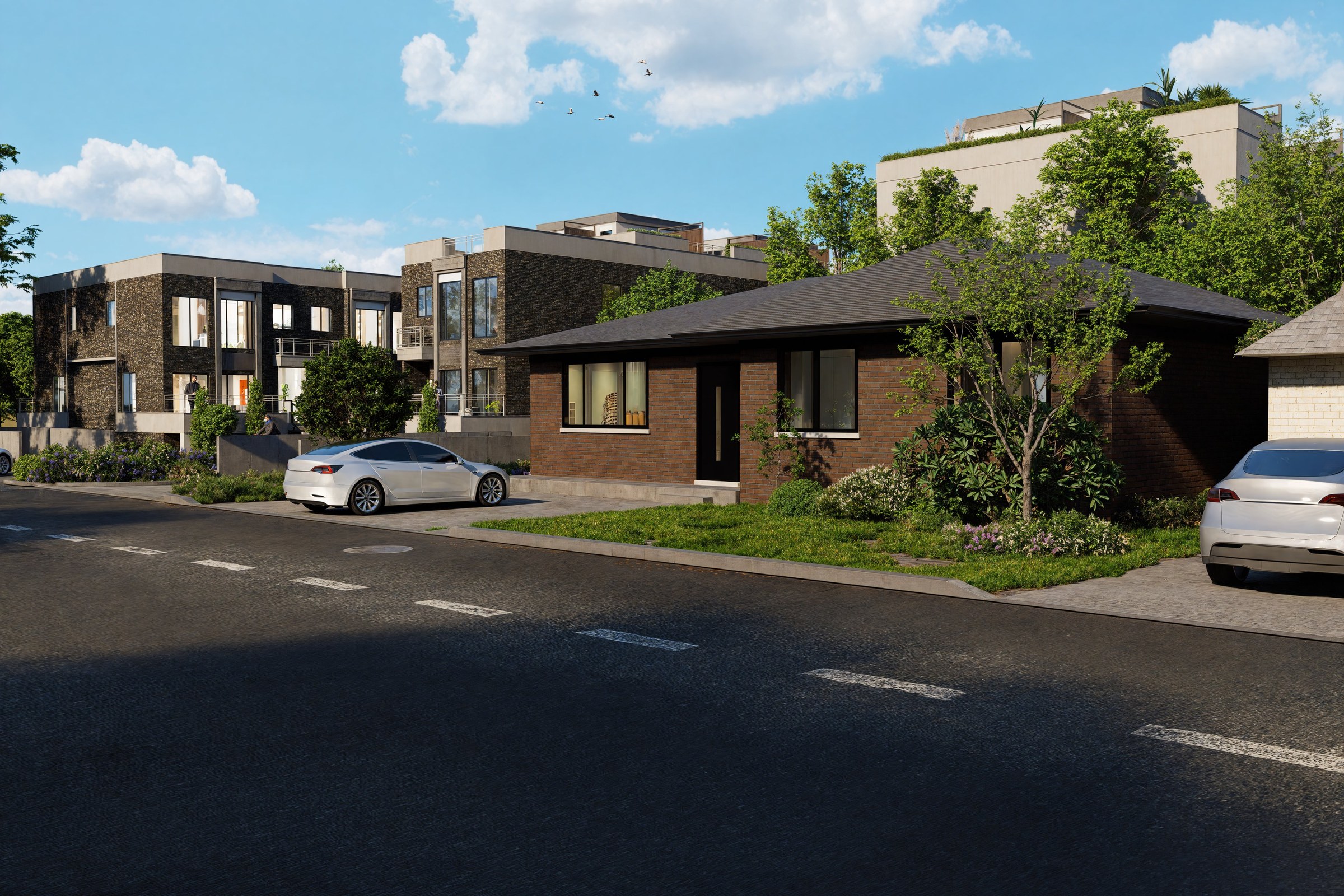
Street-level perspective of a mixed neighborhood showing a single-story brick bungalow in front and contemporary multi-family townhouses and apartments in the background.

Project Overview

Sometimes a single image is all it takes to make a design click. That was the brief for Perspective View Housing — one hero render that would carry the weight of the entire presentation.

Street-level perspective of a mixed neighborhood showing a single-story brick bungalow in front and contemporary multi-family townhouses and apartments in the background.

The Result

Delivered within 1-2 weeks, the render slotted straight into the urban planning firm’s pitch deck and has been their lead visual for the project.

If this is the kind of quality you’re after, start a conversation with us. Or explore the full portfolio.
Frequently Asked Questions

How do you handle the contrast between older brick bungalows and modern multi-family buildings in a single street-level render?

We carefully match material textures, weathering, and lighting so that both architectural styles read authentically within the same scene, preserving the neighborhood's mixed-era character without either building appearing out of place.

Why is a street-level perspective particularly effective for mixed-density housing projects?

Street-level views replicate the pedestrian experience, allowing urban planning firms to evaluate how building massing, setbacks, and height transitions feel at human scale rather than from an abstract aerial vantage point.

What is the typical turnaround for a multi-family exterior perspective like this?

A street-level scene with multiple building types and landscaping detail is typically delivered within 5-7 business days, including one round of revisions for material and lighting adjustments.

How do urban planners use renders like this during the entitlement and community review process?

Planning firms present these perspective views at zoning hearings and neighborhood meetings to demonstrate how new multi-family infill will visually integrate with existing single-family homes, helping reduce community pushback.

What makes multi-family exterior visualization more complex than single-building residential renders?

Multi-family exteriors require coordinating varied unit typologies, shared amenity spaces, parking configurations, and streetscape elements across a wider frame, demanding precise attention to scale relationships and urban context that single-structure renders do not.

Like what you see?

Let's create something extraordinary for your next project.