61 Neoclassical Townhouses
Neoclassical Townhouse Visualization
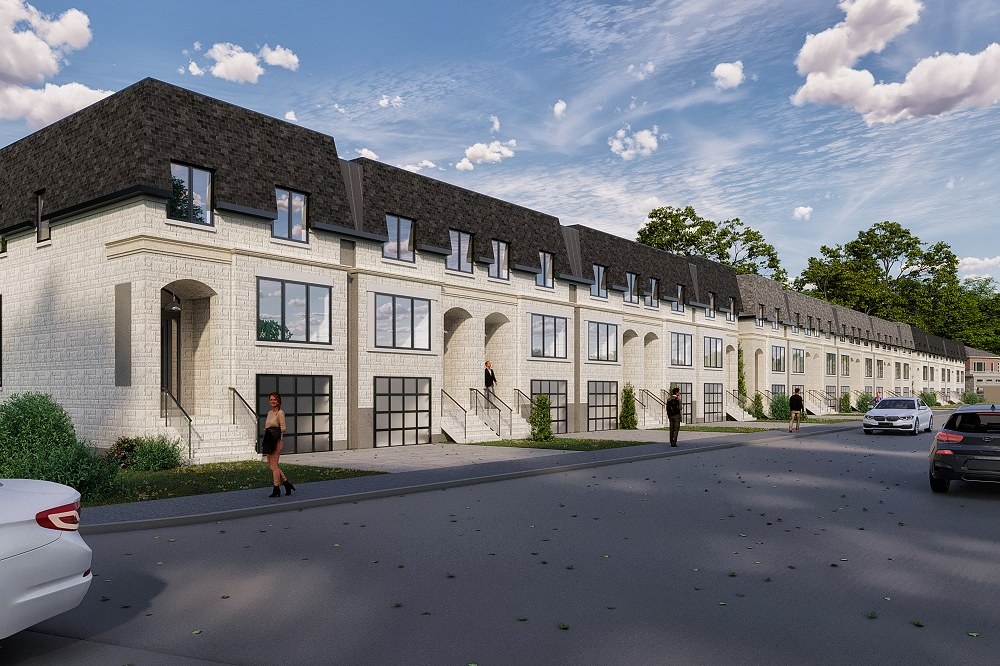
Street-level perspective of a long row of neoclassical townhouses with white limestone facades, arched doorways with stoops, dark mansard shingled roof with dormers, and a clean streetscape.
In our recent project featuring 61 neoclassical townhouses, our client, a prominent real estate developer, sought to create a striking visual representation that would not only capture the essence of their architectural vision but also serve as a powerful marketing tool. With the aim of attracting potential investors and securing planning approvals, they required photorealistic 3D renders that highlighted the elegance and grandeur of the townhouses while seamlessly integrating them into the surrounding environment.
To achieve this, we adopted a meticulous approach that emphasized the unique characteristics of neoclassical architecture. Our team focused on the intricate details of the façade, ensuring that every column, cornice, and window was accurately represented. We utilized a combination of advanced 3D modeling techniques and artistic rendering methods to create a sense of depth and realism. By carefully selecting the right angles and perspectives, we showcased the townhouses in a way that accentuated their architectural beauty and contextual relevance.
For the technical execution, we employed industry-leading software such as 3ds Max and V-Ray, which allowed us to achieve stunningly realistic lighting and material effects. We simulated natural sunlight to create dynamic shadows and highlights, enhancing the overall ambiance of the renders. The materials were meticulously chosen to reflect the luxurious finishes of the townhouses, from the rich textures of the stonework to the elegant colors of the paint.
The final results were transformative for our client. The photorealistic renders not only facilitated a smooth planning approval process but also became a cornerstone of their marketing strategy. The visuals played a crucial role in their investor pitches, effectively conveying the project’s potential and attracting significant interest. Ultimately, our collaboration helped elevate the client’s vision into a compelling narrative that resonated with stakeholders and set the stage for successful project development.
Project Overview
This one’s straightforward in scope but not in ambition. 61 Neoclassical Townhouses required a single render that could represent weeks of design work in one frame.
Street-level perspective of a long row of neoclassical townhouses with white limestone facades, arched doorways with stoops, dark mansard shingled roof with dormers, and a clean streetscape.
The Result
Turnaround was 1-2 weeks. The render now serves as the primary visual for the project — anchoring everything from the website header to the investor summary.
Got a project that needs this kind of visual clarity? Get in touch or see more examples.