Transitional Semi Detached 161112
Transitional Semi Detached Visualization
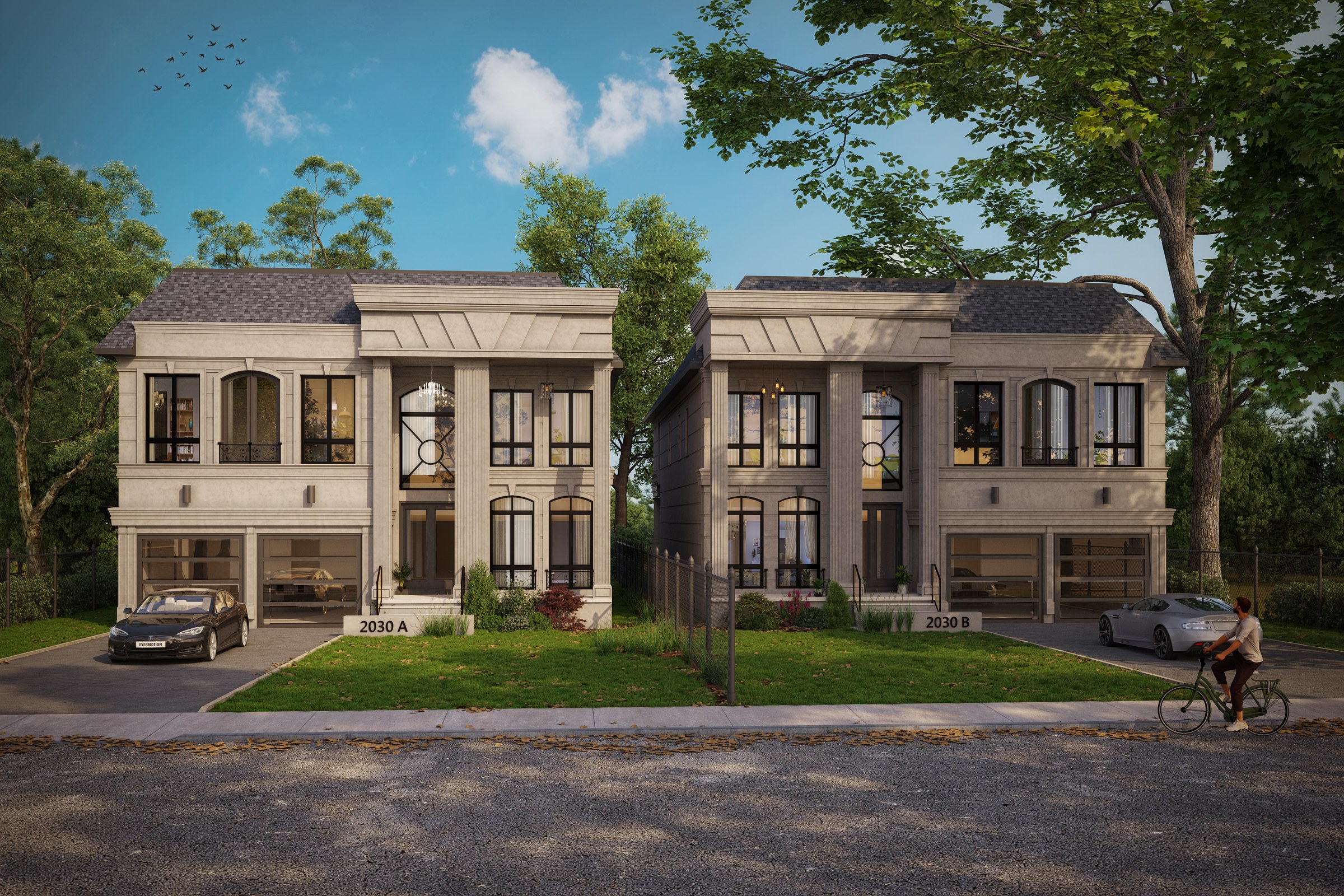
Pair of semi-detached transitional homes labeled 2030 A and 2030 B with stone and stucco facades, large windows, and tree-lined street.
Project Overview
In 2026, 3D Praxis Studio was approached by a prominent architect based in the UK to create an exterior visualization for a luxury semi-detached residential project. The client sought to showcase the transitional architectural style of the home, which seamlessly blended traditional and modern elements. The project was located in a suburban area, surrounded by lush greenery, making it essential to capture the essence of the environment in the renders.
Ravi, a senior 3D artist with over eight years of experience at the studio, took the lead on this project. He collaborated closely with the architect to ensure that the design intent was accurately represented. The team focused on highlighting the intricate details of the façade, including the use of natural stone and wood accents, which were integral to the transitional style. The project was part of a larger portfolio aimed at attracting high-end buyers, and the client emphasized the importance of realism in the visualizations.
Throughout the process, the team maintained open communication with the client, providing updates and incorporating feedback to refine the visuals. This collaborative approach ensured that the final renders aligned with the client’s vision while also adhering to the studio’s high standards of quality.
Technical Approach
The technical execution of this project involved utilizing 3ds Max and V-Ray for rendering. Ravi implemented a specific camera setup that emphasized the depth of the property, using a wide-angle lens to capture the full scope of the exterior. The lighting was carefully crafted to simulate natural sunlight, enhancing the textures of the materials used in the façade. Additionally, ForestPack was employed to create realistic landscaping around the property, integrating the home into its environment seamlessly.
The Result
The final renders successfully conveyed the elegance and charm of the luxury residence, meeting the client’s expectations. The project was delivered on time, and the client expressed satisfaction with the results, noting that the visuals would play a crucial role in their marketing efforts.
Have a project like this? Let’s talk or explore more work.
Project Overview
Transitional Semi Detached 161112 needed one image that could do it all: sell the vision, anchor the marketing, and give stakeholders something concrete to rally behind.
Pair of semi-detached transitional homes labeled 2030 A and 2030 B with stone and stucco facades, large windows, and tree-lined street.
The Result
Turnaround was 3-5 days. The render now serves as the primary visual for the project — anchoring everything from the website header to the investor summary.
Working on something similar? Let’s talk about your project — or browse more of our work.