Modern Box House 107
Modern Single Family Visualization
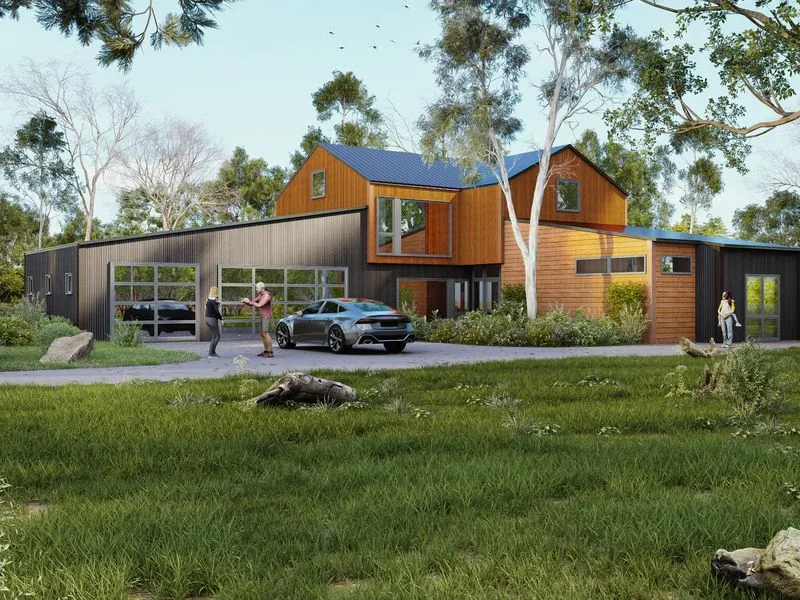
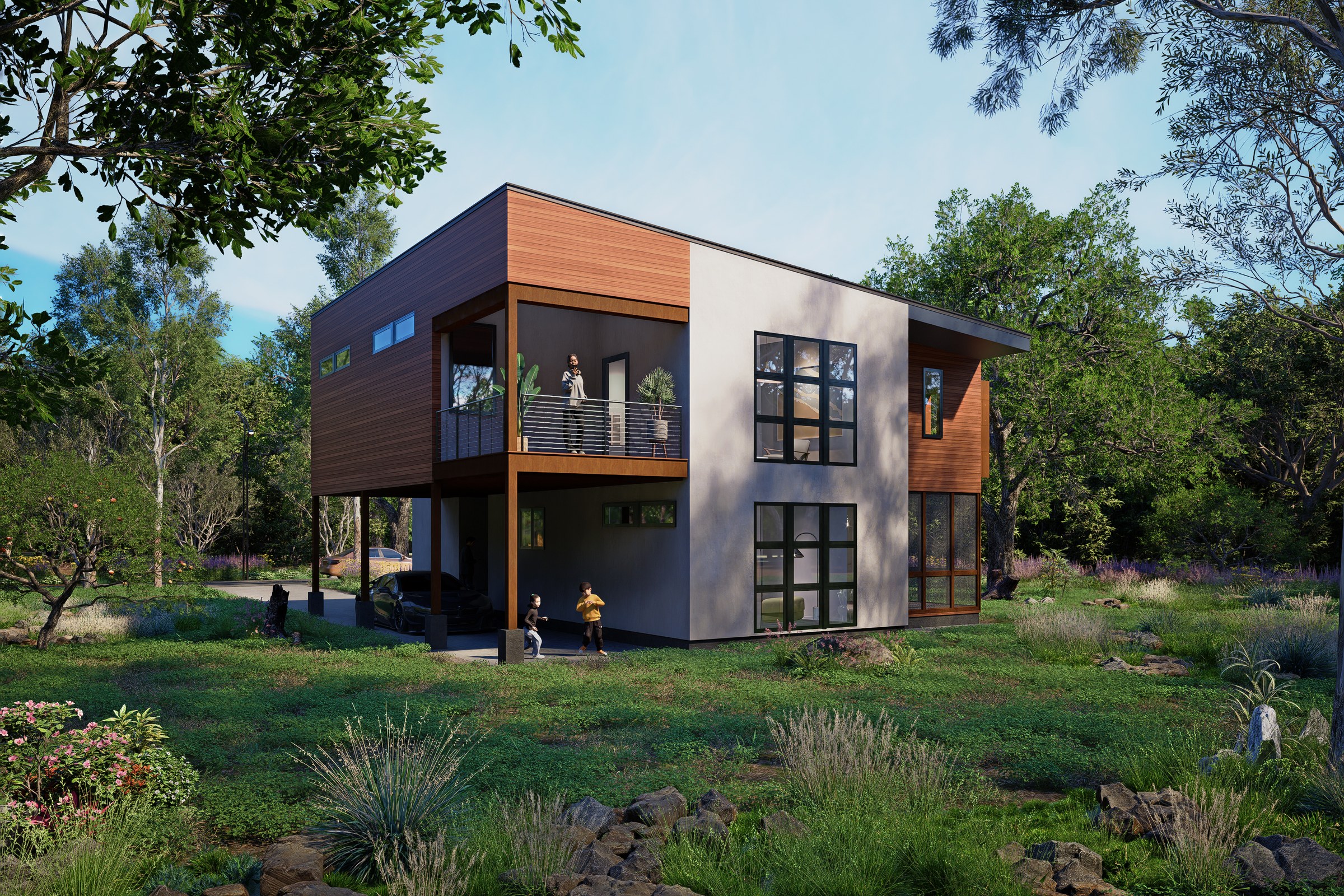
Two-story modern cubic residence with warm cedar wood cladding and grey concrete walls, flat roof, and large glass windows in a wooded setting.
Project Overview
Modern Box House 107 wasn’t just another rendering job — it was a visual campaign. The luxury home designer needed 7 views that could work across presentations, print materials, and digital marketing simultaneously.
Two-story modern cubic residence with warm cedar wood cladding and grey concrete walls, flat roof, and large glass windows in a wooded setting.
The Challenge
The project site has strong character — mature trees, sloping terrain, established neighbours. Ignoring that context would have produced renders that felt disconnected from reality. We had to model the environment as carefully as the building itself.
Lighting was the quiet challenge here. The luxury home designer wanted Daylight conditions, and getting those to look natural — not staged, not oversaturated — is where a lot of archviz falls flat.
At 7 deliverables, there’s a real risk of redundancy — views that look too similar or don’t add new information. We planned the camera positions deliberately so every image earned its place in the set.
Our Approach
Feedback cycles were structured. We presented renders in context — placed into the marketing layout or presentation deck — so the luxury home designer could evaluate them as their audience would see them, not as isolated files on a white background.
The modelling phase was methodical. We built the geometry from the architectural plans, cross-referencing elevations and sections to catch anything that might read differently in three dimensions than it does on paper.
We shared work-in-progress renders with the luxury home designer at two key milestones: after initial composition lock and after material refinement. Both rounds stayed tight — targeted feedback, fast turnarounds.
We started where we always start: with the drawings. Every wall thickness, every material notation, every site boundary got translated into the 3D model before we touched a single texture or light.
Material selection was hands-on. We sourced textures from manufacturer libraries and matched them against the specification documents. Where specs were ambiguous, we sent samples to the luxury home designer for sign-off before rendering.
The Result
Production closed within 3-4 weeks. The hero image is now the signature visual for Modern Box House 107, and the supporting gallery views have been deployed across the luxury home designer’s marketing channels.
Have a project in mind? Drop us a brief and we’ll get back to you with a quote within a day. Or see what else we’ve done.