Gray Craftsman Cottage 16
Craftsman One And A Half Story Visualization
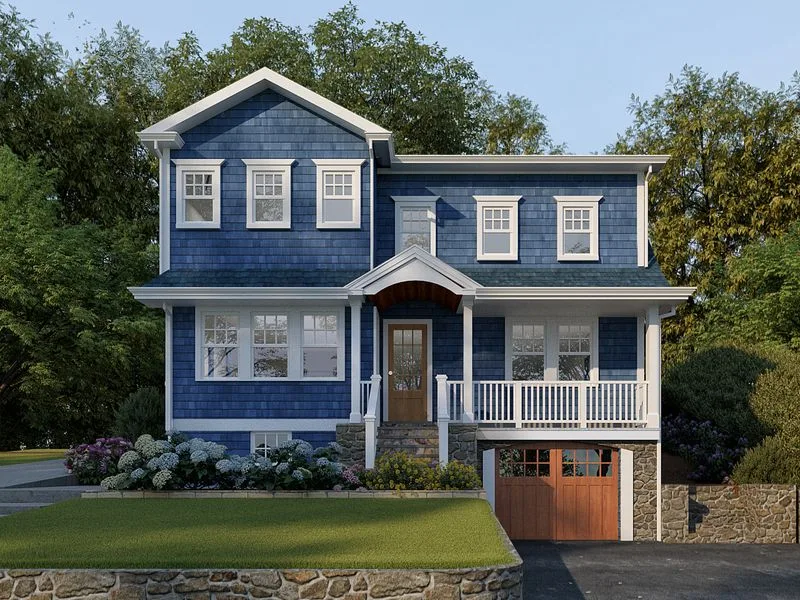
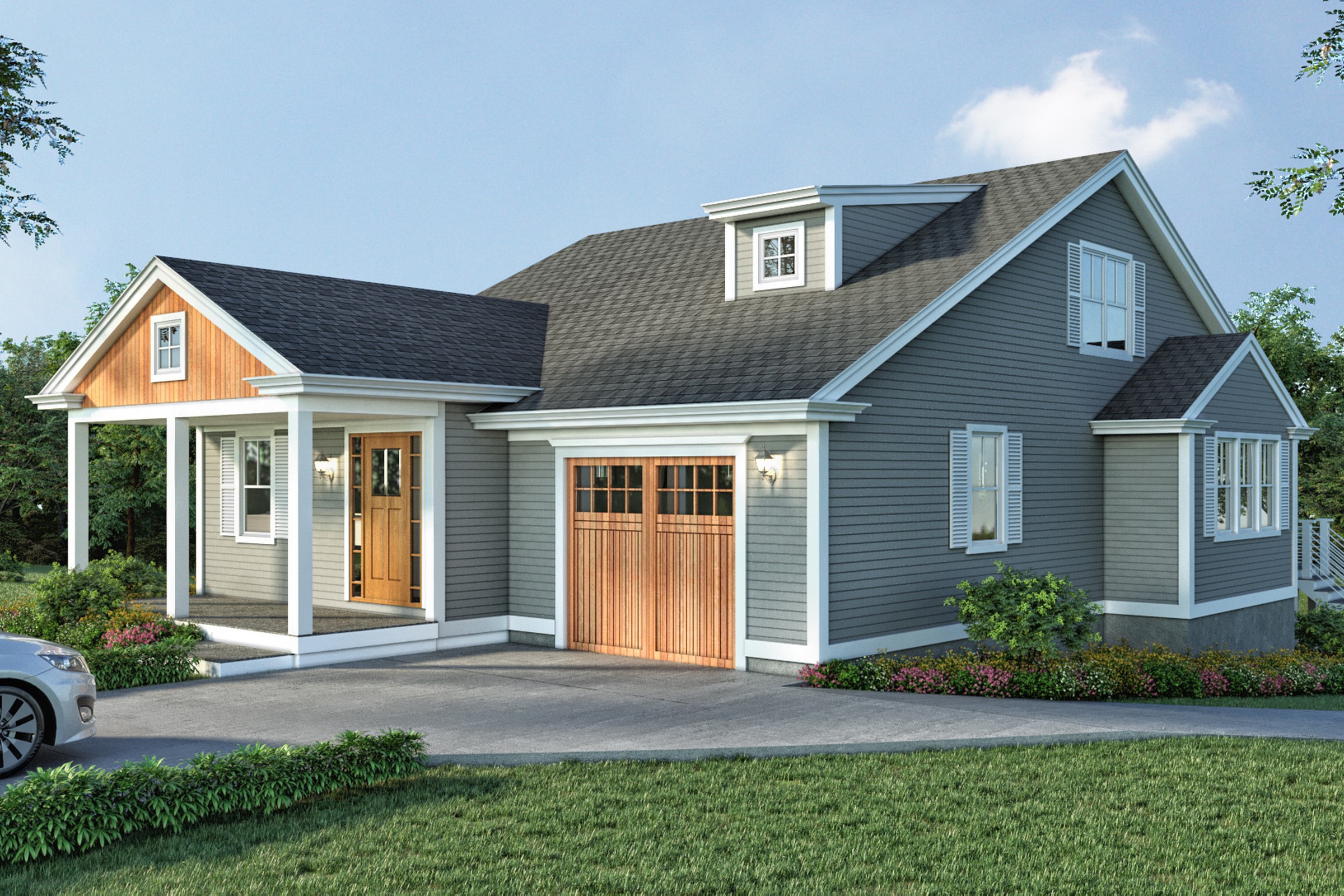
3D render of blue-gray craftsman home with covered porch, wood garage door, dormers, car in driveway. Same project as View-2 16.jpg
Project Overview
Meridian Development contacted us from Prague in mid-2022 with a residential project targeting the American market. They were developing a series of craftsman-style homes for a planned community and needed renderings that would resonate with US buyers — even though the design team was based in Europe. The disconnect between a Czech development firm and an American architectural vernacular made this project more interesting than the brief suggested.
The home itself was a one-and-a-half story craftsman cottage: blue-gray siding, a covered front porch with tapered columns, wood garage door, and dormer windows on the upper level. Two views were needed — a front elevation and an angled view showing the driveway with a car.
Tanvi, one of our junior artists at the time, was assigned the project under Ravi’s supervision. She had joined the studio about six months earlier and had been handling simpler residential exteriors. This was her first project with a specific architectural style requirement — craftsman homes have particular proportions and details (exposed rafter tails, knee braces, mixed materials) that you cannot fake.
Ravi had Tanvi start by studying reference photos of actual craftsman homes in Portland and Seattle before touching 3ds Max. She spent half a day collecting references and noting the details that make craftsman feel like craftsman: the way the porch columns taper and sit on stone bases, the proportions of the dormer windows relative to the main roof, the specific way lap siding overlaps. This research phase is something we build into every junior artist’s workflow — it prevents the kind of generic result where a home looks vaguely residential but does not feel like any real style.
The blue-gray color was a point of discussion. The client initially wanted a darker shade, but Ravi suggested a lighter, more muted tone that would photograph better and feel more contemporary within the craftsman tradition. The client agreed after seeing a quick material test.
The car in the driveway was a specific request — Meridian wanted to suggest the lifestyle of the buyer, so we placed a mid-range SUV rather than a luxury car. It is a subtle marketing decision, but it tells the target buyer: this home is for people like you.
Technical Approach
Craftsman homes are all about material transitions — where the siding meets the stone, where the porch columns meet the base, where the wood shingles meet the lap siding. Tanvi used V-Ray displacement on all major surfaces to get physical depth at these junctions. The garage door was a particular focus: real wood panel doors have a grain pattern that varies from plank to plank, so she created a multi-sub material with four different wood maps randomized across the panels. The overcast daytime lighting used a V-Ray dome light with a neutral HDRI, keeping the color palette honest — warm tones like wood and stone shift unpredictably under colored light, so neutral illumination was essential for accurate material representation.
The Result
Meridian Development used both views in their sales brochure and project website targeting US buyers considering investment properties in their planned community. The renderings helped bridge the gap between a European developer and American buyer expectations. The client returned for four additional home designs in the same community, specifically requesting Tanvi on the project — a meaningful milestone for a junior artist.
Tips for Residential Developers
-
Match the car to the buyer. The vehicle in a residential rendering is a subtle but powerful marketing signal. A family SUV says something different than a sports car. Tell us who is buying the home, and we will place the right vehicle.
-
Invest in the style research phase. If your home follows a specific architectural style — craftsman, colonial, farmhouse — invest time upfront sharing reference photos of real examples you admire. Style accuracy in renderings builds buyer trust.
-
Test your exterior color digitally first. Siding colors shift dramatically based on lighting conditions and surrounding materials. Ask for a quick material test before committing to a full render — it is much cheaper than a revision after the fact.
Have a project like this? Let’s talk — or explore more work.