English Brick Estate
Traditional English Detached Visualization
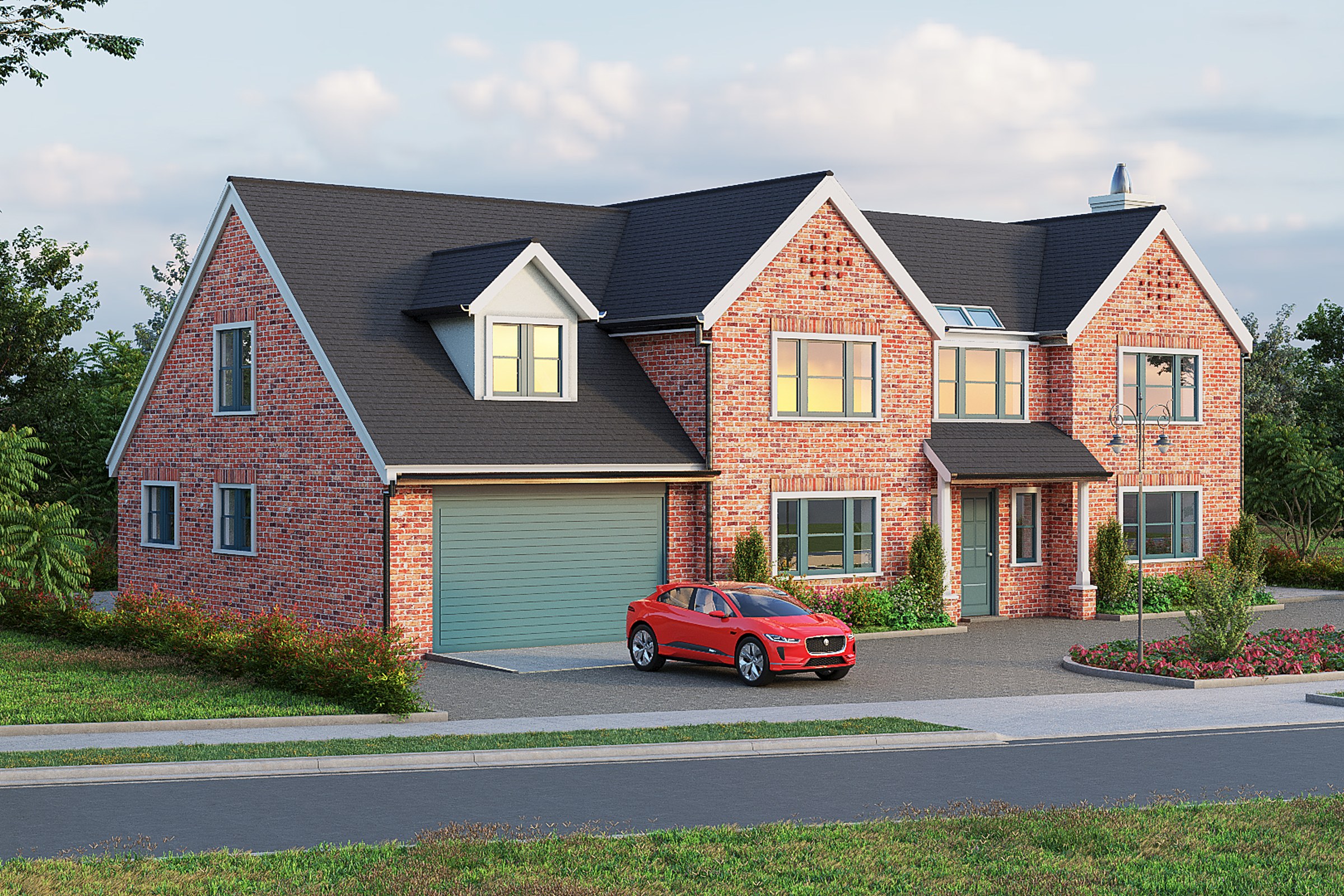
Large traditional English red brick home with dark slate roof, multiple gables, dormer windows, green garage door, paved driveway, red EV in drive
Project Overview
The scope for English Brick Estate was substantial — 5 exterior views for a luxury home project that the custom home builder was preparing to take public. Every image had a purpose, from investor decks to the project website.
Large traditional English red brick home with dark slate roof, multiple gables, dormer windows, green garage door, paved driveway, red EV in drive.
The Challenge
The biggest hurdle was fidelity at scale. With 5 compositions to produce, we couldn’t afford to let quality drift between the first render and the last. Every image needed to feel like it came from the same visual universe.
Each viewpoint served a different audience. The hero shot needed marketing punch. The detail views needed technical precision. The aerial needed context. Making all of them feel cohesive while serving different purposes was the real puzzle.
At 5 deliverables, there’s a real risk of redundancy — views that look too similar or don’t add new information. We planned the camera positions deliberately so every image earned its place in the set.
Our Approach
We started where we always start: with the drawings. Every wall thickness, every material notation, every site boundary got translated into the 3D model before we touched a single texture or light.
The modelling phase was methodical. We built the geometry from the architectural plans, cross-referencing elevations and sections to catch anything that might read differently in three dimensions than it does on paper.
The rendering pipeline was set up to handle 5 outputs efficiently. Shared lighting rigs, consistent material libraries, and a standardised colour pipeline meant every image maintained the same visual standard.
Material selection was hands-on. We sourced textures from manufacturer libraries and matched them against the specification documents. Where specs were ambiguous, we sent samples to the custom home builder for sign-off before rendering.
We leaned on physically-based rendering throughout. Every material — glass, stone, metal, timber — was defined by real-world optical properties. That’s what makes the difference between a render that looks ‘nice’ and one that looks true.
The Result
All 5 images were delivered on schedule within 2-3 weeks. The custom home builder has used the package across their website, printed materials, and investor presentations.
Thinking about visualization for your next project? Reach out — we respond within 24 hours. Or keep exploring.