Barn Style Contemporary 118
Contemporary Single Family Visualization
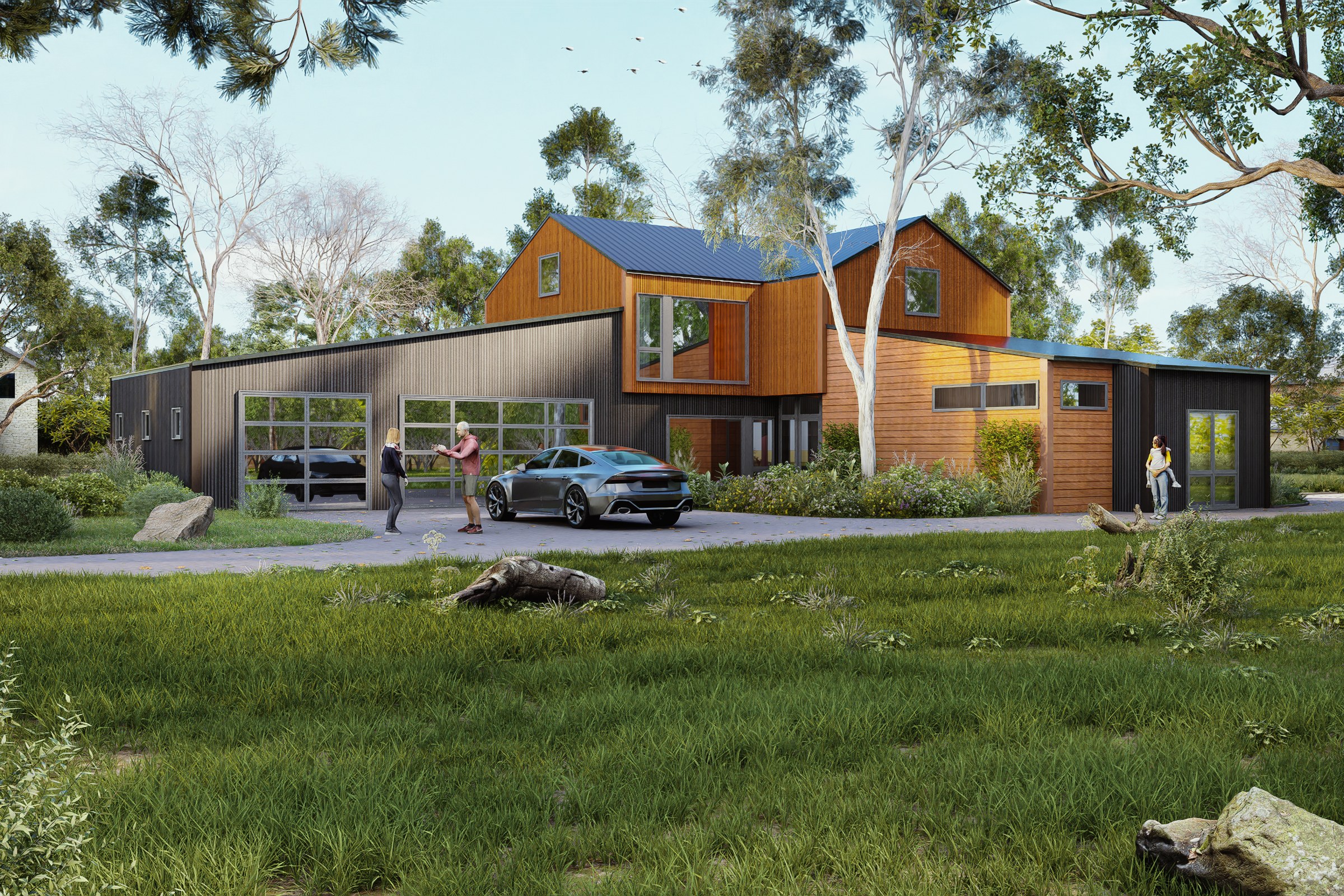
Primary front view of the barn-style contemporary home showing glass carport, timber and dark metal cladding, with people at the entrance.
Project Overview
Barn Style Contemporary 118 started with a conversation about what this luxury home project in Seattle, WA needed to communicate. The answer was 5 carefully planned views, each telling a different part of the design story.
Primary front view of the barn-style contemporary home showing glass carport, timber and dark metal cladding, with people at the entrance.
The Challenge
Each viewpoint served a different audience. The hero shot needed marketing punch. The detail views needed technical precision. The aerial needed context. Making all of them feel cohesive while serving different purposes was the real puzzle.
At 5 deliverables, there’s a real risk of redundancy — views that look too similar or don’t add new information. We planned the camera positions deliberately so every image earned its place in the set.
Balancing aesthetics with accuracy is always the tension in this work. The residential architect wanted images that looked aspirational — but the architects needed every proportion, setback, and material call to be precisely as drawn.
Our Approach
The modelling phase was methodical. We built the geometry from the architectural plans, cross-referencing elevations and sections to catch anything that might read differently in three dimensions than it does on paper.
The rendering pipeline was set up to handle 5 outputs efficiently. Shared lighting rigs, consistent material libraries, and a standardised colour pipeline meant every image maintained the same visual standard.
We shared work-in-progress renders with the residential architect at two key milestones: after initial composition lock and after material refinement. Both rounds stayed tight — targeted feedback, fast turnarounds.
Feedback cycles were structured. We presented renders in context — placed into the marketing layout or presentation deck — so the residential architect could evaluate them as their audience would see them, not as isolated files on a white background.
We leaned on physically-based rendering throughout. Every material — glass, stone, metal, timber — was defined by real-world optical properties. That’s what makes the difference between a render that looks ‘nice’ and one that looks true.
The Result
Production closed within 2-3 weeks. The hero image is now the signature visual for Barn Style Contemporary 118, and the supporting gallery views have been deployed across the residential architect’s marketing channels.
Need renders for your own project? Tell us about it — we’d like to hear what you’re working on. Or see more work like this.