Opt1 Green Tile Master Bath
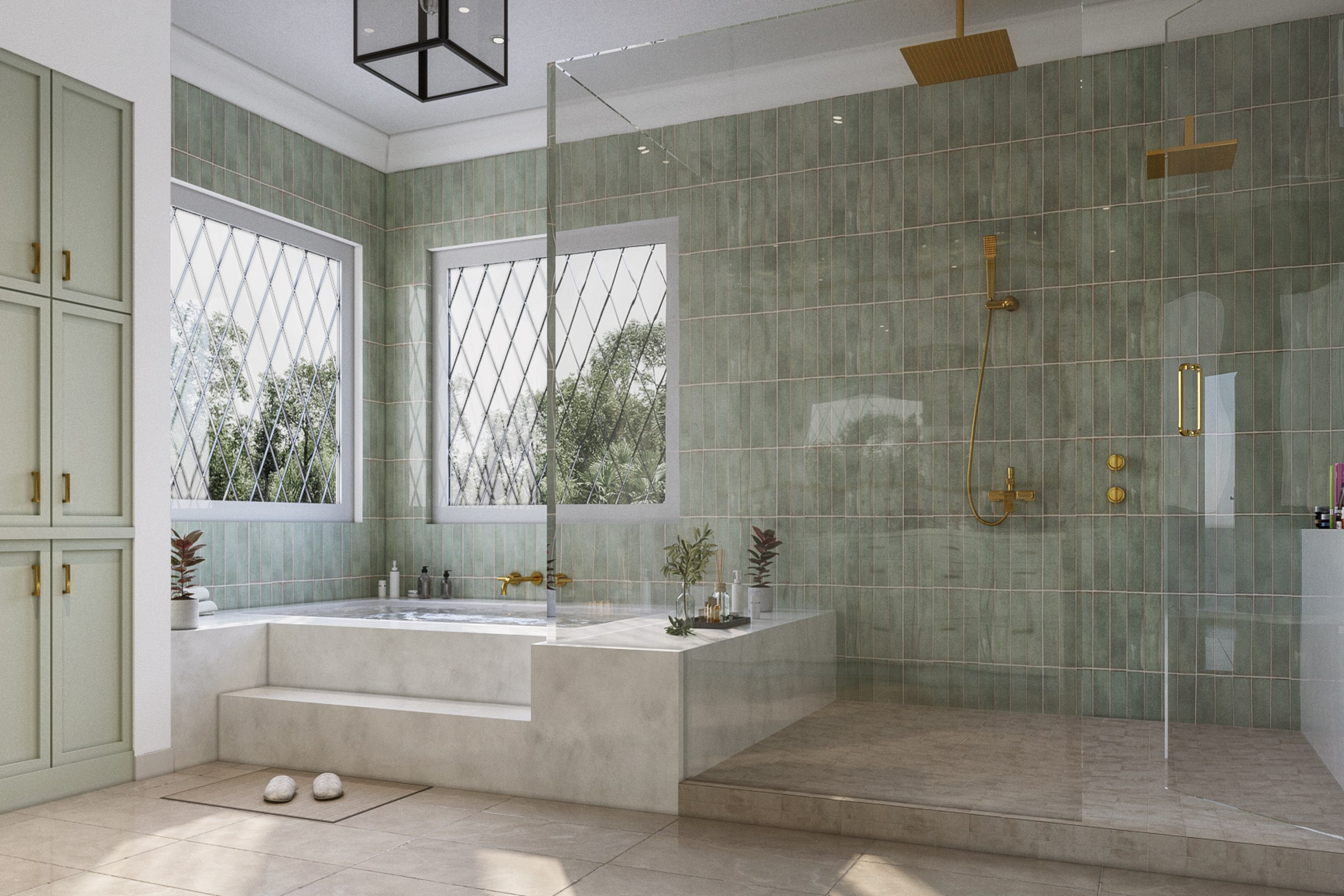
Transitional Master Bath Visualization
Elegant master bathroom with sage-green vertical tile in the shower and tub zone, a built-in soaking tub with marble surround, brass rain showerhead and fixtures, diamond-patterned window grilles, and soft green shaker-style cabinetry.
Project Overview
The scope for Opt1 Green Tile Master Bath was substantial — 4 visualizations for a kitchen and bath project that the kitchen & bath designer was preparing to take public. Every image had a purpose, from investor decks to the project website.
Elegant master bathroom with sage-green vertical tile in the shower and tub zone, a built-in soaking tub with marble surround, brass rain showerhead and fixtures, diamond-patterned window grilles, and soft green shaker-style cabinetry.
The Challenge
The timeline was compressed. The kitchen & bath designer had a launch date that wasn’t moving, which meant our production schedule had zero slack for extended revision cycles.
The design language was distinctive — a mix of forms and materials that doesn’t photograph itself. Translating that into a render that feels lived-in rather than clinical took several rounds of material and lighting refinement.
One of the trickier aspects was environmental context. A building doesn’t exist in a vacuum, and placing this kitchen and bath design convincingly into its Atlanta, GA surroundings required careful attention to vegetation, street furniture, lighting conditions, and neighbouring structures.
Our Approach
Material selection was hands-on. We sourced textures from manufacturer libraries and matched them against the specification documents. Where specs were ambiguous, we sent samples to the kitchen & bath designer for sign-off before rendering.
Landscape and entourage came last but mattered enormously. Trees, people, vehicles, sky — these contextual elements are what make a render feel like a photograph instead of a diagram.
Lighting development ran parallel to the modelling. We tested multiple Daylight setups early — before the geometry was even finished — so we could lock in the mood and atmosphere without burning production time later.
Post-production was restrained. We adjusted contrast, corrected any colour casts, and added subtle atmospheric effects — but the goal was always to enhance what was already there, not to paper over problems in the base render.
Feedback cycles were structured. We presented renders in context — placed into the marketing layout or presentation deck — so the kitchen & bath designer could evaluate them as their audience would see them, not as isolated files on a white background.
The Result
The 4 renders were handed over within 2-3 weeks — each optimised for its intended use, from large-format print to responsive web display.
Thinking about visualization for your next project? Reach out — we respond within 24 hours. Or keep exploring.