March Kitchen Open Concept — residential 3D rendering by Praxis Studio
Residential

March Kitchen Open Concept

Transitional Kitchen Visualization

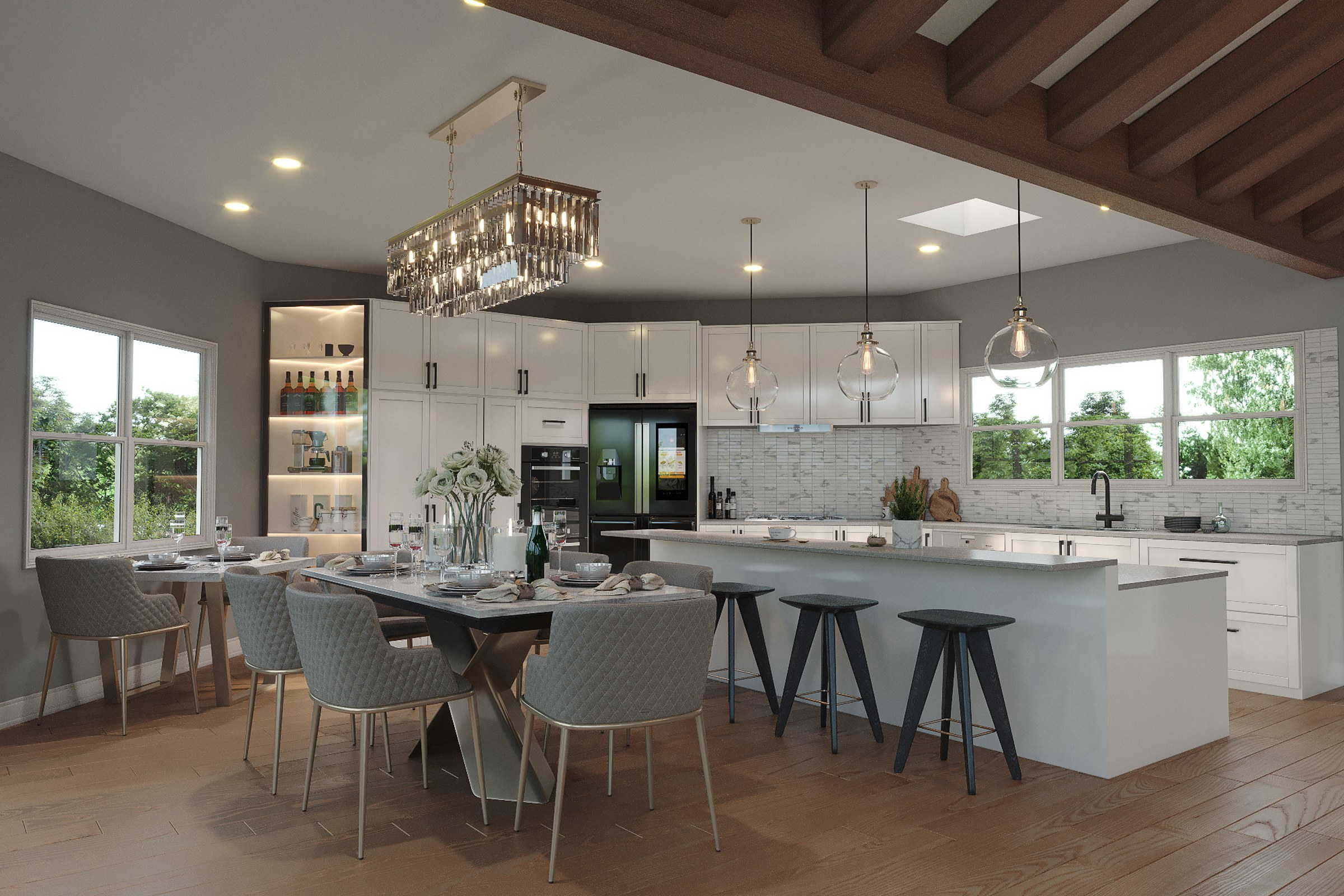
3D rendering of an open-concept kitchen featuring white shaker cabinetry, exposed wood beams, and oak hardwood flooring in a modern residential setting.

Project Overview

The team behind March Kitchen Open Concept came to us with a clear ask — a single, definitive render that would capture the essence of this kitchen and bath project in Barcelona, Spain.

Open-concept kitchen and dining area with white shaker cabinetry, exposed wood ceiling beams, crystal chandelier over a set dining table, glass globe pendants over the island, and oak hardwood flooring.

The Result

Turnaround was 3-5 days. The render now serves as the primary visual for the project — anchoring everything from the website header to the investor summary.

Working on something similar? Let’s talk about your project — or browse more of our work.
Frequently Asked Questions

How do you accurately render the warmth of exposed wood ceiling beams against white cabinetry in a kitchen visualization?

We calibrate material shaders to replicate the natural grain and tonal warmth of wood species like oak or cedar, then balance global illumination so the beams contrast authentically against lighter finishes without washing out or appearing artificially saturated.

What makes open-concept kitchen renovations particularly challenging to visualize compared to closed-layout kitchens?

Open-concept designs require seamless sightline continuity between kitchen, dining, and living zones, meaning every material transition, lighting fixture, and furniture placement must read cohesively across a single unbroken frame rather than being composed in isolation.

What is the typical turnaround for a set of kitchen-and-dining renovation renders at this level of detail?

A project of this scope—featuring detailed cabinetry, multiple lighting fixtures, and furnished dining staging—is typically delivered within 5 to 7 business days from receipt of finalized drawings and material selections.

How do renovation contractors use these kitchen renders in their client approval workflow?

Contractors present photorealistic renders during the design-sign-off phase to eliminate ambiguity around finishes, fixture placement, and spatial proportions, significantly reducing mid-construction change orders and material reselections.

Why does the kitchen-and-bath category demand a higher standard of material accuracy than other residential visualization work?

Kitchens and bathrooms feature the highest density of distinct materials in close proximity—stone countertops, glass pendants, metallic hardware, wood flooring—so even minor inaccuracies in reflectivity or texture scale become immediately noticeable to both professionals and homeowners.

Like what you see?

Let's create something extraordinary for your next project.