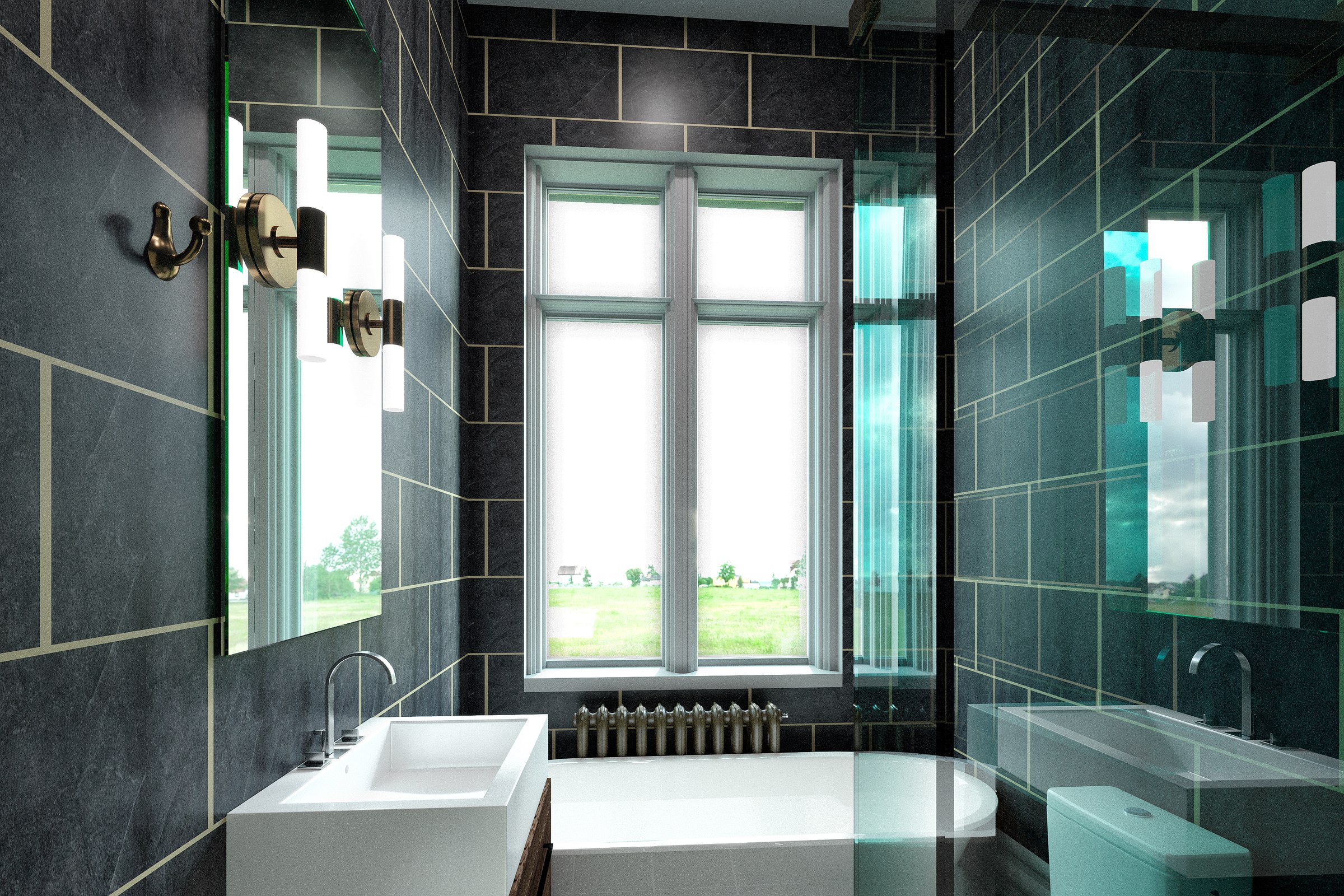
Dark Slate Tile Bathroom — residential 3D rendering by Praxis Studio
Residential

Dark Slate Tile Bathroom

Modern Bathroom Visualization

Moody bathroom with dark charcoal slate tiles floor to ceiling, rectangular vessel sink on a dark wood vanity, large mirror, wall sconces, a soaking tub under the window, and a glass shower partition.

Project Overview

When cabinetry manufacturer reached out about Dark Slate Tile Bathroom, the scope was intentionally tight. One render. No gallery. Just the strongest possible version of this kitchen and bath design.

Moody bathroom with dark charcoal slate tiles floor to ceiling, rectangular vessel sink on a dark wood vanity, large mirror, wall sconces, a soaking tub under the window, and a glass shower partition.

The Result

The image shipped on schedule and has been the go-to visual for this project ever since — presentations, planning submissions, social media, the lot.

Have a project in mind? Drop us a brief and we’ll get back to you with a quote within a day. Or see what else we’ve done.
Frequently Asked Questions

How do you accurately render the texture and sheen variations of dark charcoal slate tiles across large surface areas?

We use high-resolution PBR material maps with custom roughness and normal detail to capture the natural irregularity of slate, ensuring each tile shows realistic tonal variation under different lighting conditions.

Why are photorealistic bathroom visualizations particularly valuable for cabinetry manufacturers?

They allow manufacturers to showcase their vanity lines installed in fully designed bathroom environments, helping architects and designers see exact finish, scale, and hardware pairings before committing to production orders.

What is the typical turnaround for a detailed bathroom visualization like this dark slate project?

A single high-resolution bathroom scene with finalized materials and lighting is typically delivered within 5–7 business days from brief approval, with revision rounds adding 1–2 days each.

How do architects use renders like this when presenting residential bathroom concepts to homeowners?

Architects use these visualizations to communicate spatial relationships—such as tub placement relative to the window and shower partition proportions—so clients can evaluate the design's feel and flow before any demolition or tile ordering begins.

What makes kitchen-and-bath visualization more complex than other residential interior categories?

Bathrooms concentrate reflective, wet, and translucent surfaces—glass partitions, mirrors, glazed tile, polished fixtures, and water—into a compact space, requiring precise light-bounce calculations to avoid unrealistic glare or flat-looking materials.

Like what you see?

Let's create something extraordinary for your next project.