Classic Gray Kitchen Coffered Ceiling — residential 3D rendering by Praxis Studio
Residential

Classic Gray Kitchen Coffered Ceiling

Traditional Kitchen Visualization

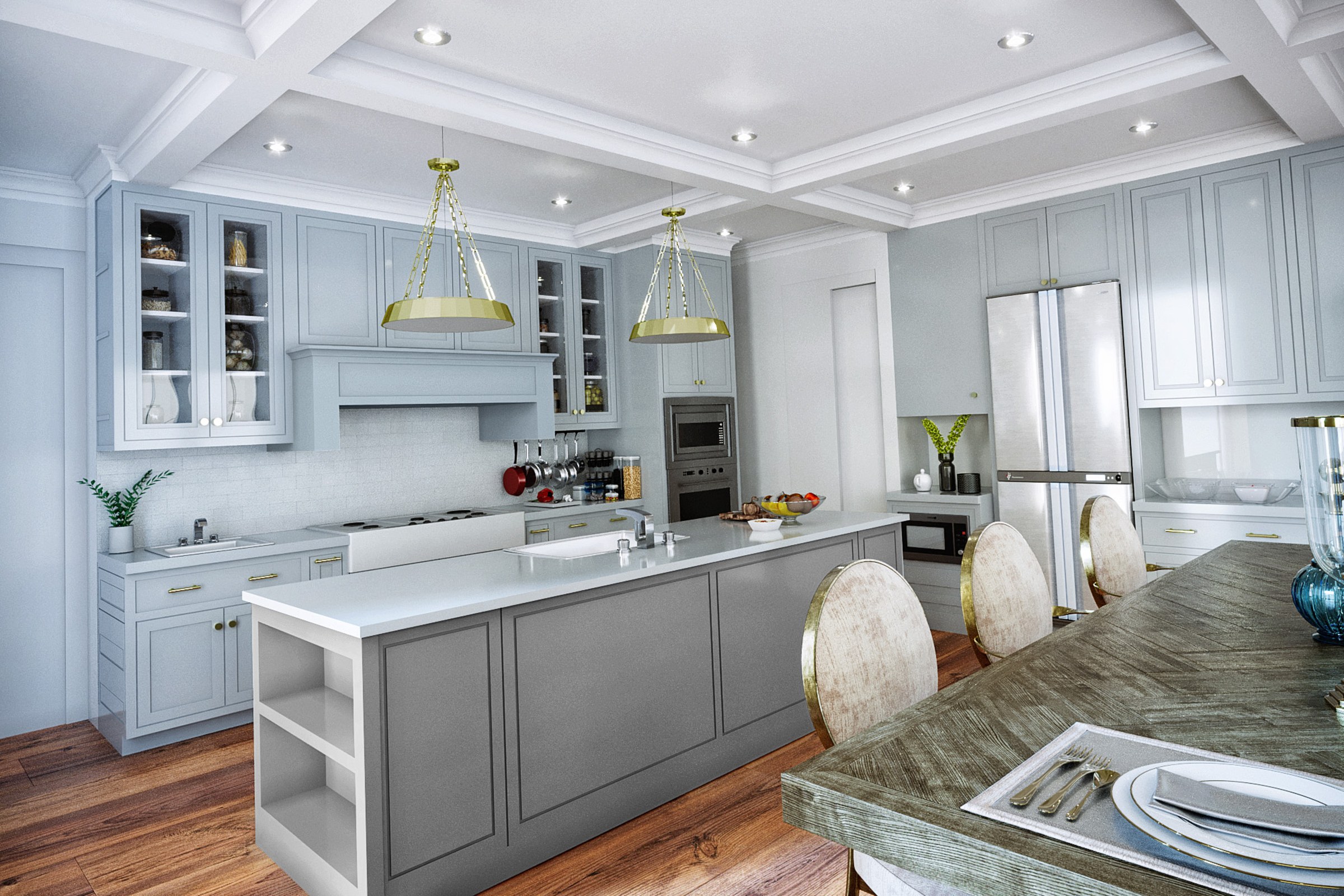
Traditional kitchen with soft blue-gray painted cabinetry, coffered ceiling, a large gray island with white quartz top and open shelving, brass pendant drum lights, glass-front upper cabinets, and hardwood flooring.

Project Overview

This one’s straightforward in scope but not in ambition. Classic Gray Kitchen Coffered Ceiling required a single render that could represent weeks of design work in one frame.

Traditional kitchen with soft blue-gray painted cabinetry, coffered ceiling, a large gray island with white quartz top and open shelving, brass pendant drum lights, glass-front upper cabinets, and hardwood flooring.

The Result

Turnaround was 3-5 days. The render now serves as the primary visual for the project — anchoring everything from the website header to the investor summary.

Have a project in mind? Drop us a brief and we’ll get back to you with a quote within a day. Or see what else we’ve done.
Frequently Asked Questions

How do you accurately render the tonal difference between blue-gray cabinetry and a gray island in the same kitchen?

We calibrate material shaders separately for each surface, matching exact paint swatches and undertones so the blue-gray cabinets read distinctly from the warm gray island under consistent lighting conditions.

Why is 3D visualization particularly valuable for traditional kitchen designs with coffered ceilings?

Coffered ceilings create complex shadow patterns that interact with pendant lighting and reflective surfaces like quartz countertops — a photorealistic render lets the designer validate these layered interactions before any millwork is fabricated.

What is the typical turnaround for a residential kitchen visualization of this complexity?

A kitchen scene with detailed cabinetry, coffered ceiling geometry, and mixed material finishes like this Malibu project is typically delivered within 5-7 business days from approved drawings.

How do kitchen and bath designers use renders like this with their clients?

Designers present these visualizations during client approval meetings to confirm finish selections — such as brass hardware against blue-gray paint — reducing costly change orders once cabinetry is in production.

What makes kitchen-and-bath visualization more demanding than other residential interior categories?

Kitchens concentrate the highest density of distinct materials in a single room — glass-front cabinets, hardwood floors, quartz surfaces, metallic fixtures, and painted millwork — each requiring precise reflection, texture, and lighting behavior to look convincing together.

Like what you see?

Let's create something extraordinary for your next project.