Project Tropical Campus
Tropical Modern Educational Campus Visualization
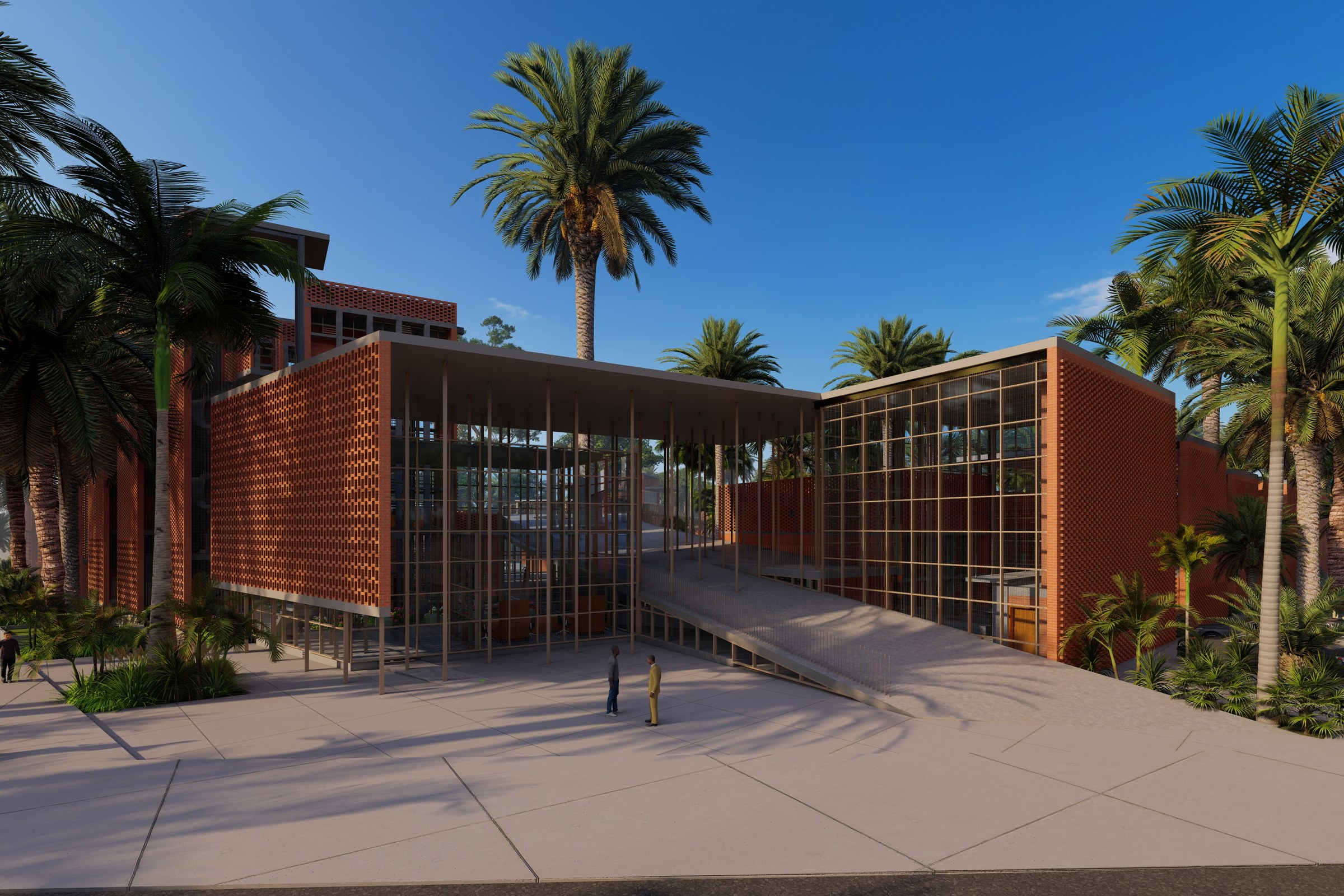
Large tropical educational campus with distinctive perforated brick screen walls, glass curtain walls, elevated ramp entrance, palm trees throughout. Warm terracotta brick with concrete structural elements. Multi-building complex.
For the Tropical Campus project, our client sought a captivating exterior rendering that would not only showcase the architectural brilliance of their design but also resonate with the vibrant, natural environment surrounding the campus. The goal was to create a visual narrative that highlighted the integration of the structure with its tropical landscape, appealing to both prospective students and investors.
Our approach was centered around capturing the essence of the tropical setting while emphasizing the innovative architectural features of the campus. We conducted extensive research on the local flora and fauna to ensure that our rendering reflected the true spirit of the environment. By utilizing a combination of dynamic angles and immersive perspectives, we aimed to create a sense of place that would draw viewers into the scene. This project was unique in that we incorporated elements of biophilic design, showcasing how the architecture harmonizes with nature.
To achieve the desired photorealism, we employed advanced software such as Autodesk 3ds Max and V-Ray for rendering, which allowed us to manipulate lighting and materials with precision. We focused on natural lighting to enhance the textures of the building materials, ensuring that the interplay of light and shadow added depth to the visualization. The use of high-quality textures for the façade and landscaping elements further contributed to the realism of the scene, making it visually striking.
The final rendering not only met but exceeded our client’s expectations, playing a crucial role in securing planning approval. It served as a powerful marketing tool, effectively communicating the vision of the Tropical Campus to stakeholders and potential investors. The project has since become a benchmark for how architectural visualization can elevate a design proposal, demonstrating our commitment to excellence in every aspect of our work.
Project Overview
Project Tropical Campus started with a conversation about what this institutional project in Denver, CO needed to communicate. The answer was 6 carefully planned views, each telling a different part of the design story.
Large tropical educational campus with distinctive perforated brick screen walls, glass curtain walls, elevated ramp entrance, palm trees throughout.
The Challenge
Stakeholder alignment was part of the challenge. Multiple decision-makers had different priorities for what the renders should emphasise, and we had to find compositions that satisfied all of them without diluting any single perspective.
The design language was distinctive — a mix of forms and materials that doesn’t photograph itself. Translating that into a render that feels lived-in rather than clinical took several rounds of material and lighting refinement.
The biggest hurdle was fidelity at scale. With 6 compositions to produce, we couldn’t afford to let quality drift between the first render and the last. Every image needed to feel like it came from the same visual universe.
Our Approach
Landscape and entourage came last but mattered enormously. Trees, people, vehicles, sky — these contextual elements are what make a render feel like a photograph instead of a diagram.
Feedback cycles were structured. We presented renders in context — placed into the marketing layout or presentation deck — so the municipal government could evaluate them as their audience would see them, not as isolated files on a white background.
We ran the first round of test renders at reduced resolution to get quick feedback on composition, materials, and overall mood. This let us catch issues early when changes were cheap, not late when they weren’t.
Material selection was hands-on. We sourced textures from manufacturer libraries and matched them against the specification documents. Where specs were ambiguous, we sent samples to the municipal government for sign-off before rendering.
We leaned on physically-based rendering throughout. Every material — glass, stone, metal, timber — was defined by real-world optical properties. That’s what makes the difference between a render that looks ‘nice’ and one that looks true.
The Result
Delivery took 3-4 weeks from kick-off to final files. The 6-image set now powers the project’s online presence, sales centre displays, and social media content.
If this is the kind of quality you’re after, start a conversation with us. Or explore the full portfolio.