Project Student Housing Complex — institutional 3D rendering by Praxis Studio
Institutional

Project Student Housing Complex

Contemporary Dormitory Complex Visualization

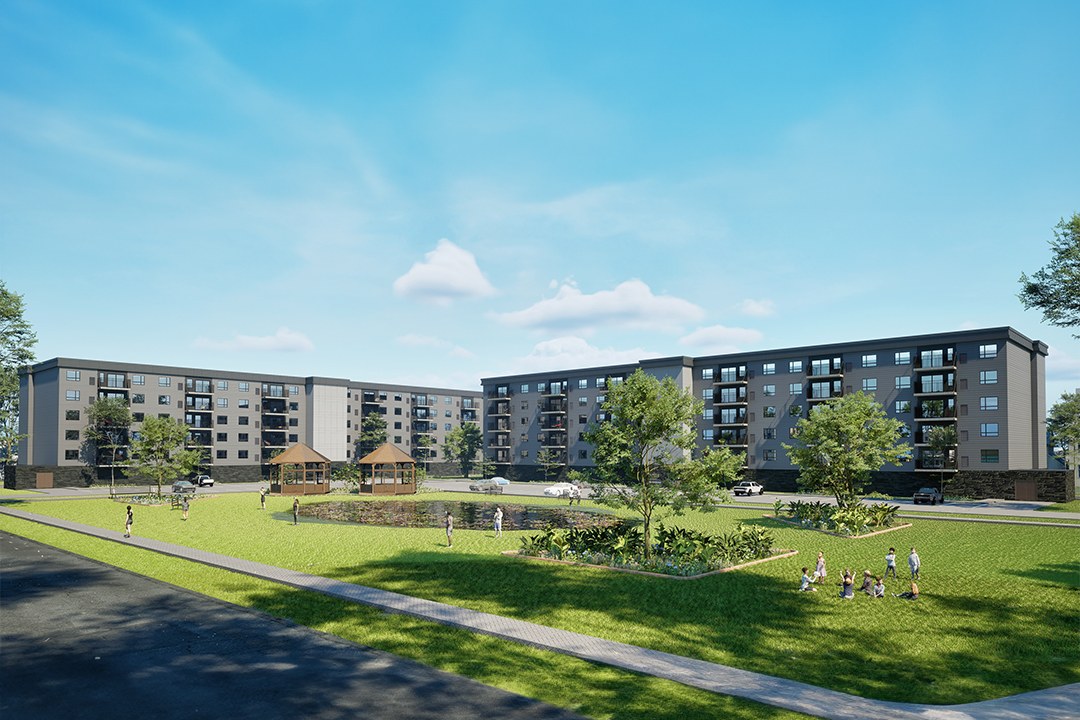
Two identical five-story residential blocks flanking a central communal green space with gazebos, pathways, and a pond. Gray and beige stucco facades with balconies. Educational or institutional housing complex (dormitory or student accommodation). Families and people on green areas. Bright blue sky. Could also be social housing or institutional residential campus.

Project Overview

Project Student Housing Complex was a quick-turn engagement. The nonprofit organization had a design they were proud of and needed it visualized — no extras, just one precise, photorealistic render.

Two identical five-story residential blocks flanking a central communal green space with gazebos, pathways, and a pond.

The Result

We delivered the finished image within 1-2 weeks. It’s since been used across the project’s marketing materials, from digital listings to printed collateral.

If this is the kind of quality you’re after, start a conversation with us. Or explore the full portfolio.
Frequently Asked Questions

How do you visualize large-scale student housing complexes with multiple identical buildings?

We model each block with full architectural detail, then use instancing and careful material variation to maintain visual accuracy across repeated structures while ensuring each facade reads authentically in context.

What challenges are unique to rendering institutional residential campuses compared to single-family projects?

Institutional housing requires balancing the scale of multi-story repeated units with human-scale elements like communal green spaces, pathways, and gathering areas to convey both the project's density and its livability.

What is the typical turnaround for exterior renders of a mid-rise housing complex like this?

A project of this scope with multiple buildings and landscaped common areas typically takes 7-10 business days from confirmed camera angles to final delivery.

How do architects and nonprofit developers use these renders during the approval process?

Renders like these are presented to planning boards, funding bodies, and community stakeholders to demonstrate how the housing complex integrates with its surroundings and serves resident needs before construction begins.

Why is showing populated green spaces and communal areas important in institutional exterior visualizations?

Including figures on pathways, near gazebos, and around shared amenities communicates the intended community life of the development, which is critical for institutional and nonprofit clients seeking stakeholder buy-in.

Like what you see?

Let's create something extraordinary for your next project.