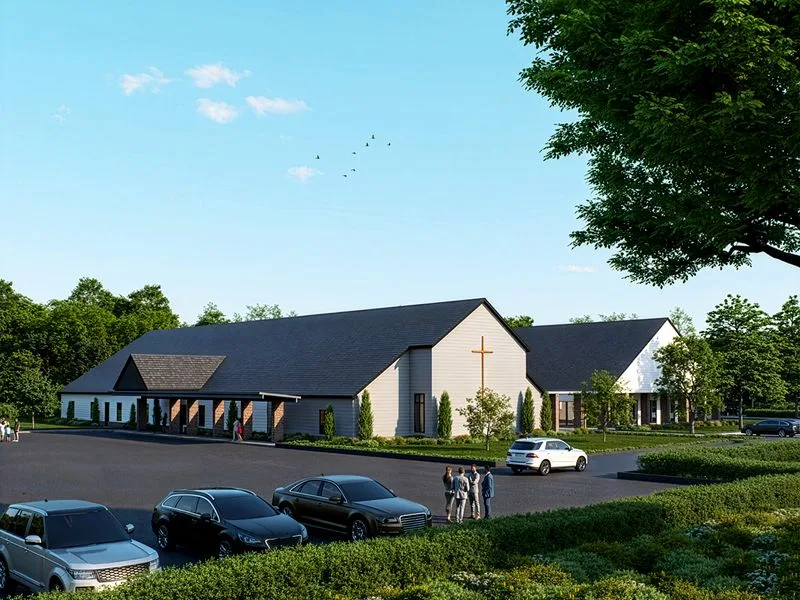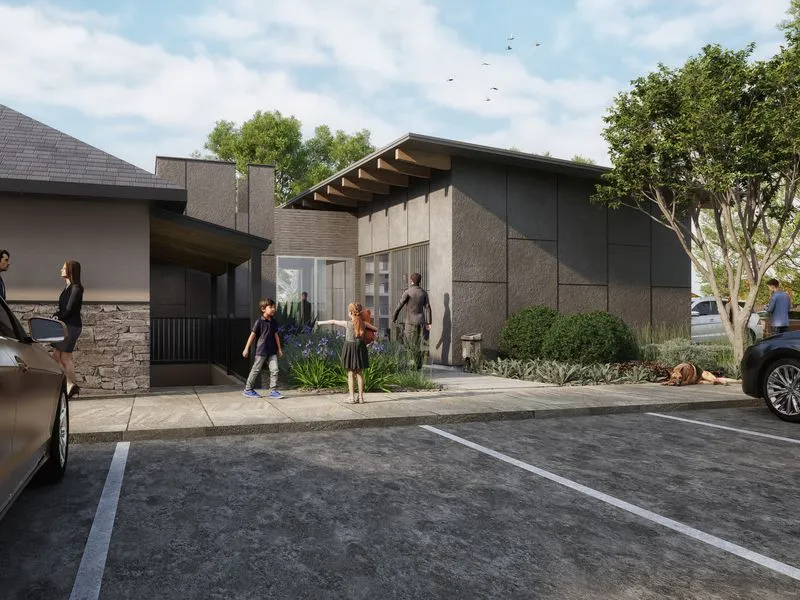
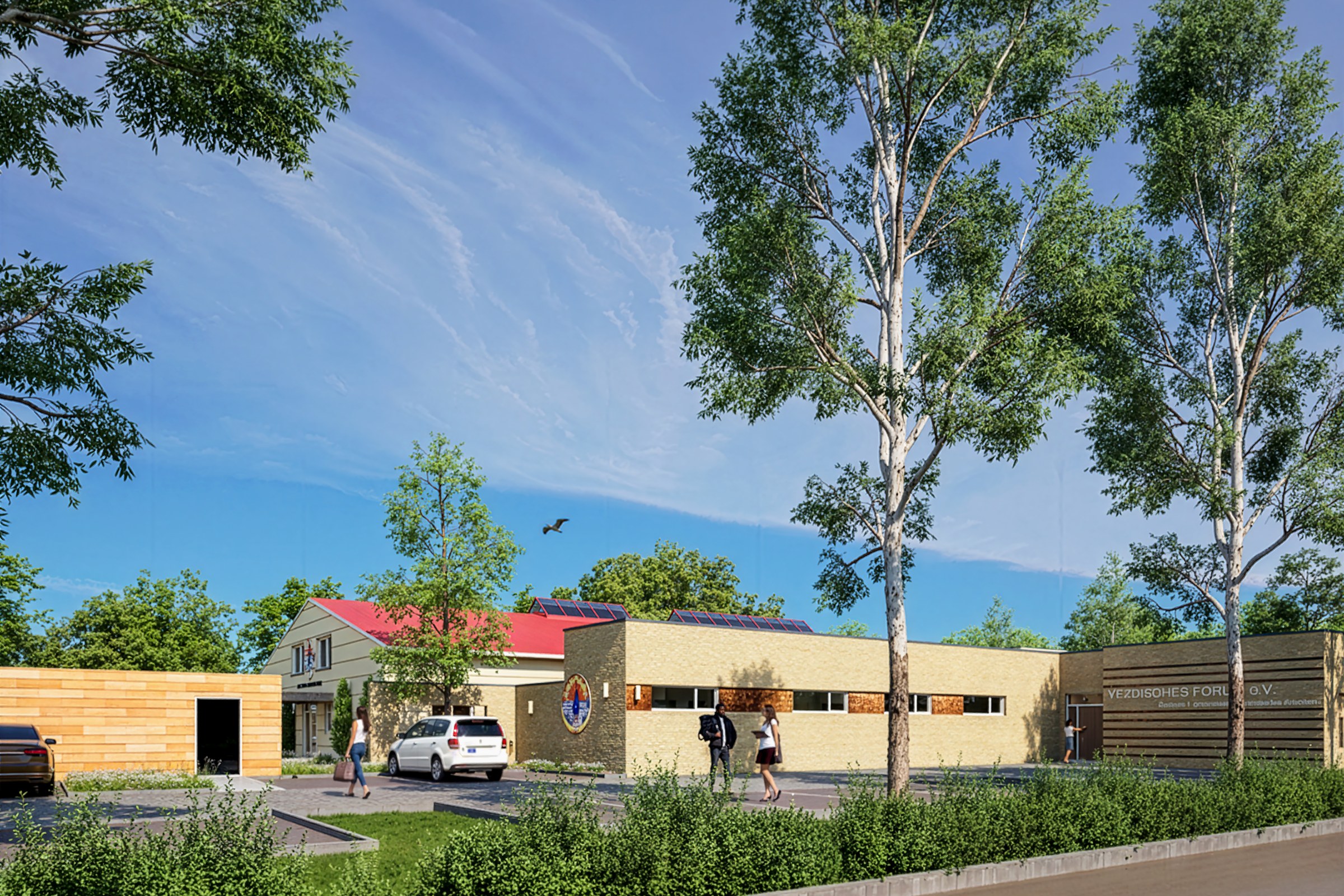
Project Community Center Brick Stucco — institutional 3D rendering by Praxis Studio
Institutional

Project Community Center Brick Stucco

Contemporary Community Facility Visualization

3D exterior rendering of a low-rise community center featuring beige stucco and red brick materials, surrounded by mature birch trees and green hedgerows.

Project Overview

Project Community Center Brick Stucco wasn’t just another rendering job — it was a visual campaign. The school district needed 2 views that could work across presentations, print materials, and digital marketing simultaneously.

Low-rise community center viewed from across the street through mature birch trees.

The Challenge

The design language was distinctive — a mix of forms and materials that doesn’t photograph itself. Translating that into a render that feels lived-in rather than clinical took several rounds of material and lighting refinement.

The design was still evolving when we started. We had to build a model flexible enough to absorb changes mid-stream without derailing the production schedule.

Our Approach

We shared work-in-progress renders with the school district at two key milestones: after initial composition lock and after material refinement. Both rounds stayed tight — targeted feedback, fast turnarounds.

Post-production was restrained. We adjusted contrast, corrected any colour casts, and added subtle atmospheric effects — but the goal was always to enhance what was already there, not to paper over problems in the base render.

We leaned on physically-based rendering throughout. Every material — glass, stone, metal, timber — was defined by real-world optical properties. That’s what makes the difference between a render that looks ‘nice’ and one that looks true.

The Result

The 2 renders were handed over within 2-3 weeks — each optimised for its intended use, from large-format print to responsive web display.

Got a project that needs this kind of visual clarity? Get in touch or see more examples.
Frequently Asked Questions

How do you capture the realistic look of mixed materials like brick and stucco on institutional facades?

We build separate material profiles for each surface—matching the texture scale of red brick against smooth beige stucco—and calibrate weathering and color variation so the transition between cladding types reads naturally at street-level perspective.

Why is exterior visualization important for community center projects going through public approval?

School districts and municipal boards need to show stakeholders exactly how the building will sit in its neighborhood context, making a photorealistic street-view render one of the most effective tools for securing community buy-in and zoning approval.

What is the typical turnaround for an institutional exterior rendering like this community center?

A single hero exterior view at this level of detail—including environment, landscaping, and parked vehicles—is typically delivered within 5 to 7 business days from receipt of finalized drawings and material selections.

How do architects use a street-level community center render like this in their workflow?

Architects present these renders in school board meetings and public hearings to demonstrate neighborhood fit, and also use them in design-development packages to confirm material choices and massing with the client before construction documents.

What makes institutional exterior visualizations different from residential or commercial projects?

Institutional projects demand careful attention to civic context—showing the building's relationship to public sidewalks, mature trees, signage, and street-facing identity elements—because the audience evaluating the design is the community itself, not just the building owner.

Like what you see?

Let's create something extraordinary for your next project.